Fertilising Hunger: Violence in the Gulf and the Logic of Control
Colin Todhunter
The US-Israeli assault on Iran is being sold by the US as a defensive manoeuvre. However, it functions as something far more revealing: a maintenance operation for a global system that can no longer sustain itself and is increasingly reliant on violence.
The Strait of Hormuz can be regarded as a pressure valve for the world economy. Any threat to close it disrupts the predictability that global markets depend on for pricing, investment and trade flows.
Since 1973, the petrodollar has served as the backbone of US power—an unwritten pact ensuring that global energy is traded in a single currency. This arrangement forces every nation to hold dollar reserves, effectively tying the fate of a farmer in the Global South to the stability of a ledger in Washington.
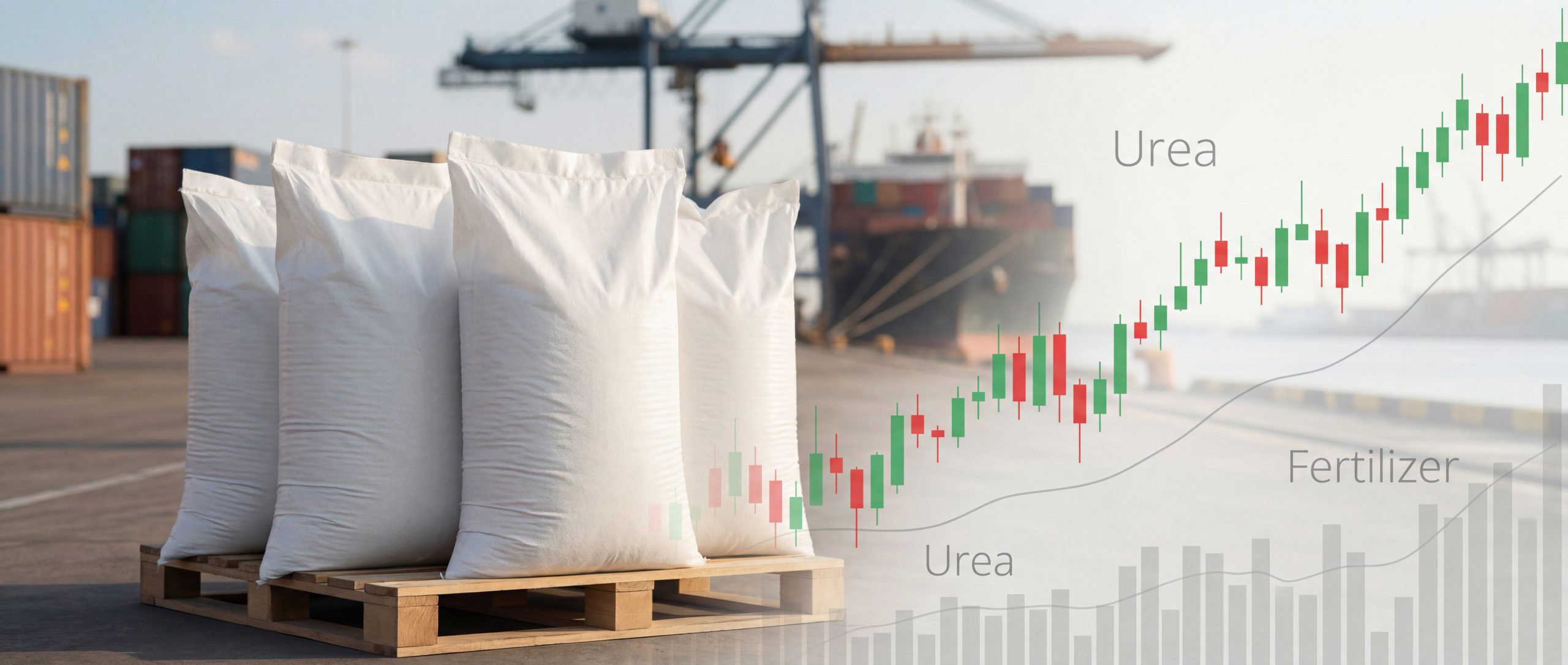
But the petrodollar is not merely a financial abstraction. It is embedded in the global food system itself. The Green Revolution increasingly replaced soil biology with fossil fuel–derived inputs, turning agriculture into an extension of the energy economy. And because industrial agriculture is structurally fused to fossil fuels, any shock to the energy system becomes a shock to the food system, resulting in spiralling food prices.
When the US bombs what is effectively Iran’s ‘filling station’, it raises the price of fuel. Because modern agriculture runs on that fuel—through diesel-powered machinery, natural gas–based fertilisers and global transport chains—this shock feeds directly into the cost of food production. In this way, control over energy markets becomes indirect control over who can afford to eat and therefore over populations themselves.
Any nation that attempts to transact outside the dollar is treated as a systemic threat. Operation Epic Fury (or Epic Failure, given Iran’s response) is not about democracy or nuclear containment. It is about enforcing monetary hegemony and preventing the emergence of an autonomous alternative, particularly one centred on China and the BRICS bloc.
This system is upheld by a structural interdependence between the world’s two principal architects: the United States and China. They are framed as adversaries, yet they function more like rival contractors building the same digital enclosure. The US enforces the monetary architecture through sanctions and military power. China controls the rare earth minerals and processing capacity required for the drones, sensors and smart infrastructure that define the next phase of technocratic governance.
Together, these systems extend the same logic of dependency—from fuel and currency into data, infrastructure and everyday life.
Neither side wants to destroy the system. They are fighting over who will administer it.
As this struggle unfolds, institutions like the UN and the World Economic Forum provide the managerial vocabulary for the transition. Under the banner of ‘sustainability’, agriculture is being re‑coded into a corporate asset class. Farmers are being reframed as ‘carbon‑sequestering units’, and even the smallest family plot is being indexed as either a carbon sink or a systemic risk.
The concepts of environmentalism and ecological stewardship are being subverted to consolidate land, data and dependency in the hands of financial-digital elites. A world in which people can feed themselves is a world that cannot be easily governed.
Whether the server sits in Washington or Beijing is a secondary detail. The deeper project is the conversion of biological and social life into data and the elimination of decentralised resilience.
The official narrative of nuclear non‑proliferation is a convenient distraction. The 2026 attack on Iran is better understood as a strike against the alternative architecture China has been constructing across Eurasia.
Iran has long served as China’s discounted energy lifeline—a way to fuel its industrial machine outside the dollar‑denominated SWIFT system. By targeting the Iranian node, the US is performing a kind of geopolitical bypass surgery on China’s energy security.
Operation Epic Failure is a message to Beijing delivered through Tehran: any attempt to build a road outside the sanctioned lanes of the current order can be physically erased.
Yet the architects remain trapped in their own design. The US cannot collapse Iran without destabilising the very markets and Gulf petrodollar recycling that sustain its power. China cannot break free from a financial order it simultaneously depends on and seeks to undermine. Both are locked in a struggle to preserve a system that is already devouring itself.
As smoke rises over refineries and tankers idle in the Strait of Hormuz, the underlying truth becomes visible: empire still operates through force.
And this brings us back to the food system. True agroecology based on the restoration of soil biology and the nitrogen cycle is more than an agricultural practice. It is a form of political refusal (see Chapter 3 here for a discussion on agroecology: what it is and its successes).
A decentralised, self-sufficient food system severs the tether between the farmer, the dollar and the droning mantra of ‘smart’ agriculture (though only partially and unevenly in a world still dependent on global supply chains). Its power is biological, local and distributed—everything the current architecture is designed to suppress.
In a world being reorganised into data streams and dependencies, the simple act of growing food outside the system becomes the most subversive act of all.

Colin Todhunter specialises in food, agriculture and development and is a research associate of the Centre for Research on Globalization in Montreal. His open access books on the global food system can be accessed via Figshare (no sign in or sign up required). You can read and subscribe to his new SubStack HERE.
Thanks for reading...
You can help us keep doing what we do. Every little helps and is hugely appreciated.




For other ways to donate, including direct-transfer bank details click HERE.



It would be interesting to know how dependent Chinese and Indian farmers are on artificial chemicals, given their long history of organic agriculture.
In conjunction with current situation this analyze is remarkable:
–
The Last Molecule Standing
https://shanakaanslemperera.substack.com/p/the-last-molecule-standing
“How One Reservoir, One Strait, and Five Manufacturers Became the Hidden Operating System of Seven Global Industries”
Shanaka Anslem Perera – Mar 29, 2026
–
The impact will be felt – and the “Epstein Fury” will end in court – probably as the “Last Judgement”
” … In a world being reorganised into data streams and dependencies, the simple act of growing food outside the system becomes the most subversive act of all.”
–
Exactly.
And we are able to extend this approach growing medical plants to replace the pharmaceutical military industrial complex as well.
–
Just one example where not even planting is required:
–
Dandelion Root Extract Kills 95% of Cancer Cells In Vitro and Reduces Human Colon Tumor Growth by Over 90% in Mice — With Zero Toxicity
https://www.thefocalpoints.com/p/dandelion-root-extract-kills-95-of
„A peer-reviewed study finds that a common backyard plant selectively kills cancer cells while sparing normal cells, acting through multiple coordinated anti-cancer pathways.“
Nicolas Hulscher, MPH – Dec 09, 2025
–
The abbreviations to look for: TCM/TEM