Tian’anmen – 30 years of sanctimony and cant
David W Ferguson
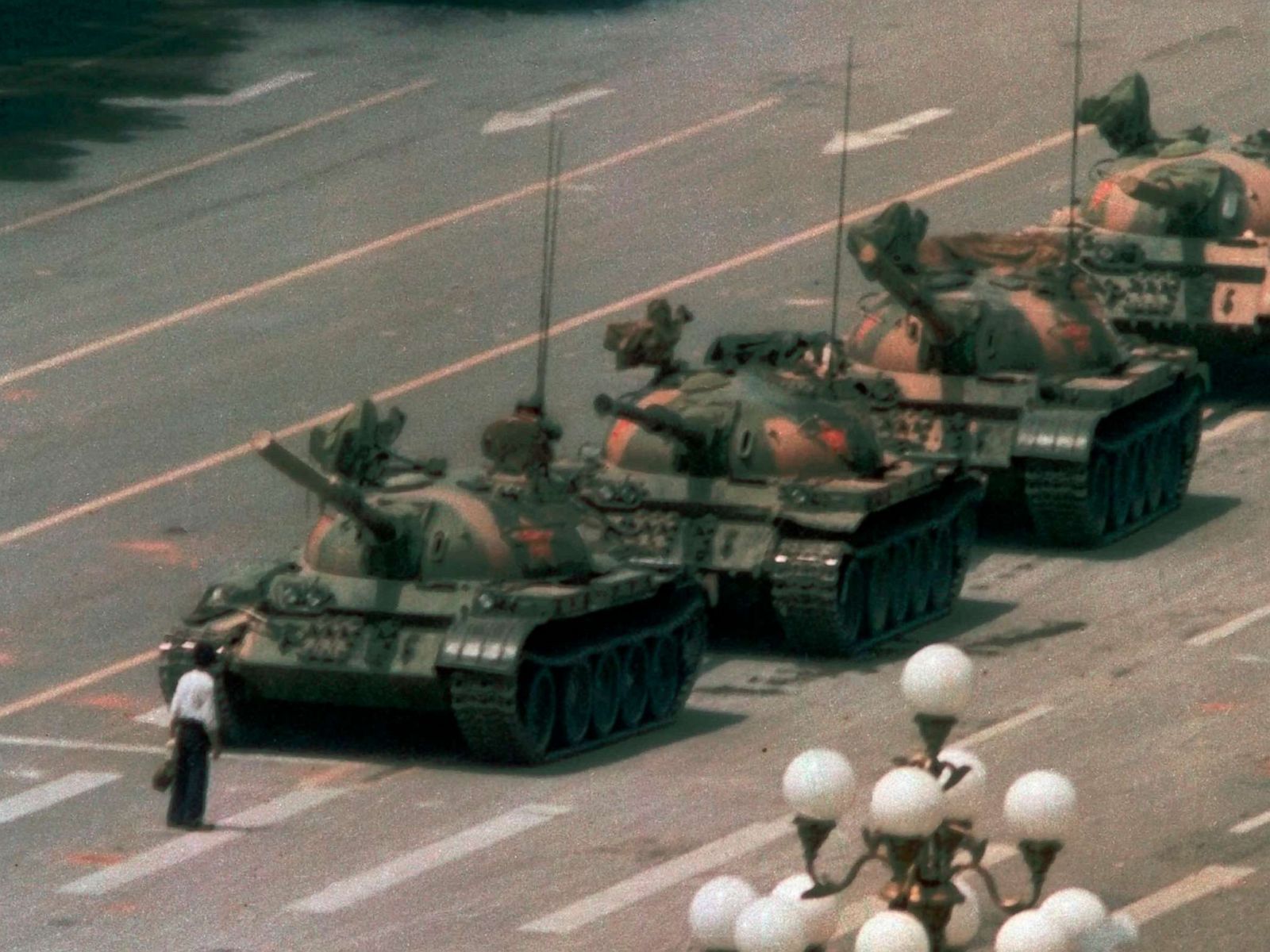
I generally describe Western attitudes to China as “a great big bag of arrogance, stuffed to the brim with ignorance, and tied with the string of prejudice”. Nothing embodies this better than Tian’anmen.
Nobody really knows exactly what happened around Tian’anmen, and it is quite possible that we never will. But its anniversaries invariably provide a golden opportunity for Western middle-class posturing and sanctimony. Not once have I ever seen a Western journalist attempt to consider the incident from a Chinese perspective – then and now.
The Guardian does not disappoint. This past weekend (Saturday 1st June), it provides us with the customary helping of hypocrisy and cant.
Incredibly, the editorial is actually open for comments – always a sign that the editors are confident that the readership will toe the party line and parrot the party narrative.
One small point: a reader (Solentbound) asked if it was possible to access the Guardian and read the article in China without a VPN. Nobody actually bothered answering the question. Speaking as someone in China who read the article without my VPN, the answer is “Yes”.
Looking back at the time, it is an uncomfortable fact that China’s leadership had every reason to be deeply sceptical about the Tian’anmen students and their demands.
In 1989, China was barely ten years out of the Cultural Revolution – a decade-long horror that destroyed thousands of lives and threatened the very existence of the country.
When I ask Westerners who made up the Red Guard – the vanguard of the Cultural Revolution – they never get the answer right. It wasn’t peasants. It wasn’t workers. It wasn’t Communist Party members. It wasn’t the soldiers of the PLA. It was radical idealistic students.
It was radical idealistic students who kicked the whole thing off by pouring boiling water over a teacher to punish her for her ‘rightist tendencies’.
It was radical idealistic students who forced communist veterans – brave and principled people who had devoted their lives to the cause of the underprivileged – to stand up in front of baying mobs (of radical idealistic students) and invent crimes they had committed so they could then beg for mercy.
It was radical idealistic students who transformed China’s main industrial activity from producing stuff that people needed into producing badly-scrawled placards and inane slogans.
Yeah but no but, I hear you say. Yeah but no but these were bad radical idealistic students. The Tian’anmen students were good radical idealistic students! They were in favour of good radical idealistic things, like Western democracy and freedom and everything…
Unfortunately, you can never be sure where even the goodest radical idealistic student might end up. Tony Blair and Jack Straw were both radical and idealistic young students. They grew into two of the 21st century’s leading warmongers and torturers – in comparison with their death toll, Tian’anmen was a fleabite.
It fell on Deng Xiaoping to make the decision to end the Tian’anmen protest with violence. Everything I know about Deng paints him as a brave, decent, and principled man. He joined the CPC in 1923.
He fought the fascist Chiang Kai Shek. He fought the Japanese war machine. Then he fought the fascist Chiang Kai Shek again. He was one of the leading figures in the fight against the Cultural Revolution. He himself was purged twice.
But the Cultural Revolution affected Deng on a more personal level. His son Pufang was taken prisoner by his fellow students at Peking University, to punish him for his father’s ‘rightist tendencies’.
Pufang was held in a student dorm and tortured so badly that eventually he tried to end his own life by jumping out of a window. He did not succeed in killing himself, but he did succeed in breaking his back, and he has lived the rest of his life as a paraplegic.
So Deng Xiaoping had better reasons than most for doubting the wisdom of radical idealistic students.
Moving on to today, there is the vexed question of what would have happened if the Tian’anmen reformers had succeeded. What guarantee is there that ordinary Chinese people would be better off today?
Well, let’s take a look at a place where they did succeed. Russia. How well did it work out for the Russians? In the five years following Russia’s successful democratic reform the country’s GDP plummeted by half.
The economy was raped and looted by a combination of local oligarchs and greed-maddened Wall Street bankers. Russia is now our sworn enemy, apparently, governed by the most evil man on the planet, apparently. That’s how well it has worked out for the Russians.
The guarantee actually works the other way around. Although its economy ranks second in the world, China is still a developing country. Per capita GDP ranks only 73rd in the world.
In 1989 China was thirty or forty times poorer than it is today. And here is an interesting fact. Not many people know this, because not many people have ever asked themselves the question: There is not one single example in all of human history of a country that was impoverished and destitute, and became a Western-style democracy, and is now successful and prosperous.[1]
India is a relevant case in point. India and China are the only two counties with which the other can reasonably be compared, and they share a number of things in common. They are both far bigger than any other country.
They both took on their current political form just after World War II. They were both desperately poor after endless years of occupation, oppression and exploitation by foreign powers. In 1950, the two countries’ per capita GDP was almost identical.
China, in addition, had been ravaged by almost twenty years of war, and tens of millions of its population had been killed. India became a Western-style democracy; China came under the rule of the CPC.
Seventy years on, it is hard to come up with any worthwhile social or economic indicator against which India has outperformed China. In many cases, China is miles ahead. According to the Credit Suisse yearly analysis, China’s mean wealth per adult was $47,810 in 2018. India’s was $7,024.
There is no rationale to support the belief that had the Tian’anmen reformers won out, China today would be anything other than a combination of India and the former Soviet Union – a ragbag of broken, impoverished, and conflict-ridden statelets, many of them dictatorships, their economies hollowed-out by greed-maddened Wall Street bankers. No ordinary Chinese would have benefited in any way.
Tian’anmen was not a ‘good thing’. Unfortunately, leaders do not always have the luxury of choosing between a good thing and a bad thing. Sometimes they have to make a choice between the lesser of two evils, and hope that their judgment was right. Tian’anmen was a personal tragedy for a few hundred people who lost their lives, and for their families. I’m sure that, with a very small number of exceptions, they only ever meant well for their country.
But in the annals of all the killings that have been inflicted on the world in the past thirty years, Tian’anmen barely even registers as a click on the dial. And it almost certainly saved China from a much bigger tragedy that would have brought devastation to hundreds of millions.
Try explaining that to the sanctimonious prigs in Guardian Land.
[1] The closest you will probably come to one is Botswana. Botswana became independent in 1966 and to its credit has remained a democracy ever since. Its economy has grown significantly. But with a population one seven hundredth of China’s, a population density one fortieth of China’s, and an economy that is largely dependent on diamond mining, it doesn’t offer much of a benchmark for China. And Botswana has its own issues. Additionally, its per capita GDP is almost the same as China’s, so it hasn’t become any more successful and prosperous than China has.
David W Ferguson has had a long and varied career in the law, business and the media, as well as various less professional sounding fields. He has spent much of the last 13 years in China, where he works as an editor, a writer and an occasional journalist. His published books include works on contemporary China, teaching guides for Chinese trying to write in English, and illustrated fiction for young children.
Thanks for reading...
You can help us keep doing what we do. Every little helps and is hugely appreciated.




For other ways to donate, including direct-transfer bank details click HERE.
 wpDiscuz