BREXIT: Is “Remain and Reform” even possible?
Frank Lee
The EU describes itself as being “based on the rule of law. This means that every action taken by the EU is based on treaties”[1].
The most important of these are the Maastricht Treaty, which transformed the European Economic Community into the EU and entrenched neoliberal regulations across the continent, and the Lisbon Treaty, the EU’s de facto constitution.
These treaties would have to be changed in order to effect any fundamental transformation of the EU.
How can EU treaties be changed? The Lisbon Treaty sets out the incredibly tortuous procedure:
- A proposal must emerge from either a national government, the European Parliament, or the European Commission.
- The Council then discusses the proposal and passes it to the Council of Ministers, comprised of national heads of government.
- The Council of Ministers must then consult the European Parliament, the Commission, and (if the proposal touches on monetary matters) the European Central Bank.
- The Council of Ministers must vote on the proposal, with a simple majority required for it to progress further.
- For any proposals suggesting fundamental change, the President of the European Council must then convene a “Convention”. This must be comprised of representatives from national parliaments, national governments, the European parliament, and the Commission, but the President has total discretion as to how many of each are included.
- The Convention discusses the proposal and develops, by consensus, a draft treaty text.
- An intergovernmental conference convenes to discuss the text.
- If the text is approved, it must be ratified by member-states in accordance with domestic law, e.g. through national parliaments or referenda.[2]
The barriers to any serious change of the EU treaties are obviously formidable; indeed, they are practically insurmountable.
One: To begin with, a majority of EU member-state governments (i.e. at least 15) must first agree to the potential change.
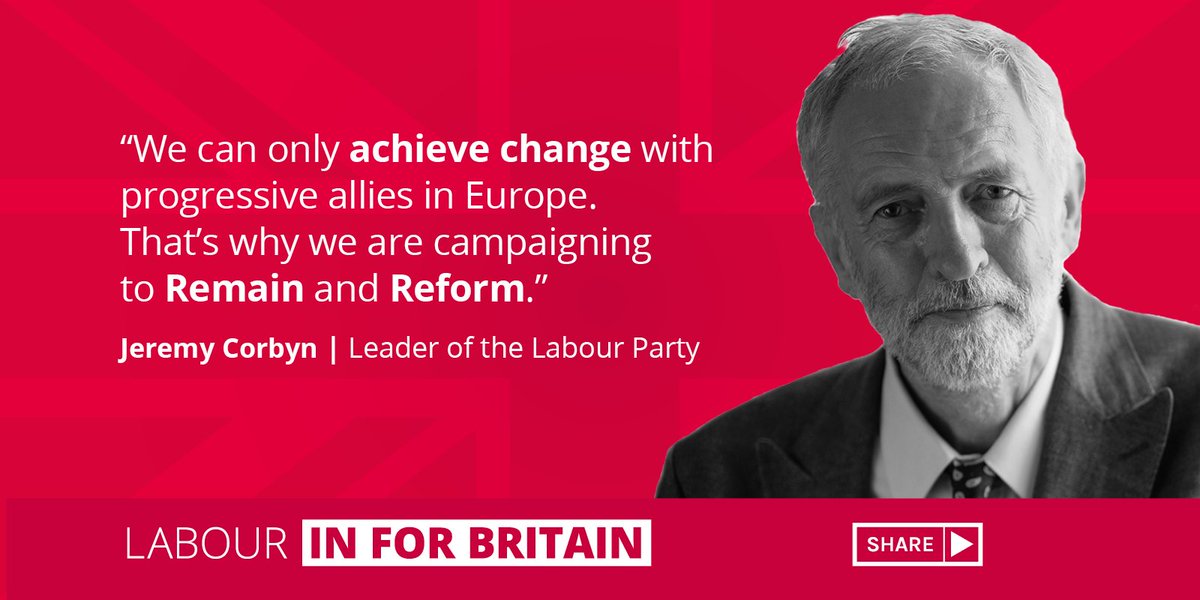
Therefore, for R&R to work in the way leftists suggest – for the EU to be reformed in a socialist direction – socialist governments would need to have been elected in 15 EU countries, and they would have had to develop a consensus on EU reform.
The likelihood of this occurring is obviously close to zero. Thanks in part to the EU treaties, even moderate social democratic parties – let alone real socialist parties – have been eviscerated across the continent, and there has been a widespread lurch to the right and towards nationalist populism.
Even if we ride the unicorn into a fantastical future where 15 socialist governments are simultaneously elected across the EU, at step five the Council president has the power to rig proceedings against meaningful change.
There is nothing to stop him or her stuffing the Convention with unelected bureaucrats from the Commission, or with the scarcely-elected Europhiles who dominate the European Parliament.
Furthermore, at step six, our imaginary socialist governments’ representatives will be further diluted by representatives of other EU governments that do not share their priorities, with whom they are supposed to reach “consensus”.
Any serious reform programme – let alone radical objectives like turning the EU into an instrument of socialism – would be considerably diluted, if any consensus could be reached at all.
At step seven, the non-socialist EU member-states would enjoy a second opportunity to veto any change, while at step eight, so would the parliaments or populations of most EU countries, depending on their domestic rules on treaty ratification.
The Irish constitution, for example, requires treaties on constitutional matters to be put to a referendum; accordingly, a country of 4.8 million people could veto changes desired by up to 468.7 million people (the combined population of the 15 largest EU member-states).
R&R is therefore practically impossible.
NOTES:-
- [1] Ideology and Utopia – Karl Mannheim – p.140/141
- [2] The Looting of Greece – Jack Rasmus – pp.116/117
Thanks for reading...
You can help us keep doing what we do. Every little helps and is hugely appreciated.




For other ways to donate, including direct-transfer bank details click HERE.
 wpDiscuz