Literature and Politics in a Dystopian Age
Frank Lee

Unquestionably, the world seems to be moving away from democratic forms of rule and morphing into authoritarian/totalitarian political and economic systems (liberal totalitarianism if you will).
This process has not gone without commentary and analysis. The 20th century bore witness to a copious amount of dystopian literature, both prior to and coincidental with the rise of totalitarian systems in both Stalinist Russia, Nazi Germany, and Fascist Italy. In a time of economic and political break-down, these regimes were the early prototypes of counter-revolutions from below.
The first decades of the 20th century were troubled times for the ruling elites who were increasingly unable to keep order in this deteriorating situation particularly in Italy and Germany. This was made worse by the rise of socialist and communist movements which represented a real and present danger to the PTB and the capitalist social order. Thus a counter-balancing political mass movement – fascism – was recruited and built as an anti-communist, anti-socialist, counter-revolution from below.
In Germany this consisted of the SA (Stormtroopers or Brownshirts) with a political belief-system and ideology containing much which could be interpreted as, in a perverse sense ‘socialistic’, and earlier in Italy with the creation of Mussolini’s fascist squadristi – black-shirt goon squads who were given free rein to attack socialists and communists.
These movements were created, funded and backed by reactionary elites who were able to manipulate significant sectors of the masses and organize them into armed militias with a political brief to smash the organized working classes and impose totalitarian rule.
More recently the same types of nationalistic movements were evident in the Ukrainian Maidan in 2014: the neo-nazi street-fighters of Svoboda, Right Sector, Patriots of the Ukraine, the Azov Brigade, spearheaded the coup, with funding coming from the US-based, National Endowment for Democracy, and various other NGOs sponsored by both the EU and US. Having carried out the grisly tasks these putschist reactionary movements were no longer of any use.
They were either ‘liquidated’, in the case of the SA by Hitler’s, elite SS, disbanded or integrated into the armed forces. The exception has been the continued existence and political role of the neo-nazi militias in the Ukraine.
JACK LONDON – 1876-1916
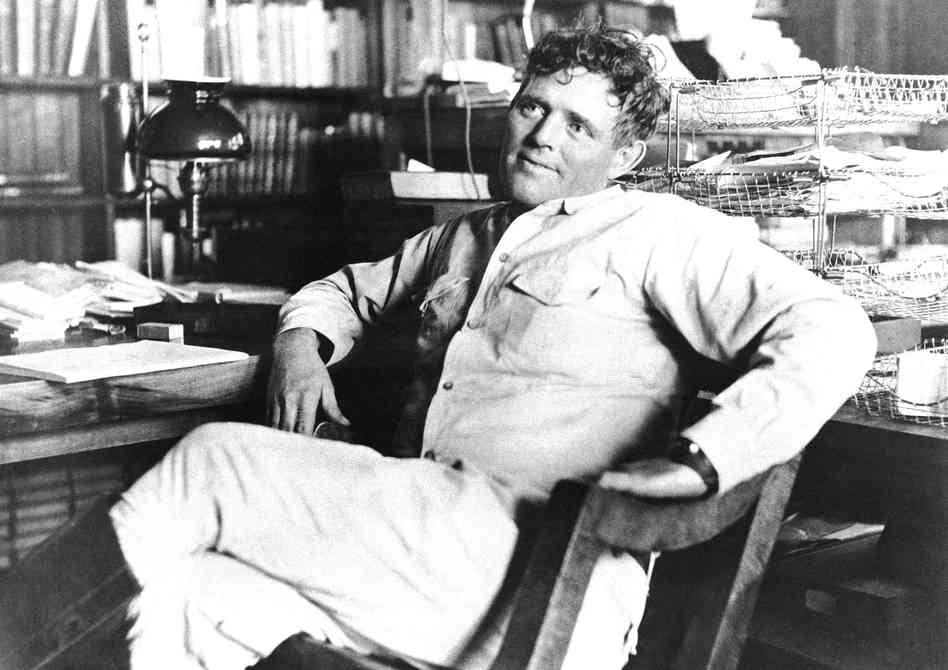
These above historical tendencies were initially anticipated and captured in Jack London’s novel The Iron Heel first published in 1907. And given the violent presence of class struggle in the US at the time the novel was not too far from the actually existing situation.[1]
In this fictional narrative, London tried to imagine a proletarian revolution that had broken out in the United States. Power had lain in the hands of a small group of tyrants called the Oligarchs (does this sound familiar?) who were served and guarded by the Mercenaries, a group of elite para-militaries like the Praetorian Guard in ancient Rome.
The Oligarchs were to launch the Mercenaries into a counter-revolution, which partly crushed the workers’ insurrection. This open class-struggle was unremittingly vicious – no prisoners taken.
The situation eventually simmered down into a low-intensity conflict and any perceived enemies of the state were ‘disappeared’.
As for the Oligarchs, they thought that they were saving civilization from the semi-human hoi-polloi. Without their leadership anarchy would surely reign, and humanity would drop back into the primaeval slime from which it originally emerged. Thus, the raison d’etre for the entire edifice and the ruling elite was the unshakable belief that they were doing, in the words of Goldman Sachs, one-time CEO Lloyd Blankfein, ‘‘God’s work’’. They imagined themselves as the keepers of a fragile civilization defending all that was sacred.
As Jack London put it:
It was their belief that, if they ever weakened, the great bestial mob would engulf them and everything of beauty, joy and wonder and good, would disappear into the mobs’ slime-dripping jaw. The Oligarchs stood alone, by their unremitting toil and self-sacrifice, between weak humanity and the all-devouring beast; and they believed it. They firmly believed it.”[2]
London understood this well.
Born into poverty he fought his way, quite literally in some senses, knowing more than most book-trained socialists that the class struggle was not subordinated to any Marquess of Queensbury rules, and much of his time was spent working for the socialist movement, as he understood it.
He was to come to the UK as an already successful writer and agitator, whilst passing himself off as an American merchant seaman, all the better to gain an intimate knowledge of the worst depths of poverty in the slums of East London. The material he garnered from this experience was published in the aforementioned The People of the Abyss.
Broadly speaking it could be argued that London was a socialist, but a socialist sui generis. Whilst accepting the orthodoxies of conventional Marxism, particularly the political economy, he nonetheless carved out a specific niche for himself which marked him out as being not altogether politically compatible with mainstream socialist thinking.
His infatuation with violence and physical strength, and his belief in a natural aristocracy of nature, his animal worship – White Fang and Call of the Wild – and exaltation of the primitive, and his comment that ‘First of all I am a white man, and then I am a socialist’ revealed a latent fascistic strain in his thinking. But this probably helped him understand just how the possessing class would behave when once they were seriously menaced.
London’s political eclecticism was democratic in the sense that he hated exploitation and hereditary privilege, the latter being a particular American trait, and that he felt most at home with people who worked with their hands: but his instincts lay toward acceptance of a social aristocracy of strength, beauty and talent.
In terms of orthodox socialism, he knew, as one can see from his remarks in The Iron Heel that socialism ought to mean the meek inheriting the Earth, but this was not something that his temperament demanded.
In short, London was a political maverick balancing between the two tensions of reason and feeling within himself. It is very hard to estimate where his ultimate political allegiance would come to rest.
One can imagine him falling victim to Nazi racial ideology and one can imagine him also as a quixotic champion of some Trotskyist or Anarchist sect. But if he had been a politically reliable person, he would have probably left behind nothing of interest.
YEVGENY ZAMYATIN- 1884-1937

An addition to the genre came with the publication of We by the Russian writer, Yevgeny Zamyatin. The book was first published in 1921.
It is the 26th century and the inhabitants of Utopia, called OneState, have lost all their individuality and are known only by numbers. They have no privacy and live in glass houses; this enables the secret police (known as Guardians – I’m not joking here) to supervise them more closely. Citizens could dim the light at 19.00 for their ‘pleasure hour’.
When morning came with six-wheeled precision at the same hour and the very same minute, we get up, millions of us, as though we were one.”
The citizens lived on synthetic food and can have sex for one hour at stipulated time-slots. The overlord of this state is an entity called the Benefactor. The Benefactor undergoes an annual re-election and wins each term of office by 100% of the votes on a 100% turnout. According to the state ideology, it was postulated that freedom and happiness are incompatible.
Against this backdrop the couple, O-90 (female) and I-330 (male) began to experience doubts about the putative perfection of OneState. But rebellions are ruthlessly repressed and the guilty are punished to execution by guillotine. Not that the citizens were prone to rebellion that much.
In this distant utopia the people had finally become, if not actually machines, then as machine-like as possible, utterly predictable, and completely happy. The human condition, however, raised disturbing paradoxes and choices as articulated in the words of I-330:
Those two in paradise [Adam and Eve] were offered a choice: happiness without freedom or freedom without happiness, nothing else. Those idiots chose Freedom. Thus for centuries they were homesick for the chains. That’s why the world was so miserable, see? They missed the chains. For ages!
And we were the first to get on the way back to happiness…The ancient God and us, side by side, at the same table. Yes! We finally helped God overcome the Devil – because that’s who it was that pushed people to break the commandments, taste freedom and be ruined. It was him the wily serpent. But we gave him a boot to the head! Crack! And it was all over, Paradise was back … none of the complications about good and evil. Everything is simple, childishly simple – Paradise.
But it is in the nature of things that social systems malfunction and often break down completely; indeed it is something of a leitmotif. Bad thoughts were beginning to brew in I-330’s head.
This to the extent that I-330 was to become aware that he was developing a serious malady. He had or was apparently suspected of having an ‘imagination’. But he was assured by the resident surgeon “that an operation existed – that one where they cut out the imagination.”
A little later he was also led to suspect that he might have a “soul”. A soul? That strange, ancient, and long-forgotten word. “That’s very dangerous I-330 commented.” “Incurable2 the surgeon replied.
And so on and so forth. Part of Zamyatin’s point surely, was that his nightmare lacked the long taste and smell of human habitation and lacked any of the recognisable attributes of nationhood.
OneState is not to be blamed on the Americans or the Russians, or the Chinese, or the entrenched bureaucracies of the European Union, but rather towards a faultless humanity which is careering towards, but to a large extent is already in, the Weberian, escape-proof ‘iron cage’ of bureaucratic rule.
Such is humanity’s fate in the early 21st century.
GEORGE ORWELL 1903-1950
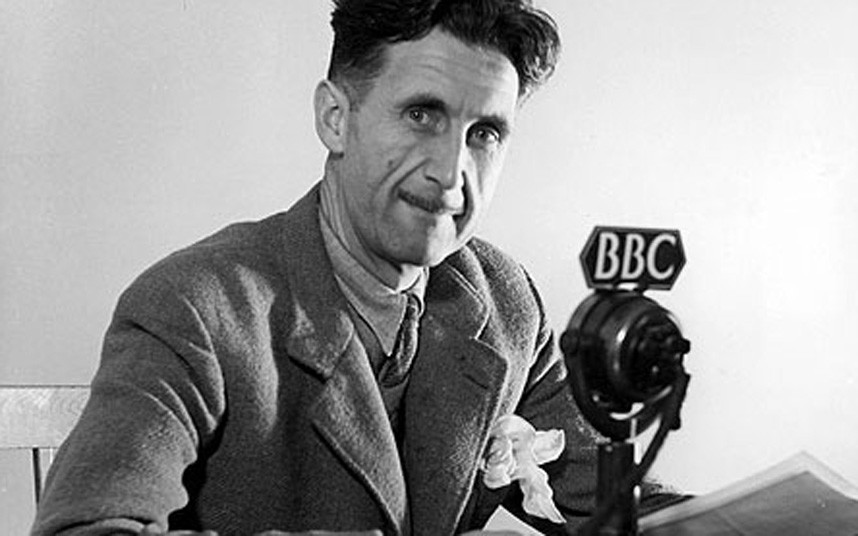
In a number of ways George Orwell’s themes complemented those of London and generally speaking belonged in the same political genre. There was in both writers the familiar juxtaposition of literature and journalism. Orwell’s novels had an understated political slant. But his polemical journalism was overtly explicit and stated when it explored many of the same themes and issues as London’s.
Down and Out in Paris and London, The Road to Wigan Pier, and in a more European geopolitical context, Homage to Catalonia. Like London, Orwell wanted to explore the mass poverty of the working classes both in England and abroad.
He left Burma in 1929 unable any longer to play the role of imperial overlord Rudyard Kipling style[3], setting out for Europe to experience poverty in both England and France. He almost starved to death in Paris, but eventually found work as a porter/dishwasher working in the kitchen basements of smart hotels, noting that the smart hotels had the filthiest basement kitchens.
The proletariat in the basement kitchens were, apparently, avenging themselves on the bourgeoisie in the smart salons above. Upon his return to England, he met conditions in both London and the North of England some of which Jack London had met and described three decades earlier.
Living in doss houses and tramping around London and the English home counties, perpetually hungry and looking for somewhere to sleep; and later travelling around the north of England during the 1930s during the height of the great depression and mass unemployment. [4] In between these episodes Orwell had enlisted in the Independent Labour Party (ILP) and the Spanish military wing of the two-and-a-half-international and fought in Spain until he was wounded.[5]
His first-hand experience of British imperialism in India led him to write some of his best essays, Shooting an Elephant published in 1936. He wrote:
In Moulmein in Lower Burma, I was hated by large numbers of people – the only time in my life I had been important enough for this to happen to me. I was sub-divisional police officer in the town and in an aimless petty kind of way anti-European feeling was very bitter … With one part of my mind I thought of the British Raj as an unbreakable tyranny, as something clamped down … upon the will of prostrate people; with another part I thought that the greatest joy in the world would be to drive a bayonet into a Buddhist Priest’s guts. Feelings like this are the normal by-products of imperialism.
This, of course, pretty much sums up the whole history of western imperialism – British, French, German, Portuguese, Spanish and currently the American version which has been particularly murderous. The relationship between the west and the south is one of exploitation, theft and industrial murder. Always was, always will be.
But returning to Orwell.
One day, what seemed like a rather trivial problem arose in Orwell’s neck of the woods; it involved an elephant. The animal had apparently gone berserk ravaging the local bazaar. The creature was a tame one which had had an attack of ‘must’. It had been chained up as all tame elephants are when their attack of must was due. But on the previous night it had broken its chain and escaped and was now wreaking havoc on the local populace and already killed one man. Nothing for it apparently than to shoot the delinquent animal. Orwell describes the standoff.
I halted on the road. As soon as I saw the Elephant, I knew with perfect certainty that I ought not to shoot him. It is a serious matter to shoot a working elephant – it is comparable to a huge and costly piece of machinery. And of course one ought not to do it if it was possibly avoidable. And at that distance peacefully eating the elephant look no more dangerous than a cow … I would watch him for a little while to make sure that he did not turn savage again, and then go home.
But by now an immense crowd of the locals had gathered to watch the fun. Word had got around among the villagers and he was now being watched by a growing crowd of increasing size and expectations. Watching him as a conjurer about to perform a trick. Orwell than realised that he had to shoot the animal after all as the crowd expected it.
I should have to shoot the elephant after all. I could feel their two-thousand wills pressing me forward irresistibly – And it was at this moment as I stood there with my rifle in my hands that I first grasped the hollowness, the futility of the white man’s Dominion in the East.
Here was I, the white man with his gun, standing in front of the unarmed native crowd – seemingly the leading actor of the piece; but in reality, I was only an absurd puppet pushed to and fro by the will of those yellow faces behind. I perceived in this that when the white man turns tyrant it is his own freedom he destroys. He becomes a sort of hollow, posing dummy, the conventionalized figure of the Sahib … it is the condition of his rule that he shall spend his life trying to impress the ‘natives’, and so in every crisis he has got to do what the natives expect of him.
He wears a mask and his face grows to fit it.
There were legal implications to this sordid little episode, however. As Orwell well-knew the killing of a working elephant might involve considerable costs. Who exactly was going to pay these costs? Well the death of the coolie who was trampled when the elephant went rogue provided Orwell with a get-out clause. He afterwards admitted that he was glad of the coolie’s death since this put him legally on safe legal ground, giving him a pretext for shooting the elephant. He writes:
I often wondered if any of the others grasped that I had done it solely to avoid looking like a fool. Shooting an Elephant – 1936
Turning to his political essays, Orwell’s concern with language was inseparable from his concern with politics; or rather, both grew from his belief in the existence of objective and discoverable truths.
Dishonesty in politics and dishonesty in language were the concealment of these truths.
When he criticised an inflated, highly abstract style it is the injury to truth and therefore to the cause of humanity. Officialdom’s language, such as that commonly used by bureaucracies in the US Department of Defence the Washington Post, or the International Monetary Fund, are intended to obfuscate rather embarrassing facts in order to make them more palatable.
The usual patter would go something like this:
The US air-force carried out surgical precision drone strikes at enemy positions which had been infiltrated by terrorist insurgents. The villages were evacuated, and the village populations were moved to a safer area controlled by US and government forces. Regrettably there was some collateral damage.
Orwell’s translation:
Defenceless villages are deliberately bombarded from the air, the inhabitants driven out of the countryside, their cattle machine-gunned, the huts set on fire with incendiary bullets: this is called pacification. Millions of peasants are robbed of their farms and sent trudging along the roads with no more than they can carry this is called transfer of population and rectification of frontiers. Politics and the English Language (1946)
In his later essay, Notes on Nationalism (first published in 1945) Orwell deepened this theme of political dishonesty further. This meant that the peddlers of falsehoods and lies have often come to believe in their own narrative. He writes that:
By ‘nationalism’ I mean first of all the habit of assuming that human beings can be classified like insects and that whole blocks of tens of millions of people can be confidently labelled ‘good’ or ‘bad’, but secondly, and this is much more important, I mean the habit of identifying oneself with a single nation or other unit, placing it beyond good or evil and recognising no other duty than that of advancing its interests.
This is, of course, a common enough occurrence. So long as it is merely applied to the more identifiable nationalist movements in Germany, Japan and other countries all this is obvious enough … but nationalism may be extended to include football teams, communism, pacifism, Zionism, Trotskyism and anti-semitism, or we can add a further layer.
Football matches between Glasgow Celtic and Glasgow Rangers are stormy and violent affairs and the rivalry stemming from the long history in the North of Ireland and the conflict between loyalists and nationalists. Rebel songs are openly flaunted containing references to the Irish Republican Army on one side and the Ulster Volunteer Force on the other.
In Argentina there exists a similar – but in this instance a class rivalry – between Boca Juniors from the wrong side of town and River Plate (generally referred to as Los Millionaires) and the right side of town. Thus Orwell was using nationalism in a very broad sense.
[The nationalist] sees history, especially contemporary history, as the endless rise and fall of great power units. And every event that happens seems a demonstration that his own side is on the up grade and some hated rival on the down grade … Interestingly, the nationalist does not go on the principle of simply ganging up on the strongest side. On the contrary, having picked his side he persuades himself that it is the strongest, and is able to stick to his belief even when the facts are overwhelmingly against him.
One of the chief characteristics of this particular phenomenon is the complete indifference to reality.
All nationalists have the power of not seeing resemblances between similar sets of facts … Actions are held to be good or bad not on their own merits but according to who does them, and there is also no kind of outrage – torture, the use of hostages, forced labour, mass deportations, imprisonment without trial, forgery, assassination, the bombing of civilians – which does not change its moral colour when it is committed by ‘our side’… The nationalist not only does not disapprove of atrocities committed by his own side, but he has a remarkable capacity for not even hearing about them.
In his later years, Orwell was to drift steadily to the right with his anti-communism becoming increasingly pronounced.
In 1949, shortly before he died, he prepared a list of notable writers and other persons he considered to be unsuitable as possible writers for the anti-communist counter-propaganda activities of the Information Research Department, a propaganda organisation of the British state. A copy of the list was published in The Guardian in 2002.
That was a very tense period.
Even the great pacifist Bertrand Russel was gung-ho for dropping the atomic bomb on Russia. This was not unusual. The same situation was to evolve in the US, where the leading members of the intellectual left, Irving Kristol and Sydney Hook, went over lock stock and barrel to the neo-cons and stayed there.
Further additions to this political/literary genre are Aldous Huxley’s Brave New World, H.G.Wells Time Machine and Arthur Koestler’s Darkness at Noon, which carried the same dystopian message
The above authors seemed to argue that the economic structure of these civilizations (if I may use this term) was irrelevant, what mattered was the political-ideological structure which was hierarchical and elitist. I don’t altogether agree with this, I would argue that there has occurred and will continue to occur is the fusion between the state sector and corporate sector, as Mussolini predicted.
This was the corporate state. In the present conjuncture, we seem to be at the beginning of the disintegration of the ancien regime. The Powers that be TPTB seem to be losing control and are moving from the methods of control they once use(d) in empire, and applying these repressive practises back to the home base. This is not a new departure, even Thucydides pointed to this practise in ancient Greece.
In general, non-democratic states have traditionally used violence against their own people, whereas imperial democratic states, Britain, France, Germany, the US turn(ed) their violence onto the hapless inhabitants of the global south – and still do. Democracy has apparently been for internal use only, but even here in the west increasingly less so.
One final point needs to be made here: the whole show cannot go on without an ongoing permanent war and war psychosis; war being a great and indispensable social integrator.
Whether or not these dystopias will come into being is a matter for speculation. Although the symptoms of civilizational decline are clearly recognisable and indeed accelerating. The imperial cycle of birth, growth, decline and disintegration have been the track records in the past and it seems probable that this process will continue into the future.
La lotta continua.
NOTES:-
[1] The late 19th and early 20th century in the United States was a period of intense class struggle and the founding of the Socialist Party of the United States led by the firebrand leader Eugene Debbs.
[2] Jack London – The Iron Heel – 1907
[3]) Having been born in India into an Anglo- Indian family – Eric Blair – aka George Orwell decided to follow family tradition and, in 1922, went to Burma as assistant district superintendent in the Indian Imperial Police. Two very important essays were written during this time. A Hanging and Shooting an Elephant.
[4] Down and Out in Paris and London – GO – First published in 1933. The Road to Wigan Pier – GO – 1937
[5] The Two and a Half International as it was called was a group of left-wing parties the ILP Britain, the SAP (Germany) and POUM (Spain) sandwiched between the Social-Democratic, Second International, and the Communist Third International (The Comintern). The POUM – (Partie Obrero Unficacion Marxista – Workers Party of Marxist Unity) had a military wing which fought on the Aragon Front during the Spanish civil war 1936-39. Orwell joined the POUM but was wounded by a bullet which hit him in the neck and nearly killed him. The POUM was outlawed by the Communists as a ‘Troskyist’ party – which of course was a complete lie but served to further certain geopolitical interests. (That’s another essay) and Orwell got out of Spain with his wife just before the secret police were about to arrest him.
Thanks for reading...
You can help us keep doing what we do. Every little helps and is hugely appreciated.




For other ways to donate, including direct-transfer bank details click HERE.
 wpDiscuz