What Autism Is
Sinéad Murphy
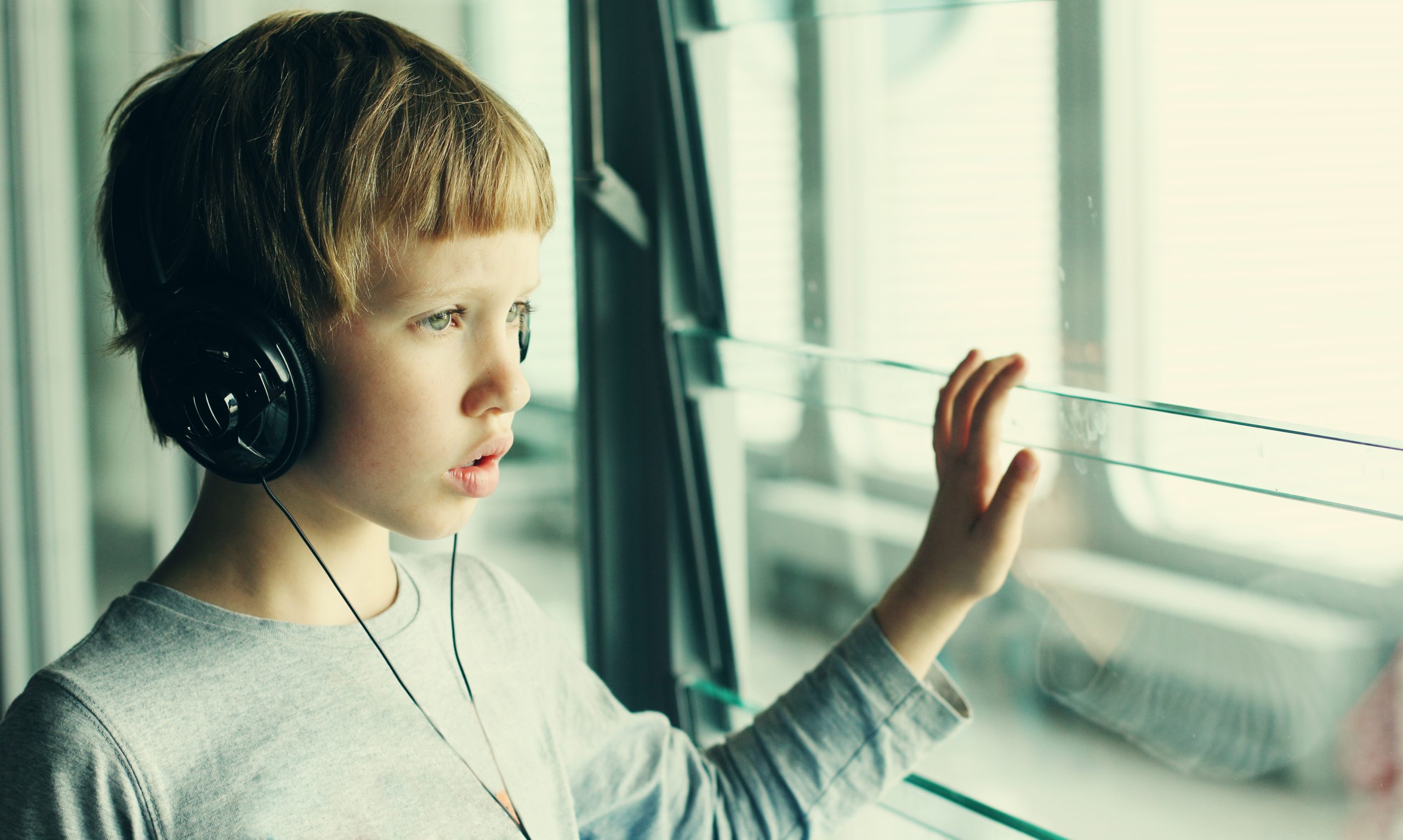
Imagine that we do not know what blindness is. Imagine that we describe people as blind very often, but that we do not know what blindness is. Imagine that blindness is increasing so that, in some districts, three in ten children are diagnosed as blind. But that we do not know what blindness is.
Imagine that we can name many symptoms of blindness. Disinclination to shake hands. Tendency to fall over. Timidity of posture. Slowness of gait. But that we do not know what blindness is.
Imagine that there is posited a spectrum of blindness, including those who sometimes trip on the rug and those who must cling to another person before taking a single step. But that it is not known what blindness is.
Imagine that it is said that blindness may hide itself and affects many people who walk about with the appearance of confidence and respond to facial expression with seeming assurance. But that it is not known what blindness is.
Imagine that the numbers of those who retrospectively interpret their own lives and the lives of others as having been shaped by undiagnosed blindness increase and increase, so rampantly that we are all inclined to understand ourselves and others as at least a little blind. But that we do not know what blindness is.
Imagine that the attribution of blindness so gathers pace that blindness acquires the atmosphere of a natural human condition, a mere difference. But that we do not know what blindness is.
Imagine that strides are made in determining possible causes of blindness – environmental toxins, genetic predisposition, style of upbringing, experience of trauma. But that it is not known what blindness is.
Meanwhile, a small cohort with a blindness diagnosis cleave to the walls of their home, their room, unresponsive to the myriad strategies employed for inclusion of the blind – a small cohort whose tragedy is concealed in the general clamour for blindness; a pitiable few, wrecked and solitary in a darkness wholly overlooked. Because we do not know what blindness is.
The scenario would be implausible were it not real.
We describe people as autistic very often. Autism is increasing; in parts of London, three in ten children are diagnosed with the condition. Almost everyone can name some symptoms of autism: lack of eye contact, tendency to sniff at things, liking for routine, propensity for distress. Autism is understood as a spectrum condition, affecting celebrity achievers and those who cannot speak, dress themselves or use the toilet.
Autism is said to mask, hiding itself beneath the simulation of functionality. Autism is advertised as a natural divergence, so ubiquitous as to explain aspects of the lives of us all. Autism is attributed to a range of causes, from childhood vaccination to the impersonal routines of metropolitan societies.
Yet we do not know what autism is.
Meanwhile, a not-so-small cohort of young people spin and flap beyond the bounds of sympathy and significance, unable to access the consolations of human life, unable to get in. A not-so-small cohort whose tragedy is obscured by the general enthusiasm for auties; a strange race whose unique foresakeness has no words to speak its name. Because we do not know what autism is.
This cohort of young people is growing and not slowly, relatively unnoticed in the melee of autism-mania except by those charged with the heavy task of supporting it, a task made infinitely more demoralising by widespread innocence about what autism is.
It is beyond time that we try to dispel this innocence.
Why is my 11-year-old son indifferent to the world and those in it, though his mind is alive and his eyes are wide? Why is he able to double large numbers but unable to grasp that subtracting from a number makes it smaller? Why can he learn Wordsworth’s ‘The Daffodils’ by heart while being unable to understand the word ‘it’? Why can he not call my attention? Why does he shout ‘Mom!’ very loudly, though I am right beside him and though he does not need or want anything and though his name for me is not ‘Mom’? Why can he move the pieces on a draughts board in the correct way without ever aiming to win the game or knowing if he loses it? Why can he not answer the question ‘What is your name?’ but only the question ‘Joseph, what is your name?’ Why can he repeat the morning traffic report but cannot understand that today is Wednesday? Why is he overwhelmed at any intimation that people’s lives end but unable to carefully cross the road? Why does he insist upon doing things that he does not like to do? Why can he recite the alphabet backwards, but cannot grasp the story of Jack and Jill going up a hill. Why does he remember the names of everyone we meet without ever wishing to join their fun?
What underlies these varied and curious manifestations?
If blind people cannot see, what is it that autistic people cannot do?
*
There is an answer to this question that has had some influence. It was proposed in 1985 by the psychologist Simon Baron-Cohen.
Baron-Cohen conducted an experiment to establish what autism is and concluded from it that autism is the lack of a theory of other minds.
If blind people cannot see physical things, autistic people, according to Baron-Cohen, cannot see mental things. They do not understand what other people expect or believe, what they want, what they think, what they feel.
Baron-Cohen’s experiment was a simple one. A group of four-year-olds, some with an autism diagnosis and some without, was prompted to attend to a scene in which there were two dolls, two baskets and one marble. The marble was placed in basket one. The first doll left the scene. The marble was moved from basket one to basket two. The first doll returned to the scene. The children were asked to predict which basket the first doll would go to to retrieve the marble.
The non-autistic four-year-olds answered that the first doll would go to basket one to retrieve the marble. The autistic four-year-olds answered that the first doll would go to basket two to retrieve the marble.
The autistic four-year-olds did not understand that the first doll would expect the marble to still be in basket one.
Baron-Cohen concluded that children with autism do not have a theory of other minds. They are, as he put it, ‘mind-blind.’
But Baron-Cohen’s experiment was autism-blind.
Four-year-old children with autism are certainly unable to develop a theory about what other people expect.
But this is because four-year-old children with autism are unable to grasp expectation.
And this is because four-year-old children with autism are unable to experience expectation.
Never mind that four-year-old children with autism cannot tell what other people expect. Four-year-old children with autism cannot themselves expect anything. They cannot be oriented towards a future possibility, no matter how basic that possibility is.
Autistic people do not lack a theory of other minds. Or rather, they do lack a theory of other minds but only because they lack something infinitely more fundamental.
Autistic people lack affinity with other people – the affinity which the rest of us cannot even dial down, the affinity from which arises not only the possibility of developing theories about our experiences of the world and those in it but the possibility of having experiences of the world and those in it.
*
The philosopher Sartre described a scenario to reveal the nature of human experience:
I am listening at the door to a conversation unfolding on the other side. Eavesdropping. There is a creak on the stairs. All at once, my experience is changed. What had been curious absorbtion becomes shameful awareness of my stooping posture, my covert operation.
The presence of another person – not even their presence, the indication of their possible presence – transforms my experience.
So utterly transforms my experience that my experience is revealed as not really my experience at all but wholly susceptible to the perspectives of other people, whether those other people are in the flesh, in the memory, in the anticipation, woven into the structures of institutions or embedded in the significance of everyday objects – if, while eavesdropping, my eyes happen upon my mother’s handbag, my curiosity might equally turn to shame.
This is what Sartre discovered: that I am not master of my experiences, that my experiences are always collaborative. That this is made salient only at moments of reversal does not gainsay its truth – before the creak on the stairs, my curiosity, and my careful concealment of my curiosity, and every other component of my experience, derived their meaning from a lifetime of being with other people.
Sartre was not overly pleased at his discovery. It seemed to destroy hopes for individual autonomy. How can I be said to be truly free if I am always implicitly in the presence of and affected by other people?
It is why Sartre wrote the infamous line, ‘Hell is other people.’
Sartre was surely wrong about that. After all, it is because our experiences are infused with the perspectives of other people that human cultures arise and take hold – ways of doing things, of thinking things, of feeling things, of seeing things. And it is because human cultures arise and take hold that our lives are given shape and have meaning.
The real hell Sartre could not have known about. It is comprised of immunity to other people and consequent imperviousness to culture, and therefore to meaning.
This hell is what autism is: blockage to the perspectives of other people so great that the conditions for human experience are not there.
My Joseph cannot feel curious. He cannot feel shame. He cannot be shy. He cannot be confident. He cannot feel sympathy. He cannot be resentful. He cannot tell the truth. He cannot tell a lie.
Because my Joseph is unable to be with other people – with, in the philosophical sense. His experiences, whatever they may be, are not shared achievements, are not woven through with the perspectives of other people.
If blind people cannot see, autistic people cannot share – incapable of the shared experiences that constitute and perpetuate human cultures, they are excluded from the human world. The most profound truncation possible, and literally unimaginable.
*
Baron-Cohen judged that his four-year-old children with autism were unable to see what other people expect.
He overlooked that his four-year-old children with autism had already spent one year, two years, perhaps four years, bereft of that attunement to the people around them from which infants and young children effortlessly derive an appreciation of the patterns of life and the predictability of events and so grow capable of expectation.
He overlooked that expectation is an experience to which four-year-olds with autism have no access, which they are neither capable of themselves nor, of course, able to attribute to others.
But there is so more he must have overlooked.
Presumably, Baron-Cohen’s four-year-olds filed into the experiment room before the experiment began. Autistic four-year-olds cannot file anywhere. The momentum and orientation of other people is something by which they cannot be affected.
Presumably, Baron-Cohen’s four-year-olds sat on chairs or on the floor waiting for the experiment to begin. Autistic four-year-olds cannot sit on chairs or on the floor waiting for anything. They are without the attunement that prompts children to do what people around them are doing or asking them to do, and have no receptors for the sense of purpose that gives meaning to waiting.
Presumably, Baron-Cohen’s four-year-olds were issued with simple instructions. Autistic four-year-olds cannot hear instructions. They do not know that they are being spoken to. They do not know what it is to be spoken to. The eye direction of other people, other people’s tone and gesture, are not available to them, do not touch them at all.
‘Now, children, shortly we will…’ Autistic four-year-olds cannot understand any but the most rudimentary words, spoken by someone familiar in a routine context. They may pronounce words, they may repeat phrases, but they cannot enter into reciprocal communication. They do not acquire language as a mother tongue, from the inside and through association with the people among whom they live. They will eventually acquire language from the outside, haltingly, partially, and without the usual motivations.
And then there were Baron-Cohen’s dolls. Autistic four-year-olds do not see dolls and what they do, any more than they see people and what they do. If Baron-Cohen was wearing a watch whose face caught the sun, the autistic four-year-olds were looking at that. Or at something else. Or at nothing.
Baron-Cohen’s conclusion, that autistic people do not have a theory of other minds, is like concluding of blind people that they do not see the sun. As if autistic people can understand everything but the perspectives of other people; as if blind people can see everything but the light. It presents as a limited restriction what is rather a wholesale exclusion.
Autistic people are not blind to other minds. They are immune to other people, and therefore to all those meanings that can only be grasped in concert with other people.
*
What this is like, this immunity to other people, is confounding indeed. About as confounding as what it is be like to be a bat.
Still, it behoves us to reach for an analogy. Something to which it might be akin. Without that, we can neither properly support young people with autism nor fully appreciate their hell.
As a child, I used to receive a monthly children’s magazine. On the back cover was always the same puzzle. A photograph of an everyday object, taken so close-up that the object was unrecognizable. The challenge was to establish what the object might be without the usual clues of outline or context.
I have often thought of this monthly puzzle as I have negotiated the world with my son.
When Joseph was a four-year-old with autism, sometimes two policemen mounted on horses would make their way down our quiet street. A really very striking event – the horses were stunning with fulsome manes and gleaming tackle, and the policemen imposing from their height.
As the horses passed our garden gate, I would try to train Joseph’s attention towards them. Sometimes, he would turn in their direction. But his eyes never widened or lit up.
Was Joseph uninterested in the horses? Or did Joseph not see the horses?
Were the horses, for Joseph, like the photographs on the cover of my children’s magazine? Was there no outline, no context, to make them meaningful?
From where does a four-year-old distil the ability to identify two horses as the relevant object on a quiet street, and not the shine of their saddle buckles, or the brown of their groomed coats, or the blue of the sky beyond, or the sound of a motorbike in the distance, or the memory of yesterday’s swim, or a word from some radio advertisement?
From where do we derive our feel for the meaningful shapes and sounds of our world?
What is it that frames our experiences so that they are shared by those around us, so that we are all in one moment captivated by the horses?
It is the fact – the most basic existential fact – that our very perceptions are already shared achievements, cut through with the perspectives of other people, made meaningful in concert with those around.
Everything that gives to the world its feel comes to us by being with others. So naturally, that we need not even exclaim ‘Look!’ for everyone about us to stare in wonder at a pair of horses on a city street.
So naturally, save to a four-year-old with autism who does not see the horses though they are right before him in their living, breathing enormity and though all about him marvel at their might.
We experience the world within the context opened up by our receptivity to the thoughts and feelings of other people. Autistic immunity to the thoughts and feelings of other people means lack of any context within which experience is possible.
Without the capacity for experience, autistic people have only bits and pieces of objects and events. Too close up for comfort. Without connections. Without dimensions. Fragments of the bones of the world, and no flesh to make them vibrant. Paltry buoys with which to keep from going under.
Joseph knows the date of his birthday. He knows that he will receive presents on this date. He knows that there will be a cake with candles. He would be a little upset if there were no presents or no cake but only because there always have been presents and cake. He cannot look forward to his birthday. He cannot feel special on his birthday. He cannot remember during his birthday that it is his birthday. He is as interested in his brother’s birthday and his neighbour’s birthday as he is in his own.
Joseph does not get birthday. He has the bones of it. But he has not the flesh of it.
The rest of us may dislike birthdays, we may eschew all birthday celebrations. But we cannot be without the meaning of birthday. We are helplessly captured by the very significance of which autistic people are helplessly free.
And as for birthday, so with everything. Everything that gives to life its feel. Fact and fiction, winning and losing, animate and inanimate, human and inhuman, past and future, man and woman, particular and general: all of the content that we use to have experiences, all the shapes of things that we learn without being told.
Joseph must negotiate life without this content, without the horizon in which life is brought to life. He has only the cold facts of some things. An uncertain and slowly amassed stockpile, from which he must draw to fashion experiences whose frailness we can never know.
Unaffected by the perspectives of other people, Joseph cannot see things in the round. And so he is locked out of the world of those about him, unable to be drawn away from an immediacy that makes no sense. Excluded from everything convivial, he is like the little match girl out in Winter’s cold.
Except that the little match girl wanted to get in, yearned to get in. Joseph cannot even see that there is something to get in to. He does not strain to share what we share. He does not yearn for our world.
A blessing, perhaps. Such yearning would break your heart. But the strangeness of being without it is like nothing on earth.
To reach this strangeness and keep hold of this strangeness and draw this strangeness just a little closer will take you too from the world and never really let you back.
*
People remark of Joseph that he is in his own world.
That is not so. You cannot have your own world.
A world is formed with others, built of the common sense that shapes the experiences whose meaning relies upon the culture in which they are given.
A world is necessarily shared. Joseph is not in a world.
Joseph can certainly learn. He has already learnt. But not because a world has begun to form. Not because shared experience dawns.
Autistic people learn on autistic terms.
Objects around become recognizable if they are presented again and again. And they can be tagged, labelled, as in early language-learning books. But always in the particular. ‘Mama,’ not mother. ‘Dinner,’ not food. ‘Dog,’ not animal.
With enough labelling of its objects and events, life acquires the comfort of familiarity. Though the unassailable particularity makes the comfort a little thin. Distress is never far away.
More can be achieved by instruction in sameness. It is why repetition is so consoling. Breakfast today is like breakfast yesterday. This thing that we know the label for is like that thing that we know the label for. Breakfast is like lunch. Lunch is like dinner. Same.
Difference too can be taught, though it is not as salient.
And there is joy in sameness and difference. It is enlivening to draw lines between tagged objects. But deadening to have the line interrupted or disputed. Breakfast in the car en route to the ferry. Not like breakfast at all. Enough to bring down your world-of-cards.
That one tagged event follows another can be taught. First this, then that. To stabilise events sufficiently is a task. Grounds for distress are extended.
That one tagged event causes another can be attempted. Joseph and I are not there yet. Why umbrella? Because raining. Why raining? Because umbrella.
And false friends abound, and multiply with every advance. The computer is not working. The toaster is not working. The car is not working. The shower is not working…
…Mama is not working today. Confusion. Upset. Impossible to explain away. Your careless mistake will recede but only after a week, or a month.
Learning from the outside in is not easy.
Yet, even being with other people can be approached.
Joseph cannot call me. He cannot say ‘Mama!’ when he needs or wants something. A few times, he has been sick in his bed at night. In the morning, I have found him crusted with vomit. On seeing me, he has tagged the situation as ‘mistake.’ But he was not able to call me.
Calling out to someone relies upon the philosophical being-with that autism is without. The person is present to you though in another room. Out of sight but not out of you. You raise your voice to reach them, because their distance from you is in you. Their relation to you, what they can do for you, is in you. You don’t have to have a theory. Your experience is already formed by it and for it. ‘Mama!’
But you can teach someone to call you, from the outside. If you’re lucky.
About six months ago, Joseph shouted ‘Mom!’ for the first time.
Joseph’s tag for me is not ‘Mom.’ He was not calling me. He was doing what he does without cease, giving voice to a fragment of sound from his stockpile. Sometimes the line from a song. Sometimes an excerpt from a traffic report. Sometimes the sound of the washing machine’s spin cycle.
This time, from Joseph’s stockpile, his brother’s call for my attention. ‘Mom!’
An opportunity.
I rushed into the room. Right up to him. ‘Yes, Joseph? Yes? What is it? What does Joseph want?’
No answer, of course. But it was a start.
Having begun to plunder ‘Mom!’ from his stock of sounds, Joseph selected it again and again over the next days and weeks. Every time, I responded as if he had called me. ‘Yes Joseph? Is Joseph ok? What does Joseph want?’
Months later, we are embedding the connection. If this, then that. If ‘Mom!’ then Mama is here.
Joseph can now call ‘Mom!’ if he wants something. Not always. Not if he really needs something. He would still be crusted in vomit. And not using his name for me. And not with any variation of tone. If I am next to him, he shouts.
But a win nonetheless. Assembly between us of a small simulation of being-with, falteringly, excruciatingly slowly, and from the outside in.
*
Many will not recognise their child with a diagnosis of autism in this account of what autism is.
The number of children who receive a diagnosis of autism far exceeds the number of children who are like Joseph.
Indeed, ‘autistic’ is not even a good word for children like Joseph, suggesting as it does a kind of confinement to one’s self.
Joseph cannot use the word ‘I.’ He calls himself ‘Joseph.’ If I ask ‘Joseph? Joseph? Where’s Joseph?,’ he puts his finger against his chest and says ‘This one.’ Another of the bits and pieces on his stockpile. With no special status at all.
Our sense of self is as shared an achievement as our sense of everything else. It is being with other people that gives me my self.
Joseph is as unable to be selfish as he is unable to be selfless. He cannot act in his own interest any more than he can act in the interest of others.
But my account of Joseph’s condition does have relevance for all children with a diagnosis of autism, even those who are not like Joseph to begin with.
Because once the diagnosis of autism is given, strategies are put in place that will bring to the outside children who, whatever their troubles, are by their nature inside.
Ear defenders, chew toys, fidget breaks, safe spaces, electronic devices, chaperones and exemptions draw children with a diagnosis of autism away from access to other people and the world, initiating them into an outsideness that is not their native condition.
Unless we grasp what autism is at its core, we will continue to miss this separate, closely related phenomenon, this second-order autism of institutional manufacture from which vast and growing numbers of children now suffer.
A few weeks ago, Joseph and I visited a local school. We were there with fellow volunteers to receive thank-yous from the children we had hosted at our garden that year.
We went from class to class, accepting cards that the children had made, listening to their garden memories, being clapped and feted.
In one class of eight-year-olds, I recognised a little boy from the street we used to live on.
During the last couple of years, I had come to feel for this boy. Though I had never been close to him or his family, he would rush up to me at the garden and tell me that he missed me and talk to me of news from the old street. Once, at a Christmas concert in the school, a teacher asked if I would go into the corridor because this boy had seen me and wanted to talk to me. When I came out, he flung his arms around me as if his life depended on it, as if he needed to be saved. My only thought was ‘Hello? Someone? Archie’s not doing so well.’ The teacher had difficulty in prising him away.
Since then, I had seen Archie at the garden once or twice. He had had a Special Educational Needs Assistant by his side, who marshalled him around the margins of goings-on.
And now here he was again, on the day of our visit to the school. Seated alongside his classmates. With earphones. And an Ipad. Festivities going on all about him but without him.
Does Archie have a diagnosis of autism? I don’t know. But I guess that he does. And that it is drawing him away from us, dragging him out of life.
This little boy, born for the inside, who had seemed to have an inkling of his fate, who had clung as best he could to random people while he could: unseeing now; unhearing; screened-off; outside.
Not because he has autism. Because he has a diagnosis of autism.

Sinéad Murphy is author of Effective History (2010), The Art Kettle (2012), and Zombie University (2017), and co-editor of Pandemic Response and the Cost of Lockdowns (2022).
Thanks for reading...
You can help us keep doing what we do. Every little helps and is hugely appreciated.




For other ways to donate, including direct-transfer bank details click HERE.



Does Sinéad Murphy have a substack?
Autist shtick. Autist ick.
Sinéad thank you for sharing this brought tears to my eyes.
Question for the audience, Does the parasiteclass children get autism?
I would say this could happen to all children. But, if you would define the parasiteclass?
Labour and Commies would say the Kulaks, Other indignant groups would the rich, a third group would say the Oligarchs, fourth group would say the usury bankers, a.s.o.
There’s an amazing section in Philip K. Dick’s ‘Martian Time-Slip’ with autistic children being taught by an A.I. robot teacher. This was written in…. 1964! Dick does not present it as a good thing.
To see autism thru rose-colored glasses is to deny the tremendous crime done to its victims by a billionaire subclass whose motive is to disable or kill all opposition to its rule.
To see their crimes as somehow “poetic” is cowardice.
Autism is a limited way of experiencing life. It isn’t a limited ability of the person per se, but a derivative of the toxic condition of his body. It’s not only about vaxx; it starts with the mother’s health, the toxic burden(mainly heavy metals) which she sadly passes to her child, it continues with vaxx, and many other toxic compounds found in food, chemicals and so on. Once the child is unfortunate enough to accumulate those toxic compound which his body cann’t metabolise and escrete, in delicate parts of the body such as the nervous system, troubles began. To reverse it the parent needs to implement a very healthy(toxic free) diet and everything that sorrounds the child and then some detoxing procedures which are not easy to do in this kind of situation. It’s hard but if the parents tries to give the autism some kind of meaning outside that of a toxic condition it has lost the battle from the beginning.
Would you regard grown people pretending to eat human flesh and blood as mentally ill?
You write like that yet, I think your mental for thinking your son is different.
to even fall for the whitecoats priest class medical hexing.
Joseph is more switched on, the most of the people on this forum.
did you name him Joseph because of Jesus?
Powerful and insightful…. I wonder, though, whether a person who dwells in the world described is aware or experiencing any kind or torment or hell.
I appreciate your writing, allowing us to peer ever so lightly into your and Joseph’s world.
Thank you
Autism is a profound brain disorder. In California, where parents may NOT opt out of vax schedule, one in 12 boys is autistic by age 4.
”On the spectrum” seems fashionable.
being retarded sounds great,
Anyone who does not fit into this society is considered insane and given
a DSM diagnoses.
Such a truth worthy source.
The Diagnostic and Statistical Manual of Mental Illnesses is the latest edition of the American Psychiatric Association’s professional reference book on mental health and brain-related conditions.
https://www.psychiatry.org/File%20Library/Psychiatrists/Practice/DSM/APA_DSM-5-Contents.pdf
Autism or not, the boy was in need of love. As we all are. It is THAT easy man, so easy!
The more deranged and perverted society becomes the more ordinary healthy people will be labelled as disordered.
Anyone who does not want to be cuddled or have cheap shitting clothes rubbing there bodies or poison foods or led lights or conform to the schoolling system or parenting system of control
must be mentally ill.
as your the parents – maybe it is you.
it is always blamed on chemicals or vaccines 💤
Maybe the child is normal and your the fucked up one as you want them to be normal according to the religion + state mindcontrol on being there sickness called normal.
That is something no one person on this collectivist mind set of a site can even fathom as they are all clones themselves.
leave them children allow and let them be FFS
You want answers to make your self feel better as your child (which like your pets is a control mechanism does not jump or do as you want or follows your instruction or listens when you speak)
who control freak fruit cake, it the parents.
I dont buy that without hard evidence.
The reason is that Labour’s/Democrat’s political ideological background is communism with a human face called Socialism.
And the Socialism that Labour/Democrats sell is change from family sustain to State sustain.
Away from power in the family on to power of the state. How do you do that? You double the taxation and thereby castrate men’s ability to sustain his family.
To compensate for the loss of income women were send out on the factories working 9 hours/day and pedagogues was educated to sell the State to the children left alone in the empty home.
You obviously have not lived it.
Sinead’s sentence…
“Unless we grasp what autism is at its core, we will continue to miss this separate, closely related phenomenon, this second-order autism of institutional manufacture from which vast and growing numbers of children now suffer.”
…says it all. As human beings who have yet to fully utilize anywhere near the capacity of our brains, we must, of necessity, categorise and contain our experiences and understanding. The mistake we make (again of necessity because of our limited ability) is then generalising. And so we ‘manufacture, institutionally’ parameters that ought not to be applied across the board… in order to ‘cope’.
To err is human, to forgive, divine?
The Real Rain Man (below video… thanks Vagabard) illustrates the potential of an unfetterd brain but at the same time the chaos of a brain trying to adjust to the lack of a corpus collosum which seems to be the necessary reins of our brain’s potential.
Perhaps the differences in actual folk with real autism has to do with the degree to which that neurological ‘chaos’ ensues and/or degree to which the corpus callosum is atrophied?
For me cell/mobile/tablets/laptops, are triggers – to changing healthy young minds into confused and frightened minds – kids spend far too much time on these devices, and they must surely have some sort of detrimental affect on them in a mental capacity even if its only likes and dislikes online, but I think it goes much deeper than that.
I don’t recall this epidemic of mental health problems with kids and young adults, when I was growing up, when being outside and actually playing with other kids in the flesh – was the only game in town.
This is a very, very interesting article. Thank you.
Many thanks for these very interesting information!
Autism is a neurological disorder caused by metals in the brain. Vaccines ingredients contain aluminium that can cross the blood brain barrier and children who have died with autism have been shown to have up to 30x the normal aluminium toxin in the brain by autopsy.
The bstrds know this and dont give a shit.
I hear Andrew Wakefield is coming to a a UK COLUMN event in York on the 18th October and is the first speaker. So time to get off our arses and go and support him.
Andrew Wakefield LOL
To you and Erik the dumb:
Andrew Wakefield was set up by the Murdoch press using his lap dog Brian Deere (Times). Rupert Murdoch had pharma interests in Australia and his son James was a leading director at GSK. Crispin Davis used his influence at BMJ using his position at Reid Elsevier writing a hit piece. The Fkn judge was Crispin’s brother Nigel Davis another crooked arsehole. The governments position was directed by arch Zionist Evan (Dr Death) Harris.
All the parents were 100% behind Wakefield and all other friends and partners exonerated. The criminal murdering bstrds only needed 1 head to roll and it was Andrew’s.
Wakefields name is rrolled out time and again by the likes of the BBC and you dumb fks use Wiki as your source. LO fkn L.
What do you know you pair of muppets.
I think they may be the muppets who penned the Wikiwank profile
I do just use wiki as any source. It refer to quite comprehensive investigation of all public institutions and court ruling of the said.
We third party cant go deep into this but must rely on divers info and gut feeling.
My conclusion is that it seems his documentation is not waterproof and then he can cause more harm than good to the said.
.
Notwithstanding that I agree in his stand about vaccination, but research and scientific papers must not be manipulated even if it is a good case.
But we will have a new chance through UKcolumn so let us see, and meet again…some sunny day.
There will be blue birds over, the white cliffs of Dover.
Andrew Wakefield – Wikipedia . What they write in wiki here is hard and heavy evidence Rickypoppy. Well not saying as a blind hen he impossibly could not have found a goldcorn.
Andrew Wakefield who married Eleanor the body Macpherson.
(like something like that happens to normies)
Thee Andrew Wakefield who told everyone in 2015 to go for vote Trump as Trump will stops the vaccines. 😂
Andrew Wakefield is RFK jr for the retards,
UKC is the bbc of alt media.
throw in Andrew Bridgen the u.k version of RfKjr who gives faith to the idiots who believe there solution is either from a book (Church or state) or some onlne hero sold to you via the telescreens of alt media lies.
When our now forty year old son first started high school he used to stand in the quadrangle by himself, eating his lunch and looking into the middle distance.
We had no idea that was happening until another Mother saw him and informed us. Eventually, another boy befriended him and he managed to finish his high school education without too many dramas.
We had always assumed he was just a shy boy.
Our son has Aspergers, a higher functioning form of autism. Something we had never heard of until 2005.
Long story short: He found a partner, got married, and two years ago stumbled into a well paid job because a perceptive person recognised his good work ethic and ability to be highly focussed.
Our son still struggles in most social situations but has managed to persevere. So far.
We Love him dearly.
So many children are ill, so many people are ill. We are under attack daily by chemical poisons, electromagnetic radiation, pharma products, stress, and a host of negative energy. It’s hard to keep healthy. Our water and food have been contaminated with toxic shite. My family also has Health problems, and I could kick myself for allowing poisonous vaccines to be pumped into them when they were no more than babies.
Keep your head up, mate, we are only here for a short time before we are off on our next adventure.
The evils you list, which are indeed beseiging western white-majority nations on a daily basis, are not our attackers, merely their weapons. Why hide the former with the latter?
Thanks Ricky.
Love sustains us.
Life gives us little miracles every day.
That’s a nice story, Johnny, and I’m glad your Son has excelled in life.
But not every Autistic person gets a free pass. Many are ostracised, bullied, beaten and take their own lives. I hope the 21st century is a new dawn for Autistic people, I doubt it though.
He doesn’t ‘excel’, far from it. He just copes with the every day encounters the rest of us take for granted.
So no ‘free pass’, just a day to day series of hurdle jumps.
He is a brave man.
After much research and discussion with ‘experts’ in the field, l am fully aware that he is one of the more fortunate ones.
That is so encouraging. Our son is 38 – never had a girlfriend. We keep hoping someone is out there for him. He can live alone thank goodness. But he is not a people person.
Maybe it’s a joke or something. But I think I read somewhere that:
There is something male about autism.
And there is something female about borderline.
And something genius about Obsessive Compulsive.
What about us in the middle of all this?
It will eventually be proven beyond reasonable doubt that the amount of aluminum as an adjuvant across the childhood vaccine schedule is the reason so many children today suffer from autism. Aluminum injected goes straight to the brain. My grandchildren were given 9 vaccines before the age of 3 months and the boy is autistic. For some reason boys are more affected than girls. I took the list of the 9 vaccines and looked up the ingredients for each one. Mercury had already been banned at this point. The amount though of aluminum across the 9 vaccines was off the charts.
So you suffer today from autism?
Erik you are a prick.
“I took all the 9 vaccines on the list, and hereafter I looked at the ingredients”.
It cant be said more clearly. Just asking.
Sarah, the first stories that mercury had been banned were false; in fact, the law merely affected the drug companies” mandate to DISCLOSE the mercury in the vaxxes. They simply no longer had to tell you about the mercury content.
Is GPT5 ~autistic?
“Imagine that three in ten AI ChatGTP programmes are diagnosed as autistic. But that we do not know what autistic is.
Imagine that we can name many symptoms of autistic AI programmes. Disinclination to shake hands. Tendency to fall over. Timidity of posture. Slowness of gait. But that we do not know what autistic AI programmes is.”
Imagine that!
bless you, bless you and your precious son who is so lucky, lucky despite the enormous challenges he faces, luckier by far than many many children who might be called normal but who will have to go through life never knowing that immense love which only an extraordinary mother like you can give
The article and all comments so far are beside the point,
https://drchristopherexley.substack.com/,
“Aluminium and Autism: UnequivocalHow else do we explain the science”
Reminds me of the people who were horrified that anyone would challenge the Covid Narrative TM by saying things like: People have died of Covid! How dare you! You should ostracized from society…
What is your comment supposed to mean, WHAT reminds you of the people, are you alleging that Dr Exley’s work on aluminium as cause of autism does not exist?
There are just too many variables in this equation; mercury, aluminium, vaccines, parental home, anti-conceptions, environment, family genetic, m.m.
As the Author write, ‘we dont know’.
I am not talking about aluminum, but how we are supposed to be sad (the article above) about how misunderstood this poor kid with autism is. Rather than be angry that several generation of kids have been poisoned with neurotoxins; why isn’t this parent devastated by what they did (the road to hell is paved with good intentions) to their kid? Instead they wax poetic about the injustices of people’s perceptions…
Baron Cohen got it wrong. He completely missed how autism is existential and cannot be defined in some all encompassing way that explains everything. If he, or anyone else wants to understand what it is to be autistic or to be blind or any other experiential existence by some firm definition, then they can reasonably expect to also be pigeon holed and diminished. Autists to not believe they can read minds. We do not see non-verbal communication as absolute truth and do not for one moment fully understand just how ego driven are those that do. We just accept other people think they have some hidden wisdom when in fact all they have is the desire to protect their own self perceived status.
How do you know?
A Teapot is a Teapot and have their own inner life.
Nobody here have humour. This my comment was the comment of the year. All related to the article and everything.
How can a mom be so close to her son yet so far away ?
Dear Sinead, thank you for sharing your experience and perspective. Your discussion of autism is refreshingly frank and honest. Your writing is poetic.
Have you ever considered Spelling to Communicate, Rapid Prompting Method or any similar methodology with would train Joseph’s body to communicate by pointing to letters / typing?
You describe the outward manifestation of Joseph’s condition succinctly but may I suggest that there is indeed a significant aspect of his autism that (even) you, like most, don’t understand?
Joseph isn’t unaware, unconcerned, unemotional, unconnected. His challenge isn’t a lack of empathy, intellectual disability or language deficiency; it is a brain-body disconnect, a physical impairment which disturbs the flow of information between the various elements of his neuro-sensory-motor system. Put simply; he’s in there but he can’t operate his body for purposeful motor function, particularly for novel situations. He has no shortage of words; he just can’t speak them.
There is a way to coach him to develop the physical motor function required to spell / type as a means of communication, to train his body to reliably express what his mind already knows.
It certainly won’t ‘fix’ his autism or guarantee you both a simple, ‘normal’ life but it will shift the entire paradigm of your shared experience. With his words, he will blow your mind.
Please consider it.
Kind regards,
Mark Dunne
One of my dear friends has a level 3 autistic boy
He accesses information that we are unable to.
He is telepathic, talks to what my friend ends up realising is recently departed loved ones and he foresees things before they take place.
He recently helped his friends parents find their missing boy who had wandered off into bush land.
My friend knew immediately after he received his childhood 💉that he was affected.
Autism to me seems reminiscent of eugenics experiments and potentially part of the transhuman agenda
The poor boy is currently being forced through negligence and cruel treatment by teachers, out of his special needs school as they have clearly decided they don’t want level 3’s as they receive the same gov funds for the easier to care for lower levels
The level of stress being inflicted on their family on a daily basis is absolutely abhorrent
In the 1970’s, when I was at school, out of 800 pupils, there were maybe 3 or 4 that we would describe as autistic.
“Something” has changed.
Diet, drugs and electronic devices.
A very moving and thought provoking essay. Coincidentally I was at a local fun dog show today and was chatting to the mother of a family who were entering the daughter’s relatively new support dog in one of the categories. I was told by the mother that her daughter of about 12 yrs of age had autism. Where this essay resonates is that the girl was inconsolable when her little dog failed to win the 1st rosette. She was inconsolable, not through disappointment, but sheer disbelief; this made it near on impossible to placate her. “But she [the dog] IS the best, so why didn’t she win?”. Her mother and brother tried to explain to her (and I could see they were effectively following a regular script for them) that different people judge things in different ways and just happened to think another dog deserved to win but it was just a difference of opinion. The girl genuinely could not grasp this concept and maintained that ‘her dog was the best so why couldn’t they [the judge] see it’. I felt for them as it was no doubt yet another occasion for the whole family where what was supposed to be an enjoyable afternoon turned into anything but, and the ramifications would continue for the rest of the day and, quite possibly, tomorrow.
They should have told her it was fixed.
Even autists have egos so they should have told her that not everyone is able to perceive truth like she can. Because of fear or lack. An autist can understand that and feel good about themselves being cleverer.
What if
Artificial Intelligence
…
is in all reality…
Autistic
???
Autism is the capacity to see things as they really are combined with the guts to say it.
Ask an autistic person what 2+2 is. It will answer 2+2=4
Ask a normal person what 2+2 is. It will answer that 2+2 is what his boss tells what the correct answer is.
Ask an autistic person if someone is nice, friendly or stupid and you will very likely get the correct answer. Ask the same to a normal person and he will say… how dare you ask such questions?
An autistic person is unable to lie, will always tell the truth whether you like it or not. A normal person cannot see the difference between lie and truth and thinks it relates to having an opinion, of which the most truthful opinion is the one that is adhered by his boss who knows the correct opinion… as he reads the news…
Nevertheless an autistic is someone who is crazy or should be felt sorry for or (secretly) can be mocked against, needs medication, should be shunned from society, etc, while normal persons… don’t know who they are yet believe that they are defined by some color, titel, organ or by the ability to parrot others.
This article reads very much like ‘there should really only be one species of tomato – the fact that there are hundreds of them offends my sense of uniformity’.
My take on how to look at autism would be to suggest that the ‘natural sequence of human development’ which may be natural for ‘normal people’ (as if normality embraced mass murder, brutal sadism, enslavement, prejudice, hatred, sexual abuse etc etc etc) may simply not be the ‘natural sequence’ for autistics.
Of course, if that were the case, then the Rosetta Stone for autism research would have to be elucidating what that altered ‘natural sequence of events’ might be.
Given the heterogeneity of the autistic spectrum and how it manifests itself amongst young children, there may not be a single guidebook for this, it may involve more global collaboration amongst parents and those who work with young autistics to try and pick up whatever natural impulses they do manifest in the early years and to nurture them to see if that leads on to new ones emerging in the future.
My gut feel would be that autistics have the same capability to reach human fulfilment over a 40-50 year cycle in principle, it is just that the conditions necessary for that fulfilment to be manifested may simply not currently be available.
No, that’s the exact opposite of what the article says RJ. And your suggestion of nurturing the natural impulses manifested by young autistics (to paraphrase) seems blind to the fact that those noticing the manifestations will be doing so from within their own frame of reference.
Your point that the ‘normal’ pathology encompasses all kinds of evil is well made; who wants to pass for that kind of normal eh.
My take is that autism is simply the capacity to *focus*.
Once regarded the capacity to achieve in a particular field, but now underrated in the modern educational era where everyone is assumed to fail first time and post resubmissions ad infinitum.
Kim Peek – The Real Rain Man (2006)
The unmentionable message of Rain Man was the vast number of young US men sent to die in Vietnam because they were deemed below par mentally, and therefore a burden to capitalist society.
What makes you think supremacist depopulationists would ever worry about the mental ability of any of their victims, namely all of us useless eaters?
Ohhh that is so wonderful, so fantastic.
Vaccines and doctors desperate to diagnose and medicate.
If it’s not autism it’s, ADHD or bi polar..
Peeps are medicated up to their eyeballs nowadays.
All spiritually bankrupt..
While the research linking jabs for children to autism “spectrum” is solid, there are other dangers from “scientific” medicine. E.g.,
Damage to mitochondria by
– psychotropic drugs, statins, antihistamines and general anesthetics
– metformin, Depakote, fluoroquinolone antibiotics, and analgesics (like acetaminophen)
– some synthetic sweeteners (I have seen reports that all of them are dangerous).
The diverse harm includes schizophrenia, bipolar disease, dementia, Alzheimer’s, Parkinson’s, epilepsy, migraine, stroke, neuropathic pain, ataxia, transient ischemic attack, cardiomyopathy, coronary artery disease, chronic fatigue, fibromyalgia, retinitis pigmentosa, diabetes, hepatitis C and primary biliary cirrhosis. -Gary Kohns c. 2023
The above does not even cover (a) anti-microbials killing essential microbes, thereby promoting dangerous ones (b) delusional or corrupt advice on diet.
Whattabout personal lifestyle? Is it always ‘the others’, the ‘medical profession’, ‘the secret society’, ‘the government’?
Those who own and profit from the business of disease (and war etc) are clearly spiritually bankrupt. But what is the evidence that we victims are just as evil?
Was Joseph vaccinated?
Thimerosal in vaccines is an adjuvant containing mercury. Amalgam fillings contain mercury and free dentistry in the UK during pregnancy meant that some pregnant women unwittingly had the mercury fillings removed causing mercury particles to get into the bloodstream of the mother and into the foetus. Contact lens solutions such as Allergan back in the 1980s contained mercury. Some eye drops still contain mercury. Why was one of the most toxic substances for humans ever considered safe to be injected into children and why was it put into teeth / eye drops back in the 60s / 70s / 80s? Answer that question to understand why we’re where we are. Eliminate all mercury / thimerosal from vaccines, from tattoo ink (yes it’s in that too) and from eye drops and see if the diagnosis of autism begins to decrease. I predict it will but no one will ever admit this was the cause because the law suits against the pharmaceutical and other companies would go through the roof.
Autism is a subject close to my heart, and this article made me feel desperately sad. Autistic people have existed throughout time, they are the very bright, the slightly odd, the unable to form full emotional connections but they can still function on a daily basis in this game called life. Sorry to say that the vast majority of children diagnosed as ‘autistic’ today are not autistic.
So what are these kids if not autistic? And is the sky-rocketing autism crisis therefore imaginary? I’d like to see solid research comparing autism rates in the most vaccinated populations with those of unvaccinated groups. Activist Steve Kirsch on X reports the Amish suffer almost zero cases of autism, and have always shunned most childhood vaccination regimes. Their deaths from C19 (and the jabs) were also near zero.