The Sacred and the Sick: The Rhythm of the Lanes and the Repercussions of Progress
Colin Todhunter
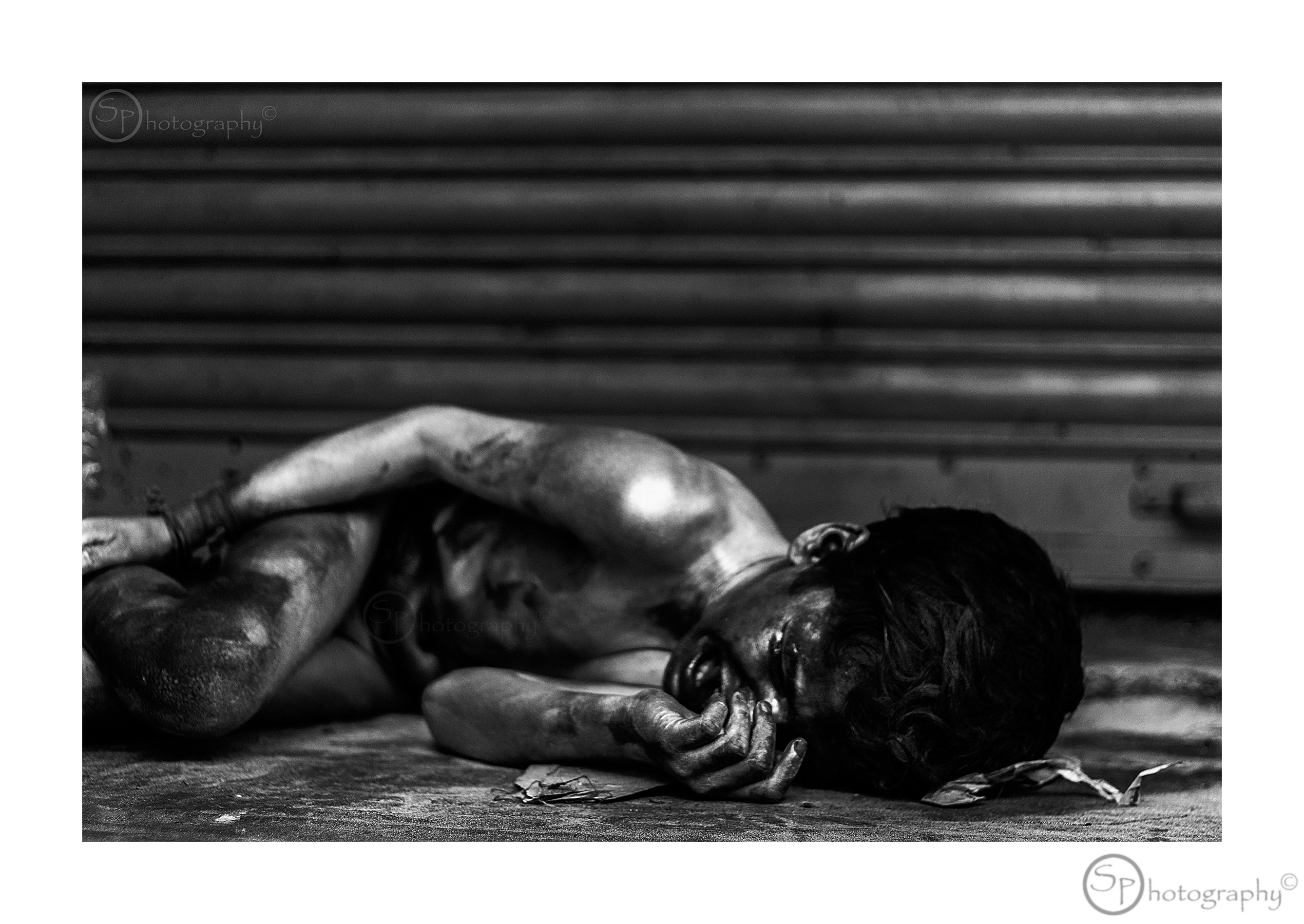
Image credit - Prashanth Mahadevan (via Flickr)
A lot has been written on the global food system—its industrialisation, ecological consequences and the erosion of cultural, economic and food sovereignty. Despite this onslaught, however, traditional rhythms and communal resilience persist in the countryside, especially in countries like India. Cultural practices continue to foster a sense of rootedness. What’s more, this is also reflected in the back lanes of towns and cities.
Life in the Lanes Documenting Chennai is an open-access e-book that uses visual-based storytelling via low-res street photography. It conveys a narrative about the endurance of communal life and sacred practice amid the everyday pressures to be found in modern urban settings.
When walking the cramped, noisy lanes of the Sowcarpet area of Chennai (South India), the interweaving of commerce, everyday survival and spirituality is striking. A phenomenon that resists the tendency to compartmentalise life into discrete spheres of ‘work’ and ‘faith,’ ‘secular’ and ‘sacred.’
In this packed area of Chennai, the sacred spills out of temple walls and into marketplaces, shops and alleyways. While societal structures may evolve externally, fundamental cultural and spiritual values remain deeply entrenched. Indian urbanism allows for the coexistence of age-old practices (that often have their roots in rural India) with contemporary realities. Shrines rest beside fruit stalls and ritual objects like conch shells, limes and leaves adorn streetside businesses that engage in modern commerce.
These items are religious symbols that serve as markers of cultural identity. For instance, the portrayal of Hindu deities on everyday items like bags of rice reinforces cultural connections within modern contexts. Such representations often feature vibrant artistic styles that blend functionality with cultural significance.
It is a spirituality that permeates the lives of the working-class communities who inhabit these urban spaces, helping to sustain personal and community identity and resilience.
What is observed in the lanes of Sowcarpet resonates with some of the themes explored in agrarian writings that note how ancient agricultural societies—from pre-Christian European to Norse and Hindu cultures—regarded farming as a sacred vocation. The soil was alive, and the cycles of planting, growth, harvest and fallow embodied the deepest rhythms of life, death and regeneration.
In the Norse worldview, this was echoed in seasonal rituals honouring gods such as Freyr, linked to fertility and good harvests, while Hindu traditions speak of Bhumi Devi, the earth goddess and the principle of seva—selfless service—which frames labour as an act of devotion.
Agrarian philosophy, too, especially that of Wendel Berry, talks about the unity of land, people and cosmos, affirming that right livelihood stems from harmony with natural cycles.
For millennia, deities governed rain and fertility, and communities came together in festivals aligned with solstices and harvests to honour these cycles. Agriculture was more than an economic act. It was a gift exchange with the earth that cultivated gratitude, stewardship and communal solidarity.
Much of this has been lost due to the advancement of industrial agriculture and corporate control. Monocultures and mechanisation have uprooted these cyclical relationships, transforming food production into a depersonalised, profit-driven business that destroys or undermines human health, ecological balance and cultural continuity. The results are stark—dispossession, loss of local food sovereignty, environmental degradation and social fragmentation.
Although in Chennai’s urban lanes, the contexts differ—rural fields versus urban alleys—the spiritual element remains strikingly similar. In both, labour and life are imbued with meaning beyond the economic. Whether a farmer tending the soil or a street vendor arranging produce, these workers act within a framework underpinned by a larger cosmic and social order.
The concept of dharma reverberates across the landscape: duty, righteousness and interconnectedness that tie individual actions to the wellbeing of community and environment. Many dharmic traditions emphasise the significance of seva (selfless service), with charitable giving—known as dana in Sanskrit—considered an essential aspect of one’s dharma or religious duty. This practice is perceived not merely as a moral obligation but as a spiritual endeavour that fosters personal growth and good karma.
Communities rely on deep-rooted beliefs and cultural practices that resist the homogenising forces of neoliberalism, capitalist commodification and a narrow consumerist mindset. The artistic kolam patterns drawn by women at entrances, the temple festivals amid urban chaos and the small acts of care, giving and devotion assert spiritual sovereignty and communal belonging.
Such persistence mirrors the seasonal rites of rural life and the earth-honouring rituals preserved in agrarian thought—all of which express a shared understanding that human thriving can only be secured through reciprocal care with the land and with each other.
This persistence, however, is precarious. The forces that threaten rural agricultural traditions—land grabs, seed patenting and the imposition of industrial monocultures—have parallels in the urban domain through gentrification and the destruction of local neighbourhoods, the displacement of street vendors and the homogenisation of thought in an era where aspirations are increasingly shaped by the corporate media and its advertisers.
In this respect, the global market economy’s encroachment remakes both rural and urban landscapes, undermining or erasing embedded cultural rhythms and imposing a sanitised, commodified vision of modernity and ‘progress’.
For instance, take the industrial food system, driven by monocultures, chemical inputs and a singular focus on profit. This has led to a proliferation of highly processed, nutrient-deficient foods. The direct result of this shift has been a significant increase in diet-related diseases such as obesity, diabetes and cardiovascular issues. What is celebrated as economic growth—the expansion of the healthcare industry—is, in reality, a response to the negative health consequences created by another aspect of this same industrial ‘progress’.
From a purely economic standpoint, the expansion of the private healthcare sector is considered a positive development, as it contributes significantly to GDP growth. This reflects an increase in spending on medical services, pharmaceuticals and technology, thereby implying economic advancement. This form of ‘progress’ is a perverse reflection of the debasement of what was once a healthy food system based on traditional agronomic practices.
In traditional systems like Ayurveda, health was seen as a product of harmony between the individual, their diet and the natural world, underpinned by a spiritual understanding of existence. This has been supplanted by a biomedical model that views the body as a machine to be repaired, disconnected from its food source and environment.
Healthcare has become a commodified service—a business model thriving on the very illnesses created by the industrial agricultural system. It is becoming quite a well-worn statement in certain circles, but it makes it no less true: we need more family farms based on organics and fewer family doctors.
For centuries, Ayurveda offered a holistic model of health tuned to the rhythms and needs of traditional communities. Its preventive approach was remarkably effective in settings where people ate seasonal, unprocessed foods and they lived lives more closely attuned to nature. Ayurveda taught that health was the product of harmony—between body, mind, spirit, diet, community and the environment.
However, whether in the back lanes of towns and cities or out in the fields, there are complementary aspects that challenge dominant narratives of progress, which equate technological acceleration and market expansion with ‘development’.
There is a longing for rootedness—both in the land that produces healthy food and in the quest for a sense of place—with reverence for individuals, communities and the natural world.
The sacred is not a relic of an idealised past. Spirituality is enacted daily through ritual, work and community care and serves as a form of reaffirmation that sustains hope and dignity. Asserting these ways involves regenerating food sovereignty, fostering agroecological practices and respecting communal bonds rather than sweeping them aside.
It also demands recognising labour as engagement with life’s cycles and community welfare, not as alienated toil to line the pockets of shareholders who live half a world away.
The author’s open access books on the global food system can be accessed on Figshare (no sign in or sign up required).

Colin Todhunter specialises in food, agriculture and development and is a research associate of the Centre for Research on Globalization in Montreal. You can read his two free books Food, Dependency and Dispossession: Resisting the New World Order and Sickening Profits: The Global Food System’s Poisoned Food and Toxic Wealth here.
Thanks for reading...
You can help us keep doing what we do. Every little helps and is hugely appreciated.




For other ways to donate, including direct-transfer bank details click HERE.



1,538 MT rice rotten, finds House panel in Tiruchy India.
It is grown for the high subsidy, not for sales. Needed crops like vegetable oils and pulses get less subsidy so are not planted. Fertilizers are also subsidized, so wasted.
It is all about non-foreign vested interests.
Uk Column has a clip from the disgusting meeting where 7 Liberal EU Presidents are in Washington to beg President Trump on their knees to continue the war in Ukraine.
Three times in the meeting Trump says NO American boots in Ukraine to these mental idiots. https://www.ukcolumn.org/video/uk-column-news-20th-august-2025 . 😆 .
https://en.wikipedia.org/wiki/Sologamy
https://www.youtube.com/watch?v=nPjdeM7FHkA
Solo Wedding Boy
I said that I love me, I’ll never let go
Oh-oh, oh-oh
Now I’m moving to Tokyo, just for show
Oh-oh, oh-oh
Is it crazy to marry me?
A solo wedding, tax for free
No partner needed, just one plus one
Getting married just for fun
Mister, can you tell me where my refunds gone?
I’m a sologamy boy
Woke up one morning, filing taxes on my own
Oh, this sologamy joy
Ooh, I’m just a sologamy boy
People laugh about me every day
Oh-oh, oh-oh
But I claim all my write-offs anyway
Oh-oh, oh-oh
If only I could find a legal clue
A rule for single weddings, too
One lonely sandwich, one man’s cake
And 50 forms the bank will take
Mister, can you tell me where my refunds gone?
I’m a sologamy boy
Woke up one morning, dancing solo on my own
Oh, this sologamy joy
Ooh, I’m just a sologamy boy
Was it crazy plans I made
That led to this sweet tax charade?
Could it be the manga I read?
Now Pikachu is in my bed…
Mister, can you tell me where my refunds gone?
I’m a sologamy boy
Woke up one morning, and I love it so
Oh, my Little Tokyo joy
Ooh, I’m just a sologamy boy
Ooh-ooh-ooh-ooh-ooh-ooh, ooh-ooh-ooh-ooh-ooh
Ooh-ooh-ooh-ooh-ooh-ooh
Ah-ah-ah-ah-ah-ah, ah-ah-ah-ah-ah
Ah-ah-ah-ah-ah-ah
https://www.youtube.com/watch?v=t4Lty7PSm98
https://en.wikipedia.org/wiki/Japanese_community_of_D%C3%BCsseldorf
Thank you for the article and for the links to the free books !
China Scoops Up Russian Crude Amid U.S. Pressure on India
What is this hypocrisy from Trump?
Its called ‘shopping’. They agree what can be agreed, but maintain aggressive where aggressive. Quite normal business.
What a disgrace: Blackrock-Merz had a Nazi grampa.
(But for which Merz is probably the greater disgrace.)
https://libya360.wordpress.com/2025/06/16/the-nazi-heritage-of-germanys-chancellor/
A good example of organic farming and diary in India: Gloria land
1971: A scruffy communist accuses his comrades of be-
ing slaves to the capitalist system, and tries to convin-
ce society of the power of pacifism by wielding violent
force —armed with a cheap, capitalist hardware store
axe. But the fine German craftsmanship of veneered par-
ticleboard unexpectedly withstands the sneaky attack.
Who was “Techno Viking at the F..kparade”?
https://en.wikipedia.org/wiki/Techno_Viking
Tom Cruise doppelganger: “What’s
this? C*pulating people in my gar-
den! Someone left the gate open!”
“Beauty, or how wind turbines are impo-
verishing regions” (switch to Engl. audio)
Nudda classic: cursing farmer
Hermann Völxen’s kicking bull.
Hercules describes his career
as an “internet phenomenon.”
https://en.wikipedia.org/wiki/Angry_German_Kid
1 https://www.youtube.com/watch?v=euEEOD7eH14
2 https://www.youtube.com/watch?v=wJouTsuqzRQ
Original
https://www.youtube.com/watch?v=ZfagM4v0ur0
Nice parody
https://www.youtube.com/watch?v=F68sgp4zyKg
St. Pauli (Reeperbahn) kinda “Soho”
A dearth of comments here. What does that suggest?
India is ruled by the same $ick Prick$ as we are.
Total collapse may be the only catalyst for change.
Where is SamAdm when we need him most?
26 million clicks isn’t bad for this imaginative gag.
https://www.youtube.com/watch?v=AEPvSo8bE2I
The famous “party surprise scene” in full length (28:15)
“Beauty, or how wind turbines are impo-
verishing regions” (switch to Engl. audio)
https://www.youtube.com/watch?v=KREipv1vyC0
Hercules describes his career
as an “internet phenomenon.”
https://en.wikipedia.org/wiki/Angry_German_Kid
https://www.youtube.com/watch?v=euEEOD7eH14
https://www.youtube.com/watch?v=wJouTsuqzRQ
Who was “Techno Viking at the F*ckparade”?
https://en.wikipedia.org/wiki/Techno_Viking
https://www.youtube.com/watch?v=9SK38Ln3FNs
Anudda classic: cursing farmer
Hermann Völxen’s kicking bull.
https://www.youtube.com/watch?v=dNDPtJjlxew
Tom Cruise’s doppelgänger: “What’s
this? Copulating people in my gar-
den! Someone left the gate open!”
https://www.youtube.com/watch?v=BxI636qYS4g
1971: A scruffy communist accuses his comrades of be-
ing slaves to the capitalist system, and tries to convin-
ce society of the power of pacifism by wielding violent
force —armed with a cheap, capitalist hardware store
axe. But the fine German craftsmanship of veneered par-
ticleboard unexpectedly withstands the sneaky attack.”
“Beauty, or how wind turbines are impo-
verishing regions” (switch to Engl. audio)
https://www.youtube.com/watch?v=KREipv1vyC0
Hercules describes his career
as an “internet phenomenon.”
https://www.youtube.com/watch?v=euEEOD7eH14
https://www.youtube.com/watch?v=wJouTsuqzRQ
https://en.wikipedia.org/wiki/Angry_German_Kid
Who was “Techno Viking at the F*ckparade”?
https://www.youtube.com/watch?v=9SK38Ln3FNs
https://en.wikipedia.org/wiki/Techno_Viking
Anudda classic: cursing farmer
Hermann Völxen’s kicking bull.
https://www.youtube.com/watch?v=dNDPtJjlxew
Tom Cruise’s doppelgänger: “What’s
this? Copulating people in my gar-
den! Someone left the gate open!”
https://www.youtube.com/watch?v=BxI636qYS4g
1971: A scruffy communist accuses his comrades of be-
ing slaves to the capitalist system, and tries to convin-
ce society of the power of pacifism by wielding violent
force —armed with a cheap, capitalist hardware store
axe. But the fine German craftsmanship of veneered par-
ticleboard unexpectedly withstands the sneaky attack.”
If you haven’t visited India it is impossible to understand how the country works.
It doesn’t.
One and a half billion people is an impossible task.
I have been on a trip to Sri Lanka and Maldives. That was enough for me to understand everything about how India works
.
The 24/7 smell of rice and curry, warm cow shit, and the scream from India goats when beaten with a stick, all from India, was un-mistakenly.
I haven’t been to Sri Lanka but people tell me it is like Disneyland compared to India.
Live simply and you will live well.
Its a system they have – produce cheap unhealthy foods – entice us to buy and eat them, knowing fine well they’ll make us sick, this allows Big Pharma to get their slice of the pie as well via medicines for as you say the likes of diabetes, heart disease obesity etc, this system has already saturated the West – and it will be rolled out everywhere else for there’s far too much money to be made from it, adverts and propaganda campaigns are already in full flow – and just about everyone can name some sort of junk food – and a junk food producer, due to the ad and propaganda – in India it will be no different, there’s over a billion mouths that can be stuffed with junk food, and so much money to be made from it.
Thanks Colin Tollhunter.
Zelensky and all of European Leaders travelled yesterday to Washington, to try to make Trump not doing something stupid = Stopping the war in Ukraine.
https://youtu.be/36q0_M_biAU .
The entire Leadership in Europe and East-Europe plus the US Mainstream Media, the Entire Liberal Democrat US Congress wants the war (the money trail) in Ukraine to go on until the end.
It is precisely the Sacred and the Sick the whole shit is about. The mad bad man in the White House showed attempt to stop the Ukraine war.
See the disgusting video from MSNBC and their controlled media conglomerate and hear all the smear words that Trump get for insinuating he will try to stop the Ukraine war. https://youtu.be/36q0_M_biAU .
With Leaders like these, who need enemies.
Beautifully written.
Thank you Colin.
Thanks Colin.
We ARE what we eat.
When we eat the the ‘fruits’ of Mammon we are made sick.
God says in the Scriptures several times, “No, this time it was NOT Satan who seduced you”.