The Silent Singing Bird of Flamboyant Plumage
Edward Curtin
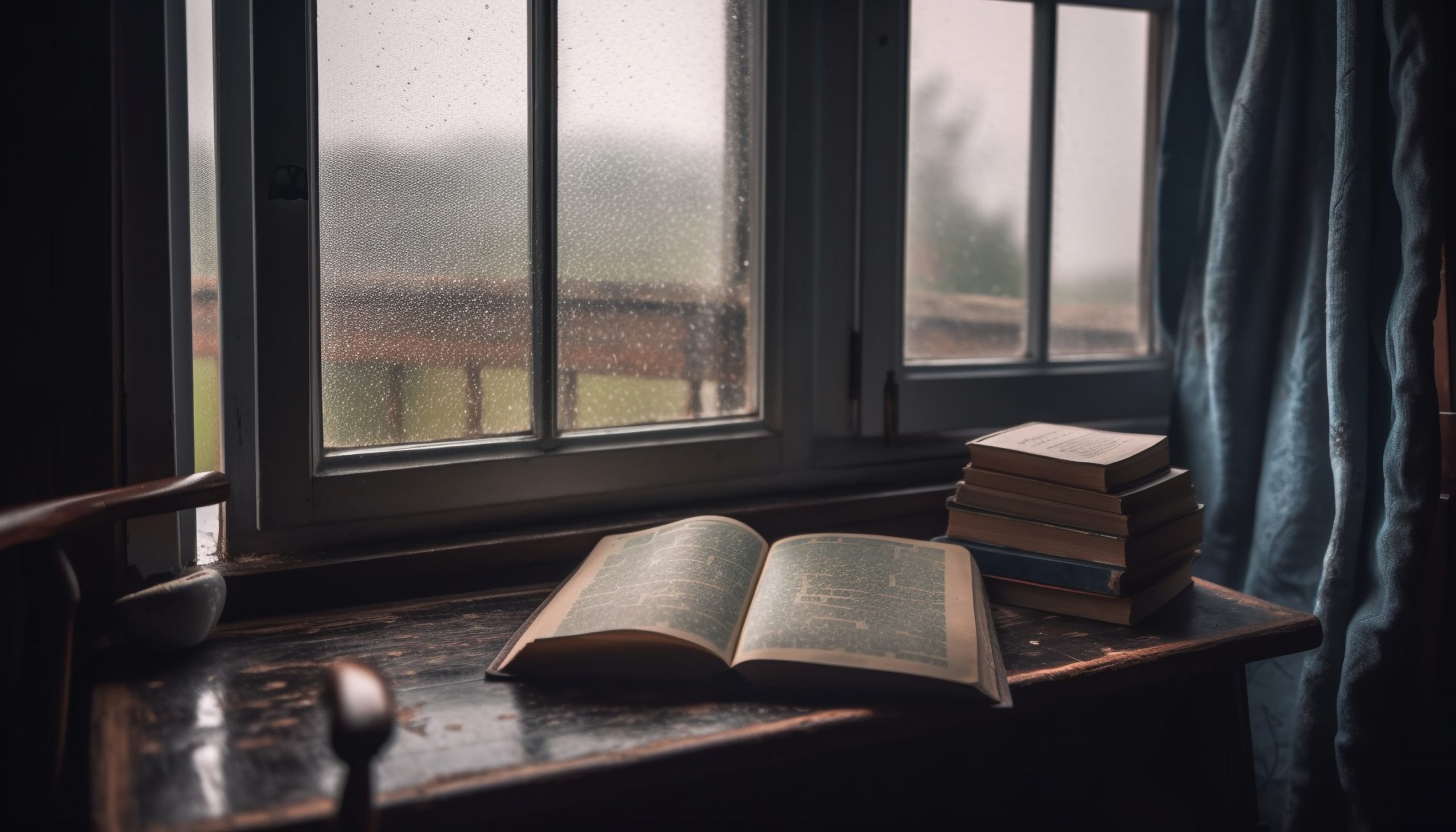
Whenever I get the infrequent opportunity to walk the wild deserted Cape Cod outer Atlantic beach in the early morning, I exult in the sea’s silent roar. It extinguishes the cacophonous dreck that fills the air of everyday life in a society whose depravity accelerates faster than shore birds can fly.
This morning, because there was a little rain and rough surf the beach was deserted except for the usual assortment of birds. So we sauntered the long strand for an hour until we finally encountered a person as the sun flashed from behind the clouds. Inside the cocoon of the crashing waves and the whistling of the wind, with the clouds blowing fast, the seals just voiceless heads bobbing in the shallow water, and the birds hushed by the waves’ wild roar, a strange silence settled over me.
I felt cloistered in a place of peace, similar to William Butler Yeats’ sentiment in his poem, The Lake Isle of Innisfree:
And I shall have some peace there, for peace comes dropping slow,
Dropping from the veils of the morning…
Silence. Without it, we are bereft of meaningful words and end up talking repetitive gibberish, small talk. There are many people who can’t shut up; their jabbering is a disease. Tranquilized with trivia, they lose their ability to communicate.
Silence is a word gravid with multiple meanings: for many a threat; for others a nostalgic evocation of a time rendered obsolete by technology; for others still a sentence to boredom; and for some, devotees of the ancient arts of reading, writing, and contemplation, a word of profound, even sacred importance. As the ancient Greeks knew so well, musing is the music of the artist’s heart.
Writing is at first, like an imaginary friend, a silent companion. Conceived by its author in silence, it asks to be received in the same spirit. And silence – contrary to the popular notion that it, like nothing, is nothing, a void, a lack of something – is the receptive spirit that encompasses all the meanings words can give. That silence is golden is an aphorism we have all heard but rarely heed. Nevertheless, it is out of that great unknown that words are born; great writing is the child of silence.
So too reading should be a venture into that unknown, an adventure upon which one embarks with eyes and ears wide open and the constant chatter of one’s private “thoughts” silenced.
But silence, like so much else in today’s world, including human beings, is on the endangered-species list . Another rare bird of flamboyant plumage and very like a black swan – “Rara avis in terris nigroque similima cyno” in Juvenal’s words – is slowly disappearing from our midst. The poison of noise is killing it.
And out of this lack of silence comes the silence of lack, the inability to use words to communicate meaningfully. As sung so wonderfully by Simon and Garfunkel in The Sound of Silence:
And in the naked light, I saw
Ten thousand people, maybe more
People talking without speaking
People hearing without listening
People writing songs that voices never shared
No one dared
Disturb the sound of silence
Ironically, as books have become more plentiful, silence has become scarcer. Most books now arrive with the clatter and bombast of the same advertising hype used to sell laxatives and pain-killing drugs. And they are received in the same spirit, often producing similar results.
These loud arrivals often make the so-called best seller lists (as if number seven on that list could be the “best” seller along with number one), a curious place where quality is measured by quantity and the noise of publicity pays off handsomely. Many of these books are what DH Lawrence called “printed toys,” loud little devices that spin and spin and always seem to end up where they started – nowhere.
When I speak of noise I am not primarily speaking of the din we associate with city life: cars, trucks, sirens, etc. Such noise, alas, is heard even in small towns where birdsong often disappears behind the grinding of gears. That kind of noise is hard to completely avoid and it is in any case the least disruptive of the silence I have in mind.
There is another kind of noise that is self-imposed, and whose purpose, consciously or not, is to make sure one is not “caught” by silence. That, as those who flee from silence know, can be dangerous to one’s reigning assumptions about self and the world. They prefer the comfort of noise because it silences the imagination, and imagination, as William Blake has told us, is the world of eternity, and to the eyes of the person of imagination, nature is imagination itself. It is only through the eyes of imagination that one can slip away and hope to break loose from the mind-forg’d manacles of convention and propaganda that society places on us all from birth.
Just this morning, very early, I read an essay that brought this home to me once again. In “Psychic Treason,” Curtis White begins by telling us that he is living in a world that no longer exists, a sentiment that should ring true for most people in this chaos of everything world. He tells us how his world changed:
I once lived in a vital world whose only limit was no-limit, ‘free frame of reference,’ as the Haight Street Diggers thought. It was a world of beatniks, Buddhists, hippies, free-jazz poets, pacifists, wandering guitar soloists, postmodern fabulists, soulful anarchists, and collaborative maunderers. It was also a world of close readers, deconstructors, and afficionados of the beautiful, all performing in the heady atmosphere of refusal, a general strike of the Imagination.
This world and its open assumptions about possibility slowly dissipated over a thirty-year period. As the late Sly Stone put it, ‘The possibility of possibility was leaking out.’ It seemed quite dead by the millennium, our collective mind aspirated into glass pipettes by techno-oligarchs and assorted others who bore us no love.
We were left with Data World, the Great American Smartphone Society. We have been priced out of cities, so there are no avenues to barricade, no ‘scenes’ where artists and musicians can hang out, and our universities are in ruin, occupied by ‘indentured students,’ in Elizabeth Tandy Shermer’s telling phrase, studying only what the boss wants. And what the boss wants has nothing to do with poets. Even at Canterbury’s Christ Church University, the destination for Chaucer’s pilgrims in The Canterbury Tales, poetry is ‘no longer viable in the current climate.’
White’s world is not the world everyone once inhabited, as others can attest. Everyone’s world of yesterday is somewhat different, but each contains nostalgic images that not just draw us back but forward – an imaginative nostalgia for a future that sustains the heart, even when the past one remembers never existed in pure form.
White writes:
Happily, it will always be possible to create stories that liberate us from the stories of our masters. This is what William Blake called for when he wrote in Jerusalem (1815), ‘I must create a system or be enslaved by another man’s; I will not reason and compare: my business is to create.’
…Blake’s quote is “heavy,” as hippies used to say, because it asks, as Tolstoy put it, “What is to be done?” The answer to that question might simply be “tell better stories.” Live through better stories. Live through stories that will be understood in an as yet unimagined world, just past the next bend in the river, where the Imagination lives in all its inherited riches. So, let us be Nietzschean, all too Nietzschean, without fear or giddiness, and seek liberation for ourselves and others.
We all know people who go from morning till night, day in and day out without ever pausing to enter the sounds of silence. One doesn’t have to look for them; technology has made them the rule. They move like techno-ghosts up and down the lanes and byways, seashells stuck in their ears (“And in her ears the little Seashells, the thimble radios tamped tight, and an electronic ocean of sound, of music and talk and music and talk coming in, coming in on the shore of her unsleeping mind,” Ray Bradbury writes in Fahrenheit 451, published in 1953) or rectangular vibrators sticking out of their back pockets, proud symbols of the manacles that hold them captive to their minds’ bedlam.
They drift through their lives in the cocoon of technological noise They are informed, with it, tuned in – to everything but the life of their own souls. The real world passes them by. Always ready to photograph something that they do not see, they ignore that rare bird of flamboyant plumage that sits on their heads, singing plaintively. They may even read books, those candy-colored non-book books filled with millions of meaningless words, distracting little noises that allow them to avoid the silence that might force then to confront self-knowledge that is the stuff of great books, true art.
For the art of writing implies the art of reading. The writer creates and the reader recreates; both demand silence, the cessation of all noise that serves to prevent true thought. The machines must be turned off. “Our inventions,” Thoreau noted, “are wont to be pretty toys, which distract our attention from serious things.”
It is not hard to turn a switch or pull a plug; the hard part is wanting to. Harder still, but equally necessary, is the quieting of the mind, the silencing of the incessant internal chatterboxes that accompany us everywhere and prevent us from experiencing the world.
For in the end one cannot hear or see the world or the penetrating truths of great writing unless, like the artists who create in silence, we turn off the noise of the social world and enter the silence. Only then, will one’s imaginary silent companion begin to sing.
In her bittersweet memoir A Freewheelin’ Time, Suze Rotolo, Bob Dylan’s girlfriend in Greenwich Village in the early 1960s, echoes Curtis White’s point about how the past is as much about the imagination and the future as the past. Her book is equally about the plight of young women in those days and the vibrancy of the Village’s creative community as about her relationship with Dylan. Writing in the early 2000s before her untimely death, she notes:
Greenwich Village bohemia exists no more. It was the public square of the twentieth century for the outsiders, the mad ones, and the misfits. Today all that remains are the posters, fliers, and signs preserved on the walls as a reminder of that bygone era when rents were cheap and New York replaced Paris as the destination for the creative crowd.
Those who feel they are not part of the mainstream are always somewhere, however. Greenwich Village is a calling. Though it is now priced out of its physical space, as a state of mind, it will never be out of bounds. . . . The creative spirit finds a way.
That way is found whenever and wherever one enters the cocoon of silence to hear the rare bird of flamboyant plumage sing. It is then we can live through better stories as we tell them.

Edward Curtin: Sociologist, researcher, poet, essayist, journalist, novelist….writer – beyond a cage of categories. His new book is AT THE LOST AND FOUND: Personal & Political Dispatches of Resistance and Hope (Clarity Press)
Thanks for reading...
You can help us keep doing what we do. Every little helps and is hugely appreciated.




For other ways to donate, including direct-transfer bank details click HERE.



“We all know people who go from morning till night, day in and day out without ever pausing to enter the sounds of silence. One doesn’t have to look for them; technology has made them the rule. They move like techno-ghosts up and down the lanes and byways, seashells stuck in their ears (“And in her ears the little Seashells, the thimble radios tamped tight, and an electronic ocean of sound, of music and talk and music and talk coming in, coming in on the shore of her unsleeping mind,” Ray Bradbury writes in Fahrenheit 451, published in 1953) or rectangular vibrators sticking out of their back pockets, proud symbols of the manacles that hold them captive to their minds’ bedlam.” Edward Curtin
–
“It is critical to note that a vast majority of internet users (91%) now use mobile devices exclusively to go online. [Source] This is significant for a couple of reasons. First of all, this sheds much light on the ever devolving critical thinking skills by those in the West most impacted and captured by the mobile phone. Detailed information, required for in-depth critical thinking, is largely impossible to decipher and analyze using a tiny mobile device.
One should know full well by now that the success of corporate products with names preceded by the word smart – are hinged on the hope that the “consumer”, or targeted demographic, is vacuous. Anything “smart” serves capital first and foremost. Humans have survived successfully for millennia without mobiles. All we require for our survival is healthy food, clean water, clean sanitation, and shelter. And as social animals, we seek physical community, companionship, joy, and love.” Cory morningstar
The Great Reset: The Final Assault on the Living Planet [It’s Not a Social Dilemma – It’s the Calculated Destruction of the Social, Part III]
https://www.wrongkindofgreen.org/2020/11/28/the-great-reset-the-final-assault-on-the-living-planet-its-not-a-social-dilemma-its-the-calculated-destruction-of-the-social-part-iii/
–
“I think fundamentally the problem is, as you posited, that people don’t read anymore. Reading, and the written word, is fundamental to any form of change. Certainly any form of change that includes making the world a better place. I think this is somewhat easily illustrated in two ways.” Ramsey Kanaan
https://derrickjensen.org/2017/09/ramsey-kanaan-resistance-radio/
–
“I have heard that, years ago, the city of Los Angeles lost power, and darkness reigned, and frightened people called the police to report strange lights in the sky: the stars. We are far along the wrong path when we no longer recognize the stars, our billion-year-old companions in the night.” Max Wilbert
When The Lights Go Out
https://www.earthisland.org/journal/index.php/magazine/entry/when-the-lights-go-out/
–
Interview of Paul Bogard, author of The Ground Beneath Us: From the Oldest Cities to the Last Wilderness, What Dirt Tells Us About Who We Are published by Little, Brown on 21 March 2017. He is also the author of The End of Night: Searching for Natural Darkness in an Age of Artificial Light, published in North America by Little, Brown, and in the UK and around the world by 4th Estate/Harper Collins.
https://derrickjensen.org/2017/07/paul-bogard-resistance-radio/
–
The Black Keys – Shine A Little Light
https://youtu.be/oT3b8bTU5NQ
Never forget these words
“Humans have survived successfully for millennia without mobiles. All we require for our survival is healthy food, clean water, clean sanitation, and shelter. And as social animals, we seek physical community, companionship, joy, and love.” Cory morningstar
–
“Lithium Americas Corporation employee Dr. Thomas Benson’s Feb. 8 opinion piece in this paper (“Mining lithium at Thacker Pass essential for combating climate change”) makes numerous false claims. Let’s set the record straight.
Dr. Benson and I agree on one critical point. Global warming is massive problem, it’s getting worse quickly, and we need to address it. Where we differ is on what should be done.
Benson’s argument is that “mining critical metals is a necessity for a greener future.” But I would ask: a necessity for whom? For example, do child slaves laboring in Congolese cobalt mines call this necessary? Cobalt is an essential ingredient in mobile phones and electric vehicle batteries, but those kids aren’t driving Teslas and listening to podcasts all day. They need liberation, not consumer toys.” Max Wilbert
‘Opinion: Mining lithium at Thacker Pass is a bright green lie
Feb. 15, 2022
https://www.rgj.com/story/opinion/voices/2022/02/15/opinion-mining-lithium-thacker-pass-bright-green-lie-max-wilbert/6791457001/
–
Max Wilbert in front of Thacker Pass Lithuim mining site
Oil on Linen 14 x 11 Available
https://www.denisemonaghan.com/workszoom/5404423/max-wilbert-in-front-of-thacker-pass-lithuim-mining-site#/
–
Female miner, 22, killed 900 feet below surface at gold mine near Timmins
The Canadian Press
Published May 25, 2015
https://nationalpost.com/news/779867
–
I remember reading about Alexie Dallaire-Vincent in 2015. Alexie Dallaire-Vincent was 22. She was not a child, but she was very young.
–
“Richard Louv, in his book Last Child in the Woods, writes that “Passion is lifted from the earth itself by the muddy hands of the young; it travels along grass-stained sleeves to the heart. If we are going to save environmentalism and the environment, we must also save an endangered indicator species: the child in nature.” Max Wilbert
‘From Megafauna to Mecha-Fauna
February 28, 2020
https://www.earthisland.org/journal/index.php/articles/entry/megafauna-mecha-fauna-machines-nature/
–
“Well, it’s cold in them tunnels today
Well, it’s cold in them tunnels today
It’s cold down in those tunnels today … ” Working for the MTA
Justin Townes Earle
https://youtu.be/m6p4L2p92IE
”Silence is golden”
thanks for the read!
please excuse me if I call bs on these luminous memories of Haight Ashbury and Greenwich Village as idyllic sanctuaries of nonconforming “misfits”
admittedly there has been a concerted effort by the advertising arm of the world capitalist behemoth to commodify alt subculture since then and convert it into a sanitized “vibrant” carnival of perfectly tame anti-establishment posturing
but even before that, and independent of all infiltration and coopting, was there a real freedom from preconceived categories, a real acceptance of ALL perspectives among this “creative crowd”?
I find that hard to believe
all communities and subcommunities have their totems and taboos, and the Bohemian, radical “scene” can be just as narrow-minded and doctrinaire as any mainstream culture, if not more, it seems to me
Does the writer have a substack?
Loved the article.
Thank you.
Not substack but edwardcurtin.com
My wife and I, also feel in many ways, homeless. A past that included the freedom to think and to act with many possibilities within reach, has disappeared and turned into a cage. I remember the early 70’s living in a Victorian flat with a Bay view with three bedrooms and two friends that afforded all of us to work half time common labor that afforded all we wanted to do. Concerts, movies, meals, travel and shelter all fit in nicely under $400/mo income.
I have been reading and thinking, “priced out”, is the new-normal, root crisis. As a visual artist I got a late start and missed out on an early 80’s in NYC that afforded many young artists an amazing temporary autonomous zone to create the next world. But that last gasp of indigenous creativity fizzled out as the “decider” class began downsizing commoners and upsizing (on steroids) themselves. It has not stopped since. Bankster deregulation in the 90’s, a 2000’s police and war state capped off by perpetual neo-Depression, then bio and ideological LOCKDOWN, all just to keep pesky normies from messing up elite’s personal Notopia.
I do see their Notopia as transhuman synth-coke magical thinking, and doomed to failure. One objective look at the current cascade of horrors, domestic and foreign, is enough confirmation for me. But the damage their greed and unlimited authority (power) has done to Humanity should never be forgiven. As their technology rollouts have crossed over Earthian limits, our human psyches are being forced into a gauntlet of submission we must never tolerate. Imho.
The big thing I ask myself is, if every other area of my life is being managed and scaled down by the decider class, why would I trust “the current cascade of horrors, domestic and foreign, especially given the obvious deleterious effect the awareness of these things has on you and most people? Is it not probable, given your logic, that what passes as news today has been co-opted to keep the rabble feeling vaguely scared and depressed, to keep them well away from notopia? A2
You are framing what I said as if is our feeling of being “homeless” is a response to the news cycle driving our perception of conditions rather than real life experience. The direct effects of the policies of elites since Thatcher/Reaganism on my personal life is not something I read in the news. It’s been repetitive direct limiting action upon my livelihood, my family’s, my friend’s and others’ lives. It’s been a constant incremental shutdown of conditions that used to exist before these draconian policies started rolling out from the US political system, both parties.
It’s hard to figure out what your point is, other than people are merely captive of the elite’s media illlusioning reality. Well I can concede that, but are you saying there is not a “current cascade of horrors, domestic and foreign”? Oh really? So, I don’t know where you live, but here in the Pacific Coast of the US, I’ve lived in San Francisco, Los Angeles, Oakland, Portland and now Eugene. In all of these places homelessness is cascade of horrors. In Eugene over 1% of the population is homeless and are pushed around by belligerent cops from one spot to the next, arrested, fined. Any free food organizations are harrassed continuously and the root problem, poverty and lack of economic self-sufficiency, has gone unaddressed since Reagan created modern homelessness by defunding mental institutions, throwing ill-equipped people out on the streets to fend for themselves like beggars. A once beggar condition has ballooned to included the least adept and/or least lucky of a ruthless capitalist economy and government to live on the streets, parks or wherever they can. I personally saw and interacted with these folks every day commuting to work. I know their stories and their plight and know it’s solvable with appropriate public policy which capitalists decapitate upon proposal.
Do you believe all the current wars, coups, engineered continuance of Western colonialism, is not driving the world to a potential WW3? Or that we shouldn’t demand an end to military conflict procuring exploitative profits from weaker foreign countries as a matter of foreign policy practice? Or you just think it’s all media fluffed up by the elites to make us fearful? The implication would be, if you believe the above, that you believe everything we see is a fraud. That seems a form of status nihilism that is all to frequently expressed by some commenters here. Are y’all wealthy enough somehow and not subject to the negative external conditions that affect about 70% of the US population, which make many of us knowingly critical of what’s limiting our lives unnecessarily?
For me to cite all of the horrors of this system, obvious to most people below median income, would take many pages. Just as a brief outline of what has happened to me personally. I’m 74. US credit agency criminal incompetence prevented me from getting a credit card or any credit until age 40. Only the intervention of a US Senator halted what was a LOCKDOWN on my life. I cannot tell you the damage this caused when trying to get a college education, run a business and survive. CA’s Prop 13 defunded Art Dept’s state wide and made it impossible for me to get a college art instructor position after MFA. Three early Reagan era recessions (equal or worse than the GR) precursored by FED jacking interest rates to 20% ended all my freelance business. Having no credit, off to low wage hell that took 30 years to crawl out of. But all this whining is but tip o’ the iceberg of shit that has happened to us in the 21st C. Every aspect of economic life in the US has become at minimum troublesome to a nightmare for the bottom 80% of society. We being sub median income, opportunities are incrementally less everyday. Unless one has no conscience to ruthlessness like those who lie and trick their way to the top.
Born under a bad sign
Been down since I begin to crawl
If it wasn’t for bad luck
You know I wouldn’t have no luck at all
Think this is not a universal condition of those “born under _________”?
You don’t think I have a valid justification for what I wrote, nor do others? Please explain.
But all these horrors, real or otherwise, seem to be framed in such a way as to breed apathy and despair, don’t you think? We can get into the habit of parroting the news, whether we take it at face value or not, while preserving this negative, disempowering energy. That was my thought. It’s a bit nebulous, so not much use trying to pin me down lol A2
Albert King https://yandex.ru/video/preview/14146726821918587498 . I follow you somehow. Its the loss of real, the real thing.
I think, Sam, that you are misinterpreting Sandy. Maybe me, also. There were once places where rents were cheap, and dissident and artistic types could live, associate and create.etc., but no more. As Suze Rotolo wrote, “Greenwhich Village is a calling.” Creative people still imagine and create and dissent but they live lonelier lives because the rich have eaten all the places where once dissidents could live and socialize together. It’s White’s and my point as well.
Thank you Edward. I was agreeing with your article, working from the economic view. The basic cost of living was manageable at many levels of income before the politicians decided to detax and subsidize high income earners, create housing bubbles, funnel most of the public’s taxes into the War Dept, and turning the US into a worldwide Bankster empire. I benefited from this low-cost social environment in LA to work a job part time while getting an MFA and building a 4 yr. viable series of art exhibits. The near TAZ world that Keith Haring, Kenny Scharf, Basquiat and many other not-wealthy- young-artists in NYC experienced in that same period, made fertile ground for a new creativity that comes out of a freedom to act.(Read Keith Haring’s Journals for details.) Imo, we have lost that world of personal freedom that allows people to create and contribute to humanity. Or just enjoy life. The now for me as a visual artist, like many other’s livelihoods, has been stripped of possibilities. The financier set, Michael Hudson calls it the FIRE (finance, insurance and real estate) sector, has incrementally engineered over 50 years the hosing up of almost all discretionary income and profitability from the bottom 90%. There are very few commercial galleries left below the auction house classes and more artists than ever before, with no where to show or sell. Non-profits and grants do little more than postpone the inevitable in this devolution of the Public Commons. How do we return wealth inequality to a 5-1 ratio that existed in the late 50’s? I don’t know, but I think it would bring a more sane and satisfying life for nearly everyone. It is at least something worthy to work toward in a collective awareness way.
Sandy,
You are right. Genuine artists are on the defensive everywhere. Their work is disparaged, ignored, and for the most part they are reduced to finding allies on the Internet, which is a pathetic replacement for flesh and blood. I once wrote and I was paid for my work – political, poetry, fiction, essays, journalism, etc. – not a great deal, but at the same time there were places to live cheaply. No more. Try to find Internet publications that pay their writers. It’s the unmentionable subject.
Pax,
Ed
I’m right there with you, man. When I first started out, ’79-’83, I could sell my small hand-colored gelatin silver prints and smal paintings for over $100. They should be selling for over $800 now. Practically speaking, no one I know can afford a luxury like that now. Back then, I had a one bedroom apartment in a mixed use storefront building in LA. I could paint and build art objects inside, and out on the giant back deck: $150/mo. Part time job of $400 mo took care of all my expenses. It was a very free and consciousness expanding time. I grew up in SF with all the $2-$5 three band concerts at Fillmore, Winterland, +, with free concerts and happenings in Golden Gate Park nearly every weekend. I had an excellent public school education with elective choices of all kinds. Two semesters of Black History with an instructor who changed my life. I knew the existing system was an elite trainwreck. But I believed with all that we knew and were experiencing our futures were only limited by our creativity to manifest an Ecotopia out of the ashes of these “old” fools. Well, they, unfortunately are still at it and my generation is participating. I may be a fool, but I still believe we can do it.
Any gallery scene has been reduced to nothing. I’m transitioning to online gallery to get some much needed income, if possible. Without my tiny pension we’d be in real trouble, being only on SS.
I appreciate your writing here so much. You and CJ are my favorites. Blessings to you. Take care!
Excellent, thank you Edward.
Imagine the world before tech, before TV, and before radio. A world within range of your senses. You would see the sky and trees. Meet real people and chat, smell the flowers, feel the wind.
We have become robots, our senses programmed to a screen. We are lost in a world of information control and believe everything they tell us is the truth. We are addicted to the tech drug and copy our heroes. Doesn’t matter if they are drug lords. Our simple brains are overloaded with bullshit. Please tell me what to do, what to wear, fck this, fck that. How can I make millions? I need a tummy tuck and nose job.
What have we become?
We become what we focus our intentions upon.
We are the same as we have always been… none of this is new… merely repackaged… simply be still and find solace in the serene solitude of your inter-connected soul…
All your living is preparation for the ultimate moment of infinite silence…
Embrace and release.
Thank you for this article! For me, it sounds like a farewell song to a world that keeps disappearing, and will very likely soon be gone, with those “old folks” who are still able to listen to the “Silent Singing Bird of Flamboyant Plumage”.
The new universal World Religion is power, brought and promoted by playing along with all those technical things I’d like to call “Empowerment Toys”. These days almost everybody is “On Air” all their waking hours, broadcasting their “Me, Me, Me!”-program to themselves and the world around them. Silence is the enemy, and total victory is near.
It’s about replacing the soul, silent and receptive, with something that is “loud” and feels powerful and even almighty. Silence and everything that is part of it very soon will be as precious and rare as water in the desert. Yes, we are desperately in need of better stories about us and the world. But almost everything that surrounds us these days is designed to “kill” silence and keep the “killed” space occupied.
Because silence is God. Only God can communicate with silence, and only those who are with God can receive it. See how your weird description suddenly gives meaning.
The Devil is described in the Scriptures as a roaring lion. Always noisy to disturb human thought. You describe it yourself: The poison of noise.
But if we are with God we can hear the trees singing, the sea speak, and the birds whistling their praise of him.
You are enslaved by another man’s system.
Physically yes. But not spiritually.
You don’t have to be in the middle of nowhere to experience the sounds of (relative) silence. Where we live is quiet, especially at night, but it will never be silent because of Nature. Last night, for example, when some neighbors finally packed in their party (its the Labor Day holiday weekend in the US) their noise was immediately replaced by that of a pack of coyotes. Nature is surprisingly noisy!
As for popular culture I have a couple of bound books of sheet music that were given to me by my teacher when I was a child. Judging from the dated index and inscription these must have been part of the pop music canon from 1842 and includes such memorable hits as “Polly, Won’t you try me Oh!” and “My Barque is Bounding Near” as well as works by more recognizable (but still obscure) early Victorian composers. People paid good money for that material — three shillings and sixpence back then was serious money — but, like all literature and music of that period its nearly all entirely forgettable. We still play works from that period but generally its a selection of the best works by top composers. Time has weeded out nearly everything else. I figure that nothing much has changed in 190 years — we still generate copious amounts of output, a lot gets sold, and nearly all of it gets forgotten. Its not something to be concerned about except for the one detail that it can be very difficult to find something worth reading or listening to these days. The material exists, though, and the search is often more entertaining than the material that one finds.
It is why some people in religious orders take a vow of silence to: listen, meditate and pray so they might comprehend the majesty of creation and God.
Hey man,
You have to live in the same place for fifty years to not understand birds and what the fuck is going on.
A lot of noise about silence.
Sometimes I prefer the company of trees
Though they are looking down they’re not judging me
And you know what?
They leave me be.
Sometimes I prefer the company of stars
Though they are looking down they’re not looking hard
And you know what?
They shine right through my heart
Sometimes I prefer the company of waves
Though they get really big they’ve got nothing big to say
And you know what?
They roll in each day
Sometimes I prefer the company of cats
Though they tend to be aloof they seem to know where it’s at
And you know what?
They don’t talk back
Sometimes I prefer to all on my own
Not a word not a thought no old monotone
And you know what?
Feels like I’m coming home
Sometimes I prefer the company of trees
There’s wisdom in those branches a great mystery
And you know what
That wisdom is free
Lyrics from a song I wrote about ten years ago.
My tribute to silence.
And stillness.
Lovely.
Thank you.
If..If we were all like you, the world would be a better place