New Book: Rejecting the Ideology of Progress
Colin Todhunter
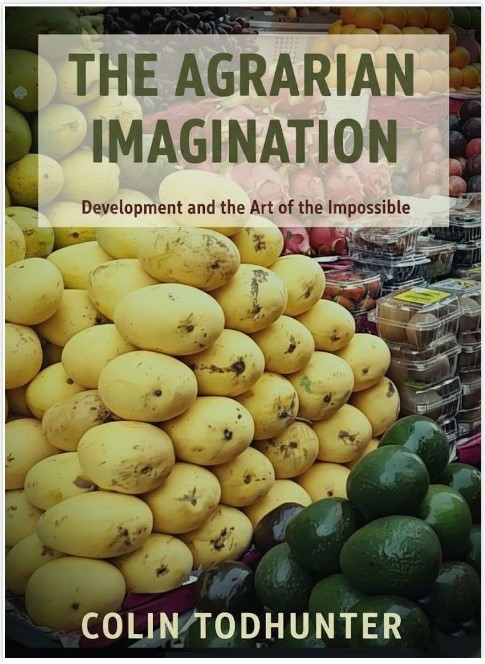
‘The Agrarian Imagination: Development and the Art of the Impossible’ (2025), published by The Critical Globalisation Collective (UK & India), is available on Figshare. All the author’s work is released under an open access framework and is freely available for non-commercial use.
The open access book The Agrarian Imagination Development and the Art of the Impossible is a critique of the dominant global economic and political model often termed ‘development’ and based on a warped notion of ‘progress’. In it, through 16 essays, it is argued that this system, driven by the needs of private (finance) capital, leads to widespread injustice, war and ecological destruction.
The book uses real-world examples to expose the enduring human cost of top-down policies, citing the devastating Bhopal disaster and the Green Revolution as concrete proof of the system’s violence and negligence.
The narrative proposes the Agrarian Imagination as a robust ethical and philosophical framework for rethinking human progress. This concept goes far beyond mere farming, advocating for a way of life rooted in soil, community permanence and the dignity of labour over endless consumption and centralised control. In the urban context, the book argues that the city is not a purely post-agrarian space by highlighting how communities, informal economies and enduring networks remain vital in the face of neoliberal capitalism, commodification and consumerism.
The text explores the structural reasons an alternative vision is perpetually sidelined, especially in its analysis of late-stage capitalism, which details how powerful forces and the state work together to enclose common resources and suppress local self-sufficiency, revealing the non-negotiable extractive logic of the current economic system.
While some might say this analysis is nothing new, its uniqueness stems from the cross-disciplinary intellectual framing. Its originality lies in bringing together agrarian political critique with literary and philosophical inquiry in a way that reframes development as an ethical rather than merely economic question.
Most strikingly, the text draws a parallel to Fyodor Dostoevsky, specifically the figure of Underground Man. This literary reference is used to define The Art of the Impossible, which is not a call for a utopian retreat but an act of moral and intellectual resistance.
Much like Underground Man, who refuses to surrender his conscience despite the world’s failings, the Agrarian Imagination refuses to abandon the ideals of justice and ecological harmony even when powerful global structures deem them unattainable or politically naïve. This refusal to surrender the ethical ideal is presented as a vital foundation for preserving the possibility of a better future.
Furthermore, the collection uniquely synthesises global and local traditions weaving together the moral anti-industrialism of Mahatma Gandhi from the Global South with the ethical land-stewardship of US writer Wendell Berry from the West. This broad approach prevents the critique from being dismissed as merely regional or nostalgic and positions the struggle for food sovereignty and decentralised life as a universal movement.
By integrating social science with literary and philosophical enquiry, the book provides a human-centred perspective on global crisis and may be of interest to anyone sceptical of the conventional wisdom surrounding ‘modernity’, ‘growth’ and ‘globalisation’, offering a coherent ethical language for challenging the established myths of industrial progress.

Colin Todhunter specialises in food, agriculture and development and is a research associate of the Centre for Research on Globalization in Montreal. His open access books on the global food system can be accessed via Figshare (no sign in or sign up required).
Thanks for reading...
You can help us keep doing what we do. Every little helps and is hugely appreciated.




For other ways to donate, including direct-transfer bank details click HERE.
 wpDiscuz