What Autism Is Not
Sinéad Murphy
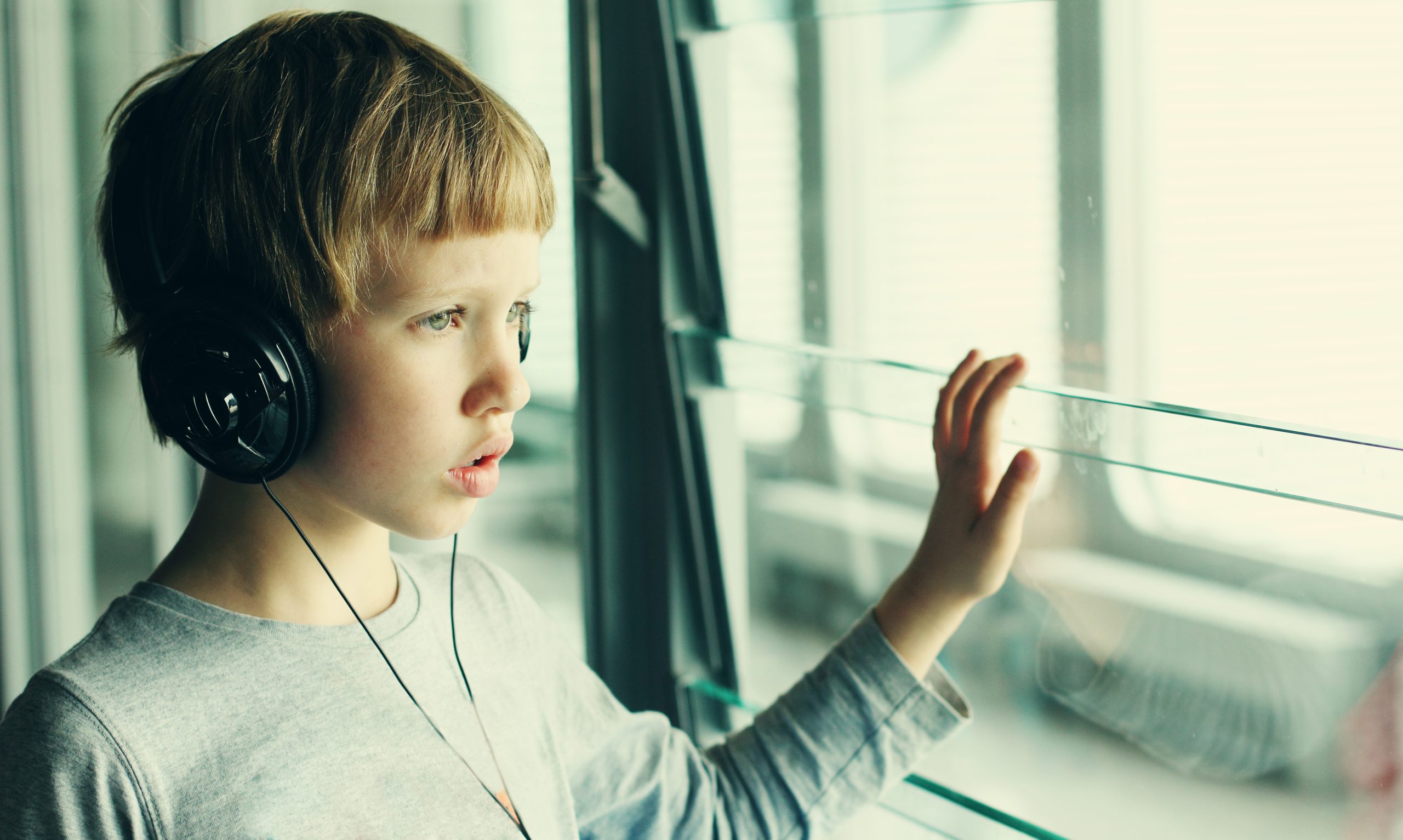
In What Autism Is, I characterized autism as exclusion from the existential empathy on which meaningful human experience relies.
Autistic people are irretrievably remote from the conditions for meaning. Whatever they learn is learnt as a simulation and from outside of human connection.
Further clarity about autism comes from considering what autism is not. An opportunity has arisen in this regard, with a discussion between psychologists Jordan Peterson and Simon Baron-Cohen.
The discussion is titled What Do We Actually Know About Autism? It concludes that autism is a talent for understanding, not thoughts and feelings but structures, not intentions but arrangements. Some of us tend to be good with people. Autistics tend to be good with things. Some of us tend to ‘empathize.’ Autistics tend to ‘systemize.’
But autism is not a talent for understanding things. Autism is not an attunement to structures and arrangements. Autism is not a propensity for systemizing.
Why not?
Because appreciation of structures and arrangements requires precisely the same baseline aptitude that is required by appreciation of thoughts and feelings – and it is this baseline aptitude that autistic people lack.
It may be true that most of us are more or less good with people or good with things. It is certainly true that those with autism are good with neither.
The idea that those with autism are good with things is often heard, admittedly – Peterson and Baron-Cohen do little more than frame the idea in professional speak.
Those with autism are not attuned to people. It is natural for us to assume that they are attuned to something. We conclude that they’re attuned to things.
We are thereby prepared for the hypothesis that those with autism are on a spectrum with those talented at the workings of things – engineers, mechanics, technicians.
And so we take autism to be merely a different style of attention to the world – less adept with people, more adept with things; less empathetic, more systematic.
It is a common mistake.
But it is not only a mistake. It is a category mistake. It posits as a form of meaningful human experience what is categorically impossible as meaningful human experience.
Nothing – not people, not things – means anything without a baseline empathy. The distinction between ‘systemizers’ and ‘empathizers,’ between engineers and nurses, is of little significance. All in the end is empathy.
Autism, as the lack of capacity for empathy, is not an attunement to the meaning of things. It is a wholesale exclusion from the meaning of anything. To describe it as a style of meaningful experience is to commit a categorical error, albeit a common one.
What is uncommon about the discussion between Peterson and Baron-Cohen is that it does not simply commit this categorical error – it unfolds it quite explicitly.
In their opening exchange, Peterson and Baron-Cohen introduce in order immediately to dismiss the baseline empathy on which meaning relies. In doing so, they make it clear what must be suppressed so as to normalize autism in our midst: the very achievement that makes our experiences human.
What do we actually know about autism? That autism is not an attunement to the meaning of things. That autism is rather an assault on meaning itself – hiding in the plain sight even of men of science.
*
At the outset of his discussion with Baron-Cohen, Peterson introduces Martin Heidegger’s insight that the fundamental human attitude is one of ‘care.’
It is a promising beginning. There are few better philosophical resources for coming to know about autism than the work of Heidegger with its central concept of ‘care.’
And Peterson does not only introduce Heidegger’s concept of ‘care,’ he explains it as implying that human beings inhabit ‘a shared structure of value that…foregrounds certain perceptions and hides others.’
Peterson’s explanation is good. In describing the baseline human attitude as one of care, Heidegger points to the essentially purposeful character of even the simplest human experience – perception itself is not the unmediated, neutral achievement that it feels to us to be but the living transmission of a culture, of a shared structure of value.
Whatever is salient to us is also significant to us; whatever we see and hear, let alone what we know and believe, is seen and heard and known and believed in the context of projects that we share with the people among whom we live.
For example, the meaning of the colour red is implicitly instilled in us by the trajectories of care of those around us, who rush to press a button flashing red and warm their hands near embers glowing red and gently stem the flow of red blood and gaily put on their red Christmas jumper.
By our native receptivity to the projects of people we are swept into channels of significance, so that our merest perceptions of red are already thickened by associations with danger, with warmth, with lifeforce, with festivity.
Objective understanding of red, acquired by the classroom mode of matching the names of colours to a line of coloured squares or learning ‘I Can Sing A Rainbow,’ is a decidedly secondary achievement. The meaning of red is already in us by the irresistible involvements with red of those around us.
By the time we set about learning what ‘red’ means, red is already part of our shared structure of value.
With his concept of ‘care,’ then, what Heidegger intends is that meaningful human experience occurs within trajectories that arise and are transmitted through our inescapable being-with-ness – our defining openness to the purposes of the people in whose presence we abide.
Whatever is meaningful to us relies ultimately on the take on the world that we acquire through an existential empathy that runs so deep it goes unseen.
It is this insight, into the essentially empathetic character of meaningful human experience, that Peterson opens onto with the concept of ‘care.’ He could hardly have opened onto an insight more vital to a discussion of what we know about autism.
If the most fundamental human attitude is a constitutive empathy, on which relies the possibility of meaning itself, what of those among us whose most manifest attribute is an apparent lack of empathy? Are they incapable of the most fundamental human attitude, and therefore of meaning itself?
A discussion of what we know about autism must at least consider this troubling possibility.
But Baron-Cohen does not consider it – does not allow that there may be a condition abroad of such inhuman exclusion that it is defined by an incapacity for the existential empathy from which meaning derives.
Baron-Cohen refuses to acknowledge Heidegger’s concept of ‘care’ as introduced by Peterson. More than this, he disarms the concept so that it ceases to denote an existential condition and describes a merely contingent personality trait.
‘You’ve just introduced an extra element,’ Baron-Cohen objects to Peterson. ‘– do we care about another person…You could think about other people’s thoughts without really caring about them.’
Peterson makes no counter-objection and the discussion proceeds.
But Baron-Cohen has obliterated Heidegger’s concept of ‘care,’ substituting for Peterson’s tentative suggestion that meaningful experience is empathetic experience the merely sideshow fact that some of us are kind to others.
Heidegger’s concept of ‘care’ has nothing to do with being kind to others. It refers to the being-with others that makes us capable of human experience. It is the condition of possibility for people and things being meaningful to us. It is the condition of possibility even for our sense of the distinction between people and things.
That there is an essential difference between my mother and my soft toy is something that we learn by our basic human receptiveness to the purposes of those around us and to the shared structure of value from which those purposes derive and which they perpetuate.
How much we take for granted that is given to us by care!
Only if you live with one who suffers from autism do you cease this taking for granted. Only if you are responsible for one who suffers from autism do you cease to rely on the most vital meanings – the difference, say, between my mother and my soft toy – meanings which are never taught to us explicitly because we cannot help but acquire them, meanings of the greatest human import made in empathy with those around.
The care that defines human being in the world is not an extra element that some kind people possess. It is the fundamental attitude in which meaning arises.
And autism is the condition of not having it.
Autism is not caring.
*
Imagine finding yourself in a room filled with people going here and there and with complex electronic boards, criss-crossing wires, thousands of flashing buttons and levers at every turn. Imagine that you are only ever told, again and again though in a language you have never heard, the names for each person and each wire and each button and each lever. Imagine that you have no idea what any one of them is for. Or indeed what the whole enterprise is for. That noone ever tells you in a way you can understand, and that it never becomes apparent of its own accord.
But you must imagine more than that. After all, you still understand that people are speaking to you, even if what they are saying does not make sense. You prioritize the noises that people are making over the noises emitted by things. And you suspect that there is an enterprise of some kind afoot, which the complex configurations of people and things are in the service of in some way.
There are baseline meanings that you still have access to.
You must imagine harder. That the noises of people are not more salient than the noises of things. That the fact that people’s noises are intended for you is not apparent. That the likelihood that the movements of people and arrangements of things are purposeful is not something you understand. That the idea of enterprise itself has never occurred to you.
Imagine the utter, ineradicable bewilderment of that, as you are expected not only to stand in the middle of this room but somehow, unfathomably, to operate within it.
That is what it is like not to care: nothing to do with the extra element of caring about other people; everything to do with exclusion from the most fundamental, the most consoling, feel for the world – for its projects and purposes, for its thoughts and actions, for its people and things.
*
In their discussion of what we know about autism, Peterson and Baron-Cohen conspire to discard nothing less than the attitude that makes us human.
It is a fatal mistake, yielding an account of autism so deeply flawed that it can know neither autistic experience of things nor autistic experience of people.
According to Baron-Cohen, those with autism look at a table, for example, and are absorbed by the rules that govern its system, by the principles of its levelness and stability.
As a rendition of autistic experience of things, this is fantastical.
Certainly, there are people who look at a table absorbed by the rules of its system. But their mode of attention to the table is as firmly founded on existential empathy as the mode of attention of those conversing with the people gathered round.
Meanwhile, for those who suffer from autism, the table means as little as the people seated at it.
Those who suffer from autism may be staring at the table. The table may be salient to them. But salience is for them as salience never is for us: without significance.
Significance relies on meanings that we have acquired, mostly without knowing it, by the attitude of care which binds us to those around in a shared structure of value.
Those who suffer from autism may be staring at the table. But they do only not know what the table is for; they do not know what for-ness is for. They do not only not know what ‘level’ means; they do not know what ‘means’ means. They do not only not know what stability is about; they do not know what aboutness is about.
Those who suffer from autism may be staring at the table. But they have no understanding of the table because they have no understanding of the world. And they have no understanding of the world because they’re not in the world with others.
Recently I made a roadtrip with my eleven-year-old son, Joseph. We spent over fourteen hours together, mostly in the car. It was a lesson like no other, in autistic experience of things.
A few months before, I had taken from Joseph what we used to call his ‘washing machine’ – a plastic barrel with a lid, into which he would put a selection of metal toy cars and tiny plastic bears and fridge-magnet numbers so as to spin it round and round in his hands.
Every day. For five years.
Because autistic experience is comprised of salience without significance, Joseph’s washing machine activity never broadened outwards, never thickened into meaning. Not once. Not in five years.
I had succeeded in making salient to Joseph the different brands of washing machine. And the different washing machine cycles. He can name the brand of washing machine of most of the people we know. And he can anticipate what washing cycle I will choose for laundering sheets.
But these themed add-ons opened out no further, sparked no curiosity or concern, coalesced into nothing systematic. Joseph had his few washing machine bits and pieces, fused without fecundity.
I took Joseph’s washing machine from him so as to relieve him of yet another preoccupying dead-end, at once over-salient and under-significant.
A few days later, looking at a group of men from the city council replacing the bulbs in the lights on our street and repainting the lampposts, Joseph entered into a replacement salience. I could almost see the new theme as it imprinted, with a suddenness and totalness truly stunning.
Men. Lights. Men. Lights.
Over the next weeks, I affected great surprise and disappointment that the lights were now white. Over and over again, I performed a preference for the old yellow lights. This too took hold.
Men. Lights. New lights white. Old lights yellow.
I praised the men repeatedly for having made the dirty lamposts nice and clean.
Men. Lights. New lights white. New lights clean. Old lights yellow. Old lights dirty.
I taught Joseph the Makaton sign for ‘light.’ Hold up a clenched fist, then unclench it.
Men. Lights. New lights white. New lights clean. Old lights yellow. Old lights dirty. Fists clenched and unclenched.
I pointed out, again and again, that streetlights were turned off. And then that streetlights were turned on. Off when bright. On when dark.
Men. Lights. New lights white. New lights clean. Old lights yellow. Old lights dirty. Lights off because bright. Lights on because dark. Fists clenched and unclenched without cease.
Salience-saturation comes quickly. We added nothing more to Joseph’s experience of streetlights. No other aspect imprinted itself.
And then, the fourteen hours in the car. Daily routines suspended. Nothing to impinge on the relentless rigidity of autistic experience of things. Just Joseph and me and lights.
Without interruption, without once varying his theme, without ever falling quiet, without broadening his attention, without wondering, without speculating, without question, Joseph gave expression to his experience of lights. For fourteen hours straight.
‘What’s Joseph thinking about?’ Lights.
‘Why white lights?’ Men.
‘Why light is broken?’ Yellow.
‘Why light is clean?’ Men.
‘Why that [clenched and unclenched fist]?’ Lights.
‘What’s Joseph thinking about?’ Lights.
Salience run riot. Unsoftened by significance. Without context. Without beginning or end. Without relief.
The strain of it was something else. For Joseph, I mean. Dusk fell as we circled Dublin, Joseph’s entire being bent on the motorway lights, his fists clenching and unclenching like a spasm.
‘What’s Joseph thinking about?’ Lights.
At last the motorway lights switched on. Joseph began to cry. The intensity of input, unalloyed by meaning, just too much to bear.
‘Why Joseph upset?’ Lights.
The subtitle of Baron-Cohen’s recent book is How Autism Drives Invention. What an idea. What a delusion.
Those who suffer from autism may be stimulated by some things. But the few aspects of some things that are present to them are not drawn together under the rules of their arrangement or the feel of their association. At best, they are cobbled together into habits of experience, hard-won, unyielding, mostly debilitating.
Far from significant. Far from systematic. Far far from inventive.
*
But however misguided Peterson’s and Baron-Cohen’s account of autistic experience of things, their account of autistic experience of people is still further from the mark.
Not surprising, perhaps. Greater or lesser attunement to things is a relatively neutral matter. Little of human import attaches to it. Greater or lesser attunement to people is far more fraught with implications.
Lack of attunement to people is chilling. In designating those with autism as more ‘systemizing’ than ‘empathizing,’ Baron-Cohen is in danger of consigning them to a kind of monstrosity.
So Baron-Cohen adds another layer to human experience, revealing his account of autism to be less a scientific project than an enterprise in wilful normalization.
Baron-Cohen divides empathy into two distinct kinds. One kind, what he calls ‘cognitive empathy,’ is not so available to those with autism. The other kind, what he calls ‘affective empathy,’ is as available to those with autism as it is to the rest of us.
When, for example, a small child is crying alone in our midst, we are, according to Baron-Cohen’s account, affected by the child’s situation in a manner more basic, more instinctual, than a cognitive appreciation of the child’s trouble.
We are moved by the plight of the child – in our heart, in our gut. Our stomach lurches. Goosebumps appear. Hairs stand on end. We do not have a theory of her experience so much as a feel for her experience. Our bodies connect even if our minds do not.
And, according to Baron-Cohen’s account, autistic bodies connect too – autistic stomachs lurch, autistic goosebumps appear, autistic hairs stand on end.
And so it turns out that Baron Cohen’s concession that those with autism are unlikely to be good ‘empathizers’ concedes much less than it may have seemed to.
Baron-Cohen’s ‘empathizers’ are empathizers only of the head, not of the heart. Very like his ‘systemizers,’ really – interested in the arrangement and interaction of kinds of thought, kinds of personality, kinds of motivation in the same dispassionate way as his ‘systemizers’ are interested in the arrangement and interaction of kinds of material, kinds of angle, kinds of function.
Not being a Baron-Cohen ‘empathizer’ does not mean that you have no feel for people. For, Baron-Cohen ‘empathizing’ is a purely cognitive affair – it involves only thinking about people; it has nothing to do with feeling for people.
Those with autism are not very good at thinking about people, that is all. They are as good as the rest of us at feeling for people – equipped with an undiminished capacity for ‘affective empathy.’
Baron-Cohen does not, after all, plot human experience between the poles of empathizing and systemizing. He plots human experience between three points: systemizing of things (‘systemizing)’; systemizing of people (‘cognitive empathizing’); and empathizing with people (‘affective empathizing’).
We may be more or less systemizers of things or systemizers of people. But, aside from actual pyschopaths, we are all empathizers with people – saved by our empathetic bodies from unimaginable exclusion from the human world.
No autistic monsters here, then.
Except that Baron-Cohen’s account of affective empathy does not tally with exposure to one with autism.
Autistic stomachs do not lurch at the sound of a crying child. Autistic goosbumps do not appear. Autistic hairs do not stand on end.
The crying of a small child is not salient to those with autism. Or, if it happens to be salient, it is not significant – not to their minds, not to their bodies either.
Why not?
Because affective empathy, empathy of the body, is as rooted in shared structures of value as is cognitive empathy – what we feel is as subject to being-with as what we know.
Affective or cognitive, attunement to people relies on care.
If you do not care – and those with autism do not care – neither your mind nor your body can see the plight of those around.
Three years ago, Joseph’s grandmother broke her ankle. We made our summer visit for a couple of weeks, during which she moved about on crutches with great difficulty and was prevented from performing her usual tasks.
The situation imprinted on Joseph.
Granny has a sore leg.
Joseph gloried in this new piece of salience, so present to him in so many ways. He jumped excitedly when Granny moved about. He gritted his teeth at her plaster cast. He walked with a limp and laughed with joy.
Granny has a sore leg.
Ever since, Joseph notices everyone we meet who walks with a stick. Everyone who leans on someone for support. Everyone with a walking frame or wheelchair.
Sore leg! Joseph shouts excitedly.
Legs don’t work! Joseph laughs.
In the past few months, our nextdoor neighbour has entered the final stages of cancer treatment. She is helped from the house sometimes and into a wheelchair, so that she can be brought to the hospital. Joseph looks through the window, enjoying it all.
Jenny has a sore leg.
Jenny’s legs don’t work.
Recently we arrived home as Jenny was being assisted to leave. I diverted Joseph to another neighbour’s house to prevent his meeting her.
‘Of course,’ said this other neighbour. ‘It is distressing to Joseph.’
‘Not so,’ I answered. ‘It is delightful to him.’
How comfortable it is for Baron-Cohen simply to assert that those with autism are ‘very good at affective empathy.’ How tempting it is to believe that he is right.
But he is not right. Those with autism are not very good at affective empathy. Because those with autism do not have the attitude of care, the attitude which instills in the rest of us – in our minds and in our bodies – the meaning of human experience.
Jenny’s last days of life are no more affecting to Joseph than is the broken leg of a table. If either is salient to him, it is salient without the significance that would let him know, and feel, what is at stake.
*
Those who suffer from autism are not monsters, though sadly they may appear so in the world. After all, they neither know nor feel what they do.
Yet they are monsters in one sense. In the sense contained in the root of that word. Monstrum – to remind, to show, to warn, to demonstrate.
Those who suffer from autism remind us of what is forgotten even by celebrated psychologists.
Those who suffer from autism show us how constitutive and consoling is our being in the world with others.
Those who suffer from autism warn us not to normalize their condition but to cherish the achievement that makes our experiences human.
Those who suffer from autism demonstrate how much the rest of us care.
They do this indirectly, of course. By not knowing what they do. By not feeling what they do. By what autism is not.

Sinéad Murphy is author of Effective History (2010), The Art Kettle (2012), and Zombie University (2017), and co-editor of Pandemic Response and the Cost of Lockdowns (2022).
Thanks for reading...
You can help us keep doing what we do. Every little helps and is hugely appreciated.




For other ways to donate, including direct-transfer bank details click HERE.



As someone who has supported people under the umbrella term of “learning disabilities” for the best part of 20 years, including a great many people with a diagnosis of being on an autistic spectrum, I have enjoyed reading your articles and can relate to a great deal of what you’re saying. I don’t feel that you’ve fully nailed it when you say that autistic people, “don’t care” and are “outside of human connection”, however.
If I’ve read you right, I agree with you saying Baron-Cohen is wrong in his belief that autism is just a different and more systematic way of thinking. A person with autism’s reduced capacity for understanding the feelings of another (empathy) is accompanied by a parallel reduction in the capacity to mentally understand the models of the world others have. The two are not separate. In many Eastern philosophies heart and mind are not separate things, they are both mind-stuff (citta) that arise concomitantly – each feeling being tied to a specific thought or story, or vice versa – the difference is of degree and not absolute.. I’d say an autistic person “not caring” is also a matter of degree and not absolute. Example:
One of the autistic people I’ve worked with longest (and still do), sounds in many ways similar to your son – what in other articles you’ve termed ‘profound’ autism. 7 or 8 years in and I’m still answering exactly the same questions that I was answering every few minutes when I first started working with him. He has a collection of matters within his life that he very much cares about: when his favourite plant will flower, favourite songs, when his next holiday to the beach will be, getting his favourite food (…things that he’ll often obsess on an endless loop and at times work himself into a frantic state about, because it’s still not summer 2 minutes after he last asked you and you still haven’t invented a time machine or found a wormhole to transport him to the moment in space-time when his favourite flower happens to be out! …maybe if he asks again though, maybe this time?) The things he cares about does include people; he regularly asks to see his brother and if any of his longer term carers are on leave he’ll regularly ask about them and say he missed them when they come back. I’d say this is more a case of having enough recognition that these people are kind to him and help him organise his world, rather than any recognition or care for their world, and from my experience that’s due to a lack of capacity. Where a psychopath may have a very sophisticated picture of someone else’s model of the world (and hence use that picture to manipulate) but not care how the person feels, the person I’m working with cares to the best of his understanding. He enjoys watching the news, but that’s not because he’s busy ‘systemizing’ an understanding of all the issues non-autistic people endlessly argue about; it’s because he likes the nice soothing tones of the readers and wants to know if will rain tomorrow. Some I’ve worked with have had abilities to do things that most couldn’t – counting the number of cars in the car park before the car we’re arriving in has even stopped, naming the day of the week for any past date… – but I’d suggest this is generally an extreme focus on particular things that they can grasp rather than an overall ability in ‘systemizing.’
As many in the comments have said (and yourself in previous articles), normalising autism as being just a diverse way of thinking is a problem. It’s not a ‘neuro-divergent’ way of thinking – it’s a disability! Autism has a heavy toll not only on those diagnosed, but on those that love them and the societies that look after them. While I’m all for society doing everything it can to try and understand what may help those with this diagnosis feel comfortable, included, and live as fulfilling life as possible (their difficulties are not their doing and society should be judged by how it treats its weakest members), I don’t believe that the msm push for acceptance is driven by the same motivation. There seems to me to be a growing body of evidence pointing towards autism being caused by large inflammations of the brain (encephalitis), which doesn’t necessarily have to be the vaccines (there’s no shortage of other toxic crap in our air, food, water and environments at the moment), but I have had more than one parent of those I work with explicitly blame them (‘They were fine until…’) and they seem likely the largest factor.
https://tobyrogers.substack.com/p/mapping-the-entire-field-of-autism
Thank you for your valuable perspective. We look forward to reading more of your thoughts 😃 A2
Thank you Sinéad.
Maybe 90 percent of humanity has turned program/robot? Autism is something of the modern time created by vaccines, chemicals, food poisoning through additives, radiation technology, wrong diet, toxicity, many factors, vaccines without doubt the main source, indoctrination, fear mongering, identification, etc etc
The human experiment is happening in front of everyone and nothing will really change. Will these two kind of robots figure it out together? Sure one needs to deal with those both models being here. It would be preferred to tackle the cause. Somehow that’s not happening and it is madness to how this game is controlled. Most certainly interesting 🤔🙏🏼💚
Hi I’m really sorry but this is absolute garbage! Autistic people DO NOT lack empathy in anyway! Where did you get this idea? Also how can you possibly tell me if I feel empathy or not when you are not me?!? This is the biggest pile of nonsense I have ever read. Maybe I would suggest reading books instead of making up random ideas about how YOU feel about autistic people and also perhaps maybe it is you who lacks care and not autistic people. Maybe I don’t know just please don’t pollute the world with this utter garbage please. Thanks kindly have a wonderful day.
I couldn’t,t read this article.I agree it is rubbish.I think autism is brain damage.
👉Autism is a badly ginned-up label for a diverse group of, “complex neuro-cognitively impaired persons” that overlaps with other psychiatric disorders, mostly ADHD. Disturbed people do exist but the label, like the label of every psychiatric disorder besides substance use, is of unprovable validity. “On the spectrum” is a just a way to gin-up more cases of this kind of unprovable validity. Many of these persons are probably vaccine and other pharma/chemical injured.
👉These labels and talk about how they ”just process things differently” is psychobabble that serves to distract from their actual injury which must be induced by society since these persons were very rare 50 years ago.
Hi Sinead, that was a beautifully written piece and an enlightening presentation of your experience with your son, Joseph.
May I ask, have you ever considered that Joseph’s torturously limited range of spoken expressions is a symptom of a physical disability and not a cognitive or intellectual one? An apraxia inhibiting purposeful motor control? One that reduces the range of physical actions he takes and leaves him trapped in seemingly primitive, repetitive, compulsive patterns of speech and behaviour?
S2C, Spelling to Communicate, has the potential to utterly transform your relationship with Joseph and cause you to dive even deeper into the autistic experience.
Please email me if you’d ever like arrange a phone conversation. The real Joseph is in there but he can’t control the meat-suit he occupies.
Peace and love,
Mark Dunne
Ireland
Parents like to blame things for there child turning out the way it did.
Vaccines seem a possible scapegoat like Bill gates during covid.
If you look at the parents who child turned out to be funny in the head them parents are far from real health clean and real normal.
“Autism” seems from all I’ve read and watched to be such a nebulous thing that it might just be a label for neurological damage due to a build up of toxins. Jonathan J. Couey advances this theory at Gigaohm Biological. If you don’t know him, you should. I’ve been studying the “Covid pandemic” intensely for years, and he is head and shoulders above the other commentators I’ve found. Listen to him suggest that “autism” is a label of convenience to hide the build of environmental toxins.
You are right ! ,a trafficed street in 1980 cold give you 10k over “normal” levels of toxic
metals ,and it transmits to kids trough breastmilk
This is interesting but I’m not sure it is accurate. Fundamentally it is about identifying a set of behaviours which can be collectively named “autism” based on generalised criteria. One of those criteria is “lack of empathy”, one of the classic threefold test for Asperger’s Syndrome (now apparently out of fashion). The discussion proceeds to identify empathy with “caring” as Heidegger understands it. This seems to be the idea that caring is a state of being fundamentally, profoundly, invested in constitutive relationships with things/objects/people/externality. I say “constitutive” because without it there is no shareable significance. This is the profound void of dis-empathy.
But different autists have different behaviours, so this seems to be a predication which relies on itself to deny itself categorically. Nor does it seem to grasp the root of the matter. I would prefer to think of “care” as the constitutive principle itself, more in line with Husserl’s distinction of Erlebnisse and Erfahrung. To a greater or lesser extent, autists experience a world of primary unassociated perceptions. There is a smell. In the classic Husserlian moment, this is constituted as significance, as reality, as a ‘good’ smell e.g. cheese, or a ‘bad’ smell e.g rot. As normies we may construct a reality in which it one or the other, or one becoming another by the application of perceptual referents. We “care” about the constituted reality in which we live. But if that constitutive moment never happens, we are in a world without significance.
This reminds me of JL Borges’ story “Funes the Memorious”, of a man who had brain damage which left him incapable of predication because he could never forget the differences between things, or the Chinese encyclopedia which had no organising principle. For autists I’ve known, significance or care can be created but it is not visceral, not automatic, more a rational simulation.I’ve seen empathy being simulated. It is a fragile, hard-won struggle to learn, and we may wish to consider autistic rage the price of failure.
I’ve supported Off-Guardian’s independent journalism since 2020, but this article hits the wrong notes on multiple levels. As with covid, the problem with autism is that nobody can define it beyond a checklist of observed symptoms or rather behavioural patterns.
We now literally have an Autistic Industrial Complex, a subdivision of the larger Mental Health (and Biotech) Industrial Complex. A whole industry seeks to diagnose nearly all non-compliant children and adults with one perceived personality disorder or another. They can only do so by conflating genuine neurological defects or brain injuries that would historically have only applied to a minuscule subset of humanity (< 1%) with a much larger group of imperfectly socialised misfits. Autism has gone from being a rare disorder associated with low-functioning intellectual handicaps and a prevalence of 1 in 10,000 to a common condition that has risen to 1 to 3% across the western world. What’s changed?
The extended autistic spectrum builds on the natural diversity of personality profiles that Baron-Cohen defines in terms of empathisers vs systemisers. He has a point,but shy geeks are just as human as flamboyant party animals. Indeed, statistically psychopaths are much more likely to use charm offensives or advanced social skills to manipulate others.
Unlike Prof. Jordan Petersen, a keen advocate of psychoactive medication and sociobiology, I do not believe personalities are hardwired. We may have some genetic susceptibility to certain behavioural outcomes, but by and large our personalities are shaped by early socialisation and our physiological limitations. These can create feedback loops or cascading effects that amplify over time through environmental interaction.. Alas we have become increasingly atomised in digital prisons that can engender autistic-like behaviour in otherwise well-adjusted children.
To be honest, I think we’re dealing with two very different phenomena: 1) social isolation of perfectly functional human beings. 2) people with obvious neurological defects often described as suffering from regressive autism with poor language skills. Both need our compassion, but the endless expansion of the mental health sector serves the interests of the same technocratic eugenicists who locked us down.
If you have time, please read Sami Timini’s Searching for Normal.
The more important question is how this condition appeared apparently out of nowhere, and continues to geometrically increase in incident of appearance. It’s obviously aberrant, similarly to the sociopathy and psychopathy of the world’s existing ruling classes.
Yes, it did seem to come ‘from out of nowhere’. It was considered a rare ‘medical condition’ which very few were aware of. It’s main characteristic was emotional unresponsiveness. (but not emotional indifference)… Repetitive gestures, banging head on wall, etc were not characteristics… Later it became an umbrella term. covering previously separate conditions such as Asperger’s Syndrome. Lumping all the various conditions together as Autism no doubt is cause of much confusion…
Sorry, but no.
You want to believe that the core of the human being is care, compassion, heart, community… warmth of the soul. And to rationalize such belief, you devise human cognition as emergent of those traits.
—
1) This is wishful thinking, not insight:
Heidegger’s insight that the fundamental human attitude is one of ‘care.’
2) You say:
whatever we see and hear, let alone what we know and believe, is seen and heard and known and believed in the context of projects that we share with the people among whom we live.
I do not. So you have at least one outlier. I am reading this for pure interest in exploring more on the topic, not because I like you. When I read Off-Guardian, I never do it because I want to feel part of the Off-Guardian community; and I am not reading this article because I am fascinated to hear what Sinéad Murphy has to say. Honestly I could not care less if a trans-dimensional goat was writing this article; whether it is published by Off-Guardian or RT, or Fox News, I could not care less.
Your assumption that all cognition is based on human relations comes so completely alien to my personal experience that I can utter a clear and categorical NO to your entire thesis in this article.
3) You say:
For example, the meaning of the colour red is implicitly instilled in us by the trajectories of care of those around us, who rush to press a button flashing red and warm their hands near embers glowing red and gently stem the flow of red blood and gaily put on their red Christmas jumper.
Buddy, that is you. You are projecting. It is not the same for all of us. At least to me, red is a pure idea of red; not some Christmas carol, not womb nostalgia; I can cognize it as “electromagnetic radiation of the range 620 to 750 nm”, but that is not it either. To me red is.. red. Just red. No emotions attached to it.
—
Hiedeggard’s views typically are interpretations of the world from his Christian framework. God is good. > God created man ∴ Man is inherently good.
And the likes.
But really, for every evidence that we can gather to support that view, can’t we also find evidence of human being a vicious, confused, and maladaptive mutation of nature gone wrong?
Considering everyone is on the spectrum, or likes to think there on
the spectrum, it seems fitting to be autistic.
There is nothing like holly woke to programme people into be dumb.
I believe what she seems to be saying is that severely autistic people are not human in any recognizable sense. And that autism is severe brain damage. It is of course possible to love those who are not human. Look at how people love dogs. But it is a very hard, hard lesson, impossible to sentimentalize, and hard for most people to take.
Sinéad Murphy and the editor must be woke right msm plus autistic to be watching a known shill who told everyone to get the vaccine then did a switcharoo when it was safe and internet fashionable to say so and still watch this known internet algorithm shill as a form of anything worth discussing and vaccines and autism shows that this site still shills when there is 1000’s, of others who can education the viewers on the subject but OD and Sinéad Murphy like to keep OD viewers in a woke right msm plus autistic TV propaganda of wankers like Peterson.
Simply put, Autism is a disability. It is a brain injury. The way that society has been attempting to frame it as a talent is perverse
Off topic.
Perhaps now Netanyahu might have a miniscule of understanding of the Palestinian people’s plight:
https://consortiumnews.com/2026/01/17/israel-fears-it-cant-defend-against-iran/
Then again _ _ _ _ nah, he wouldn’t have a bloody clue. He’s only concerned for one thing: Himself.
Every Seal learn that attack first is the best defence.
If Israel attack Gaza, Lebanon, Iran at the same time, bombing the shit out of everybody, they will all be so confused that Israel will win the game. Its worth a try. Period.
In war, nobody wins, nobody.
(On the other bloody hand, the Military Industrial Complex does make putrid profits).
Having worked with intellectually disabled Folks of various ages for twelve years, l witnessed first hand the pent up frustrations, tension and violence that an intellectual disability can produce in a physically capable human being.
I can’t even begin to comprehend how hard it must be to parent a child, a teenager and then an adult with an intellectual disability.
Those parents are the real Superheroes in our society.
Imagine what it was like for Autistic kids back in the 70’s. Town weirdo and outcast, bullied and beaten because they didn’t fit into the programmed normies small world. And a big fkin hurrah for the 21st century label slapped on anyone suffering from their poisoned surroundings and medical mis-interventions. 😏
Its opposite. Everybody loves the weak because here is where the socialist can feel superior.
Its worse to be Intelligent. Einstein has been one of the most mobbed persons, also on these pages here by dumb socialists, while the clinical autism kids received all the socialist’s empathy.
Latest we have the unvaccinated called losers and monsters by socialist group think because they were wise enough to see through the scam.
Proof: https://youtu.be/zI3yU5Z2adI
And you know it, but will not admit it!
15% of all people are physical or mental invalids -2020 claim by World Bank (in Washington DC). Is that below target? Is that why the Rabid Empire is doing its best to trigger more poverty, disasters and wars?
Someone claimed that 10% of all people care for the invalids. If these care-givers have no breaks, they are slaves, regardless of pious or political talk.
Super heros that have intentionally been kept busy to exhaustion… think depopulation… they also have to divorce since the 70’s making sure the familly cell is destroyed and it’s members weakened. Think divide and conquer… they recently multiplied the sick children by calling them “they”… the creativity of these people is on warp speed…
Exposure of children or fetuses to pollution may cause autism or hyper-activity, e.g.,
– heavy metals or black carbon polluting the environment from mining, electricity generation, manufacturing, industrial farming, transport and trash incineration
– methylene chloride or solvents that either parent gets exposed to, even at work
– pesticides, fungicides, toothpaste, disinfectants, some cookware/tableware, scientific medicines or RF from ICT devices
– phthalates, PFCs or BPA in consumer products.
France just banned some of the pollutants in products, but had to exempt one maker of non-stick pans. Covid jabs were just the tip of the iceberg.
Exposure to pollution – heavy metals and whatever else they’re mixed with – in the injections children get from the first day of life is probably a good bet.
Yes, vaccines certainly need to be considered as a major causative reason for autism – check out fourteenstudies.org, ageofautism.com and many others.
And as Dr Brian Hooker said: We need to stop calling it autism and call it what it is – vaccine-induced brain injury.
However, acetaminophen (paracetamol) use in children has also been associated with increased autism risk.
http://www.ncbi.nlm.nih.gov/pubmed/20628445
When an infant reaches out and its reach is not met, the impulse subsides.
When the infant reaches out again and again, and again and again its
reaching out is unmet, its reachings gets shorter and shorter, the impulse
subsides, and soon fails to form… It seems the adult hoomin animal is
only animal which forgets the full expressive vocabulary it is born with…
When the basis of empathy / sympathy fly out the door, trust is very close
behind…
That should read: when trust flies out the door the basis of empathy / sympathy
is gone… Dis-trust is the first lesson every newborn learns…
TRUMP SAYS GREENLAND OR ELSE
Beginning February 10% tariff on goods from 8 EU countries unless they capitulate to allowing the US to buy Greenland. Tariff to increase to 25% in June. Countries are Denmark, France, Germany, UK, Netherland, Norway, Sweden & Finland. Is that all?!
So far Trumpian tariffs have only raised prices at home & caused suppliers to seek other markets.
Autism is a misnomer. Why don’t people call it out for what it is – brain damage caused by the childhood vaccine schedule at birth or within first 4 months of birth.
I have a grandson who is termed “on the autistic spectrum”. He doesn’t relate to adults particularly ie no eye contact and he appears sulky and overly shy, but is very animated and engaging when it comes to meeting up with his own peer group.
there was no such thing as autism when I grew up, but then my peer group never succumbed to the needle.
Those who suffer from autism have gaps in their consciousness. Those who have autistic children are heavily tested but are apparently considered capable to progress with their own consciousness of coping.
When “I Care” isnt there, “I Dont Care” is the message.
This isn’t describing autism as I know it. This article is describing a modern phenomenon of mostly diagnosing personality or fundamental human traits with revenue earning labels, ADHD, bipolar or now autism. My 30 yo son is autistic – it’s not subtle. Nor treatable. For me at least, autism includes “stimming”, uncontrollable hand ot arm waving.
I hear so many normal people seeking “a diagnosis” as some kind of comfort or an excuse for medicating. Health professionals and pharmaceutical companies love it.
Thanks, saved me having to read it, !
Don’t normally like Ricky Gervais but that line in his new show ‘mortality’, something like.. ‘oh, my parents died and I turned autist’ is/was appt.
Trust Zionists at your peril, your benefit or education is not their agenda.
That’s dumb. One must have the capacity to analyze any ideas coming from anybody, regardless of who they are.
Isn’t that guy Borat? Well, then it’s settled.
I doubt if Borat’s father is an expert on anything.
He’s Borat’s cousin
Wow, you actually follow him. Congratulations.
The “Sir” barn-coin is as funny as his cousin
Not funny at all, then. Just monstrous.
The medics have to diagnose a profusion of lower level mental illness because otherwise everyone would realise that society itself is corrupt and artificial, and that many of the mentally ill are simply acting naturally to those pressures. The ‘specialists’ and bureaucrats making the judgements are themselves too successful, institutionalised and prosperous to be objective. Then you have the appalling lockdowns recently, which played havoc with people’s mental health – look at how the Guardian crows about its own enlightenment and compassion when for two years it colluded with corrupt scientists and politicians to imprison the young and old. They still don’t allow readers to debate the issue – probably they get their hard drives smashed again if they do any journalism.
Well said…and then they throw AI into the mix…
A good friend of mine. Ex Mister Universe had 2 friends die of suicide during Convid. He opened his gym to allow people to talk about their issues, only to have the Bourgh Council fine him 80k for breach of Convid rules.
That is the definition of Corrupt Fucking Arseholes.
But we fkd them using legal person identity fraud………….
“Only if you live with one who ‘SUFFERS’ from autism do you cease this taking for granted. Only if you are responsible for one who ‘SUFFERS’ from autism do you cease to rely on the most vital meanings – the difference, say, between my mother and my soft toy – meanings which are never taught to us explicitly because we cannot help but acquire them, meanings of the greatest human import made in empathy with those around.
The care that defines human being in the world is not an extra element that some kind people possess. It is the fundamental attitude in which meaning arises.
And autism is the condition of not having it.
Autism is not caring.”
What bullshit! Maybe some care for humanity in general and seek justice abstractly but others care deeply, and profoundly but don’t react to punishment and reward, disapproval and approval from the masses. I was never swayed by PEER pressure.
“Care” seems to be lacking in many neurotypicals, and there is a heck of a lot of neutroticism and attention-seeking/ power-grabbing behaviour in the majority.
And I don’t SUFFER from autism.
Huh?
Religious folks all seem autistic, no no I mean retarded.
I will need to reread this, and probably circle back to the discussion Sinead reviews here. Salience really is a key concept is all I feel qualified to say, and a further 2p regarding Sinead’s book Autistic Society Disorder. Best book of 2025.
Is Autism real? what I mean is, say in the last 10 to 15 years there’s been a real increase in Autism – is that due to modern life’s system say the MMR and other modern factors that we haven’t quite revealed yet – their certainly wasn’t much if any of it about when I was young – I suppose it could that it wasn’t diagnosed back then as Autism.
Autism as being the one and only person you associate it with.
Might that be the real moral of the story?
I was thinking this, but it occurred to me from the author’s previous writings that she is acquainted with other autistic individuals — e.g. from Joseph’s social group for kids and young people with autism. The impression she gets from others in said group appears to be similar to what she assumes about Joseph’s experience.
In any case, it seems obvious from the author’s essays that parenting someone with Joseph’s challenges has left her physically, emotionally, and spiritually exhausted. I hope that she and her son have strong support systems within their family and community.
As a mother who struggles with mental health challenges including bouts of near-crippling anxiety: My heart is with you, Sinaed. If you ever feel the need to talk/vent, I am here.
I thought you were a guy, Fatime
Sorry for any disappointment. I am an atypical woman in the sense that in my marriage, I’m the practical partner while my husband is the romantic one who buys without question into “The Agenda”. XD
We are the enemy. Not Russia or China.
Sun Tzu
By holding out advantages to him, he can cause the enemy to approach of his own accord; or, by inflicting damage, he can make it impossible for the enemy to draw near.
If the enemy is taking his ease, he can harass him; You may advance and be absolutely irresistible if you make for the enemy’s weak points; you may retire and be safe from pursuit if your movements are more rapid than those of the enemy.
Vaccines are a tool of war against the people. They contain toxins and heavy metals.
Children who have died with Autism had 30x the aluminium in their brains than normal, as shown in autopsy. Aluminium is an adjuvant used in vaccines to trigger an immune response.
We are under total control and have accepted their authority with little to no fightback. We allow ourselves to be poisoned by chemicals, toxins and radiation. We submit meekly at the surgery, at airports, when eating, and drinking. Every day, we become weaker in the body and mind.
Aluminium is also what is said to be in the HARP spraying in the sky. The military carry it out.
As I said previously the Military is the only unit who pollute our air.
All the bs that the little man and 82 year old granny pollute the air their with cigarette smoking or a wood stove is as far out as the moon landing, 9/11 and the Corona case.

https://www.youtube.com/watch?v=uNsVQSBbPkk .
What a ridiculous insulting article. Ironically, it lacks any empathy to how the autistic person might feel reading it!
Thank you. Agreed.
The autistic person doesn’t care that you lack empathy. That’s the point.
I would question the whole premise of the argument. Many autistic people are incredibly empathetic. It’s just not obvious to the neuro typical.
The autistic persons are those who decide upon us “mortals”, much too often we see “presidents” or “prime-ministers” acting with extreme lack of empathy.
Thank you Sinead.
As long as your little boy can still smile and laugh, he is not lost.
I bet he loves his mum too… despite all the above..
LOL
Using theses gimps as an example is woke right MSM plus at it finest.
Did psychologists to the internet idiots woke msm plus Jordan Peterson say that anti semetic was a form of autism.?
If anti-semitism requires:
– a lack of care
– a lack of empathy
for those taking a ‘shower’ in a concentration camp,
Then yes, it would seem to fit the definition of autism
Nonsense.
Correct, until he explains what he means. What “concentration camp”, in Gaza ?
One issue would seem to be that autism lacks a precise definition.The concept of a ‘spectrum’ doesn’t help with that.
And there’s probably a conflation of the scientific mind with the autistic mind. Baron-Cohen from what I’ve seen of him does a fair bit of work with autistic savants. Prodigies with social issues.
With would likely cultivate a tendency to overlook the more ordinary autistic types.
The capacity to focus is one of the main prerequisites for thinking about systems or things – scientifically, mathematically, inventively. Those who can focus are often labelled as ‘autistic’, likely mistakenly.
An obsessed scientist would think little of splatting a fly buzzing around his/her head in the laboratory, demonstrating a complete lack of ‘care’ or ’empathy’ for it. As would, presumably, someone labelled as ‘autistic’. In that sense they’d share a common approach for that situation.
Medical research requires the killing of many types of animals.
My job is to work with those classed as adults with learning difficulties, amongst them are those classed as autistic. I also have a disabled son who is so classed. And I have found that the autistic are as varied as those with Down Syndrome. They obviously have a condition with certain traits but it is unwise to have some kind of blanket reductive notion of their condition.
And this bothers me:
A person who has “a wholesale exclusion from the meaning of anything” is a person I cannot conceive of at all. Those I know who are classed as autistic have a sense of meaning. They value some things more than others. By your definition of autism, a stone might be autistic. Not any person I have met. Not any person I can imagine meeting.
Absolute agreement George. I haven’t seen the whole video but here is the direct link – don’t do bing or google searches folks:
https://www.youtube.com/watch?v=SDWZa_7WrFg
I suspect even the term ‘autistic spectrum’ is wrong that implies that it is a 1 axis progression from incapable to savant, but clearly some people can have parts, not all the features. Is that all the same illness? I doubt it:
Interesting bloke.
Does he ever smile?
Rarely. Dave is a Former Microsoft engineer with a good Gulagtube channel.
Here is the real link to that video..https://www.youtube.com/channel/UCtb6a_CnmGbSns9G8W2Ny0w
Every single human is his complete own within a human frame.
Thats why our desperate attempt to frame it into groups of linear statistic static systems can never be correct.
That is also why it is important to emphasize that man is a man and woman is a woman, and everything outside this frame is called an anomaly.
Constantly putting things in classes and labelling them is probably the best way to seed division and collectivism. Meanwhile, I have never seen two things, in any context, that are the same.
George, get away from using the word person. Its a legalese trick word. Use man or woman instead.
How can a man or woman be un-personed ? Only a person can be unpersoned . And women know how to un-man a man or make a man outa yew
A person is a corporate entity in legalese, not a man or a woman. Ya lum…
I normally use man only. Not to declassify women but because man has special obligations and responsibility that women dont have.
Man has a protection gene: Protection of women, children, elderly in houses of stone, protected from weather and wild animals.
Woman has a care gene: Care of children primary, but also care of elderly and men.
Together they are 1 unit and supplement the other. Single cant do full capacity without the other part.
That’s the point. That’s what she said. You cannot conceive of it, it is so foreign to you and everyone who is not autistic. That doesn’t mean she is wrong.