The Performing Author: Slow Knowledge in an Age of Spectacle
Colin Todhunter
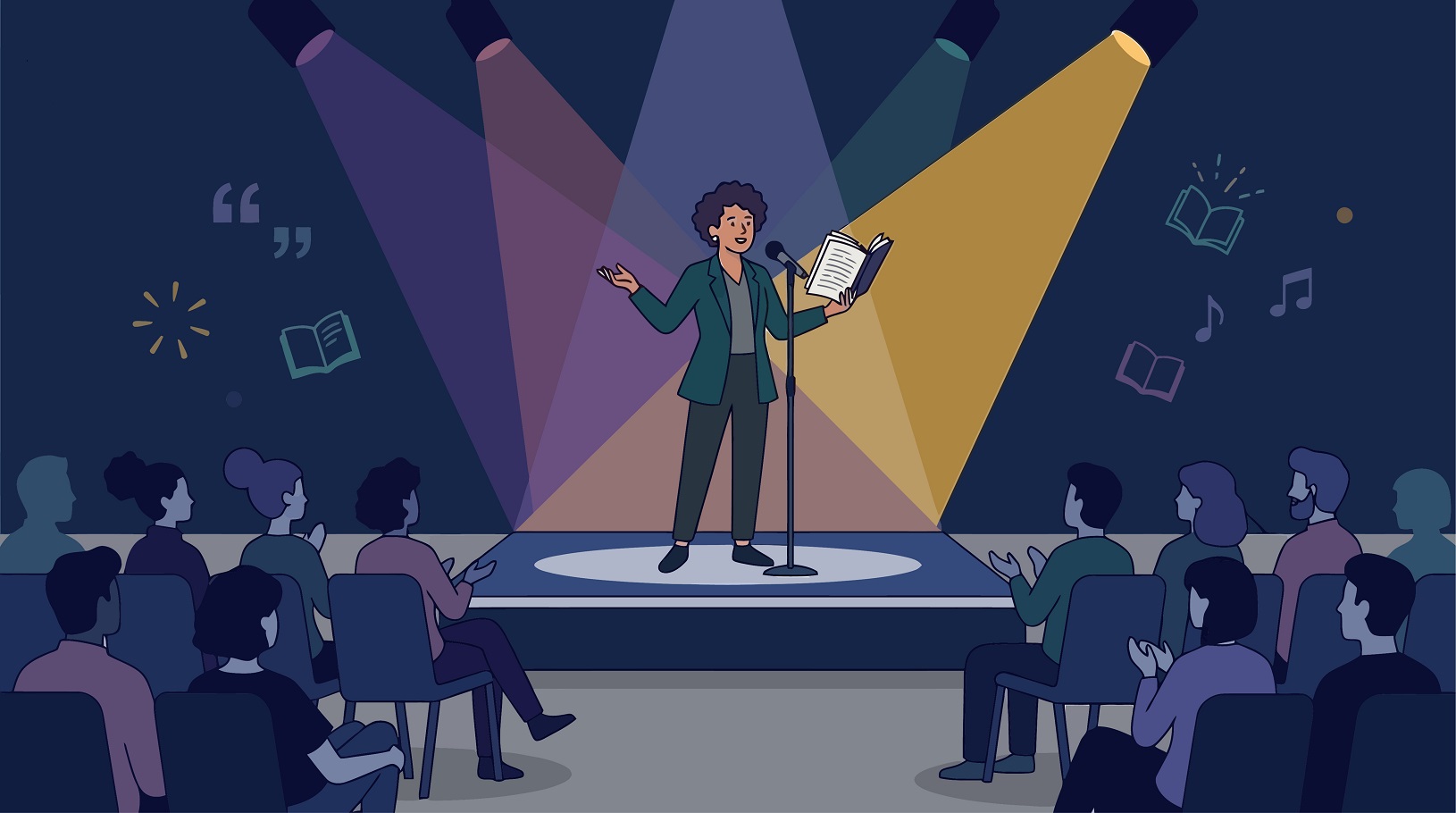
The online media age is increasingly organised around visibility. Seeing has become more important than reading. The written word, once a primary vehicle of public argument, now competes in an environment structured around images, voices and recognisable personalities. Multi-media sites thrive, while those that rely mainly on the written word struggle to survive.
Writing alone is increasingly treated as incomplete. It is considered too slow, too demanding or insufficiently engaging in an era of information overload and shorter attention spans. Rather than standing as a finished form of thought, it is expected to be supplemented by the visible presence of its author.
This shift has been reinforced by the rise of podcasts, interviews and personality-driven media. Written work is frequently treated as material to be carried into online conversation, where it is summarised, explained and re-presented in spoken form. Increasingly, ideas are treated as socially complete only once they have been voiced in real time.
A recurring pattern illustrates the shift. A fully developed argument is published as an article or book. The reasoning, evidence and conclusions are already present. Yet the response is often an invitation for the author to explain the work in conversation, even where extensive written material already exists.
What this reveals is more than a preference for the visual or the spoken word. The text is no longer assumed to carry the full burden of articulation. Instead, the author becomes responsible for making the work accessible through continuous explanation and visible presence. Writing, in this sense, ceases to be the endpoint of thought. It becomes raw material for media performance.
But to an extent, this is to be expected. Most readers do not have the time to study multiple long works by a single author, and public attention is increasingly fragmented. An author summarising their views on a podcast or media channel is efficient and often genuinely useful.
However, the issue is not that readers value summaries. The issue is that the author is often expected to become a public personality. This expectation shapes not only how writers present themselves but also how readers come to discover, trust and evaluate ideas. Rather than allowing writing to stand on its own, the writer must engage in an ongoing performance.
A hierarchy of communication can follow. Live conversation becomes the highest-status form of intellectual exchange. Recorded interviews come next. Long-form writing increasingly occupies a subordinate position, treated as incomplete unless accompanied by the author’s visible participation.
Many writers adapt by becoming public-facing personalities. Their work and identity merge into a continuous online presence. Books, articles, interviews and social media become different expressions of the same personal brand.
This is not to imply that writers have never promoted their work; appearing on lecture circuits, radio and television has been the norm for many. What is distinctive today is not that authors speak publicly but that continual visibility has become an expected component of authorship itself.
The author-as-brand takes many forms. At one end are highly visible media personalities whose authority is inseparable from their public presence. At the other are writers whose recognisability rests less on their image than on a distinctive voice and continual online commentary.
It’s not just a cultural shift. Algorithms matter. Platforms promote personalities because personalities keep people engaged. Familiar voices travel further than isolated texts, so ideas increasingly circulate through individuals rather than existing on their own.
This model has obvious advantages. It expands audiences and accelerates dissemination. It also changes how knowledge is communicated, distributed and understood. The demand for continual presence can even shape what kinds of work are written in the first place.
There is, however, another way for writing to circulate. Texts can move independently of their authors. They can be read, downloaded, cited, archived and shared without requiring their creator to become part of their distribution as a brand or personality. Their circulation occurs quietly through online repositories, PDFs and informal networks rather than through continuous performance.
This is a form of slow knowledge. Like slow food or slow travel, slow knowledge assumes that value is not measured by speed of consumption or visible reaction. By contrast, the personality author is expected to give writing ‘legs’—to move it through podcasts, interviews and commentary streams, so that the work does not stand or travel on its own.
Slow knowledge allows ideas to be encountered in full and revisited over time, without being reduced to immediate reaction. It is independent from the author’s continual public performance.
But if there is no interview, no social media presence and no ongoing performance, it is easy to assume the work is not circulating meaningfully. This confuses visibility with circulation.
Much reading leaves no trace that returns to the author. Someone may download an essay, save it as a PDF, discuss it with colleagues months later or cite it in another piece of writing without ever leaving a comment or following the author online. None of this is visible to the metrics that increasingly define success. There are no comments, acknowledgements or metrics that capture its effects. Circulation and public visibility are not the same phenomenon.
This stands in contrast to knowledge acquiring public legitimacy through personality. Ideas are increasingly expected to arrive attached to visible individuals whose continual presence authenticates, interprets and renews their own work. The author becomes the producer of knowledge and its permanent spokesperson.
For readers, the issue being discussed here matters. If ideas are recognised primarily through personalities, readers become increasingly dependent upon personalities as the gateway to understanding. The habit of engaging directly with arguments gives way to consuming interpretations delivered by the people who produced them—or by those who have successfully branded themselves as interpreters.
The consequence is a narrowing of how ideas circulate. Instead of allowing texts to be encountered directly, attention is increasingly channelled towards visible personalities.
The point is not that public personalities should not exist. Many writers communicate effectively through interviews, podcasts and regular public engagement. These forms can deepen understanding.
But once writing is routinely treated as requiring the author’s continued explanation, the authority of the text begins to migrate toward the authority of the person. The work no longer stands alone; it remains tethered to the visibility and availability of its creator.
The alternative is not the rejection of conversation. Conversation has always been an important way of exploring ideas. The question is whether conversation and public spectacle remain a supplement to writing or become a condition of its legitimacy.
Written by someone with no personal website, no social media presence and no podcast appearances, whose work circulates through recommendation, download and informal sharing. Apparently, that still works.

Colin Todhunter specialises in food, agriculture and development and is a research associate of the Centre for Research on Globalization in Montreal. His open access books on the global food system can be accessed via Figshare (no sign in or sign up required).
Thanks for reading...
You can help us keep doing what we do. Every little helps and is hugely appreciated.




For other ways to donate, including direct-transfer bank details click HERE.
 wpDiscuz