We Should Know Better
Todd Hayen
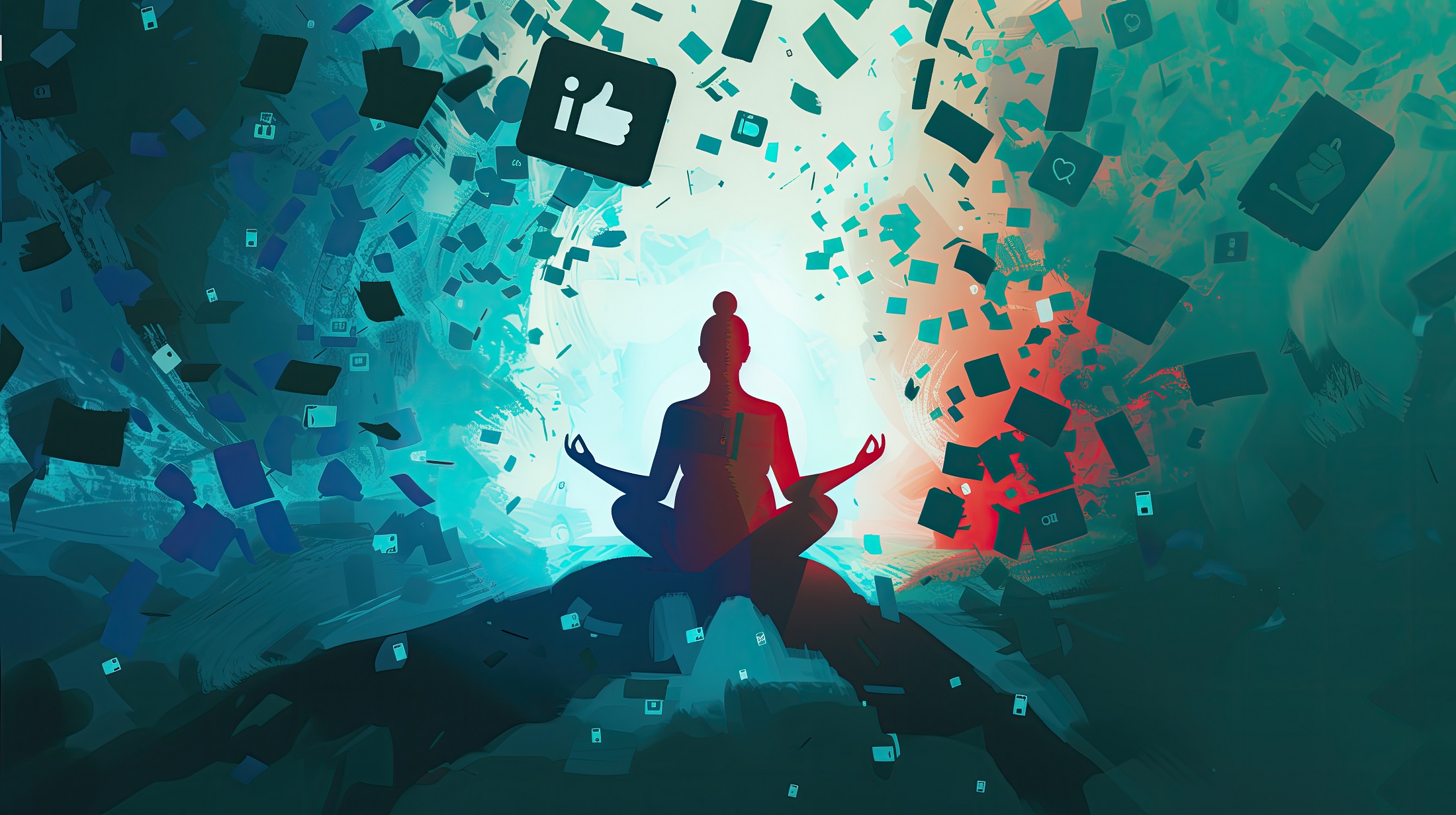
How unnatural does it need to be before we humans realize this environment is not one in which a human animal will do well in, yet alone even survive? It seems that we should, by now, be very aware of this, but few people seem to be.
And even if we are aware that our environment is slowly killing us, what can we do about it? We can’t very well up and move to Mars (no matter what Elon Musk might say), nor would that solve it.
I have had many clients over the years who are trying to raise children in this mess. Often, they ponder the option of taking their kids out of the toxicity they see every day and moving them out to the prairie, to a little house on it.
That might work to a degree, and maybe in the long run that might be the best thing to do. But how do you even do that? Moving off the grid seems like a good idea on paper, but will your kids really warm up to such a thing? Being pulled out of school, losing touch with their social media, their phone, and their corrupted friends.
How would that work?
I had one couple as clients who tried to do all this while still living in the city (Toronto). They did not have computers in their house, certainly no televisions, they lived like the Amish (and I am not knocking the Amish!)
Needless to say, it didn’t last long. Their kids were still exposed to the toxic world through school, and their neighbourhood friends—still living in the “environment” they were trying so hard to escape.
Is this possible to do?
First of all, you have to “know better,” i.e., you have to be aware that your environment is toxic to begin with. As I am stating, I think very few people are aware of that fact—or at least not before it is too late.
And I am not just talking about the obvious toxicities, like pollutants in the air, food and water, 5G, EMFs, chemtrails hovering overhead, vaccines and bogus medical treatments around every corner. As well as other rather obvious ones (that not everyone agrees are as toxic as they are) such as cell phones, social media, incessant video gaming, the internet, pornography—mostly toxic to males, and then goes through the males to relationships with females (and other sexual orientations, the toxicity not exclusive to heterosexuals).
I am also talking about the psychological toxins, which of course are carried to humans by some of the above examples (cell phones, social media, porn). The psychological toxins mostly appear in the form of media, film and television, lies from government, social pathologies such as the erosion of family values, needless sexual complexities, loss of nature, loss of human connection, the secularization of sex, loss of values, loss of community, loss of the workplace, on and on and on.
My point here is how did all of this sneak up on us so effectively?
It didn’t all just hit us at once like a ton of bricks. We really have no excuse, like we would if we were smashed instantly by a five-ton load. No, all of these things came in little doses, all of them came in such a way that we may have had more control over them as they snuck into our awareness and ultimately took us over like some sort of flesh-eating bacteria. Once it got a hold, it was over. Nothing now can be done except for extreme measures, like moving to Mars.
So, what did it look like when it first came along and why was it just brushed off like a small fly that lands on our salad during a summer picnic? Because that really was like it was—a small pesky fly. And our brush-off took the form of these comments: “What can you do?” “It’s what all the kids are doing,” “How can you stop progress or technology?”
Maybe all that is true, maybe there really wasn’t anything we could do, except see the writing on the wall and start packing for your interplanetary trip. Take cell phones for example. How could we have stopped that onslaught of toxicity? Did we even know how dangerous it could become? Maybe not, but I think once it started to take hold, we could have stemmed the tide a bit.
Should we have done this with stricter rules for our children? More severe punishments for breaking the rules? I doubt if that would have worked, but maybe. It seems that if everyone was a bit more cautious about allowing their kids to have cellphones, just as they were in my time allowing kids to have cars, or excessive makeup, or BB guns, or short skirts—maybe.
I am still fascinated by how easy it was for all of this to just get passed under the bridge without much thought about what was coming down the road as a consequence (I am not pointing any fingers here, I am just as guilty as the next person). Being within a culture and community that “allows” all of this toxic crap is of course a big part of the problem. It is very difficult to move outside of the crowd’s influence.
Take the aforementioned Amish for an example. What makes that culture able to stay within the confines of their own definition of decency, and “how to be a human being?” Is it largely religious? Respect for authority within the community?
Probably a bit of both of these things. We certainly have little of either one of those influencing factors in our current mass culture. When I say “authority within the community” I primarily mean respect for the authority of parents—at least that is the most important authority for kids to pay attention to.
Religion and spiritual character are all but dead in our “mass culture” these days. No one seems to give much homage to universal truths such as what can be found in the Bible’s Ten Commandments.
Although limited in nuance, the 10 “rules for life” certainly are still a good place to start. What is “good character” anyway? I am sure most of you have a pretty good idea of how to answer that question. Some say, as does Dennis Prager, that we all have a “moral bank account” into which we make deposits and withdrawals.
I note this because it brings home a point that is often lost on most people — religious or secular, conservative or liberal — that human beings all have what I call moral bank accounts. Just like a real bank account into which we make monetary deposits and from which we make monetary withdrawals, we make moral deposits into and moral withdrawals from our moral bank accounts based on the actions we engage in during our lifetime.”
So, what does this have to do with toxic things sneaking up on us and what we can do about them once they have consumed us and our children? Well, once it is here, there isn’t much to do but try to get as far away as possible—as previously described. To avoid them overtaking us, I think it is a matter of prevention rather than treatment.
This comment isn’t going to help anyone who is already sick from a toxic environment, but it may slow the toxic flow a bit. Focus on character.
As Prager suggests, be aware of the moral bank account you and your children are depositing and withdrawing from daily. Walk the righteous path, be kind, know and administer love, and find purpose and meaning in your life. Be aware of and be one with Source. And if we really should know better, then know better.

Todd Hayen PhD is a registered psychotherapist practicing in Toronto, Ontario, Canada. He holds a PhD in depth psychotherapy and an MA in Consciousness Studies. He specializes in Jungian, archetypal, psychology. Todd also writes for his own substack, which you can read here
Thanks for reading...
You can help us keep doing what we do. Every little helps and is hugely appreciated.




For other ways to donate, including direct-transfer bank details click HERE.
 wpDiscuz