Photo Illusion
Todd Hayen
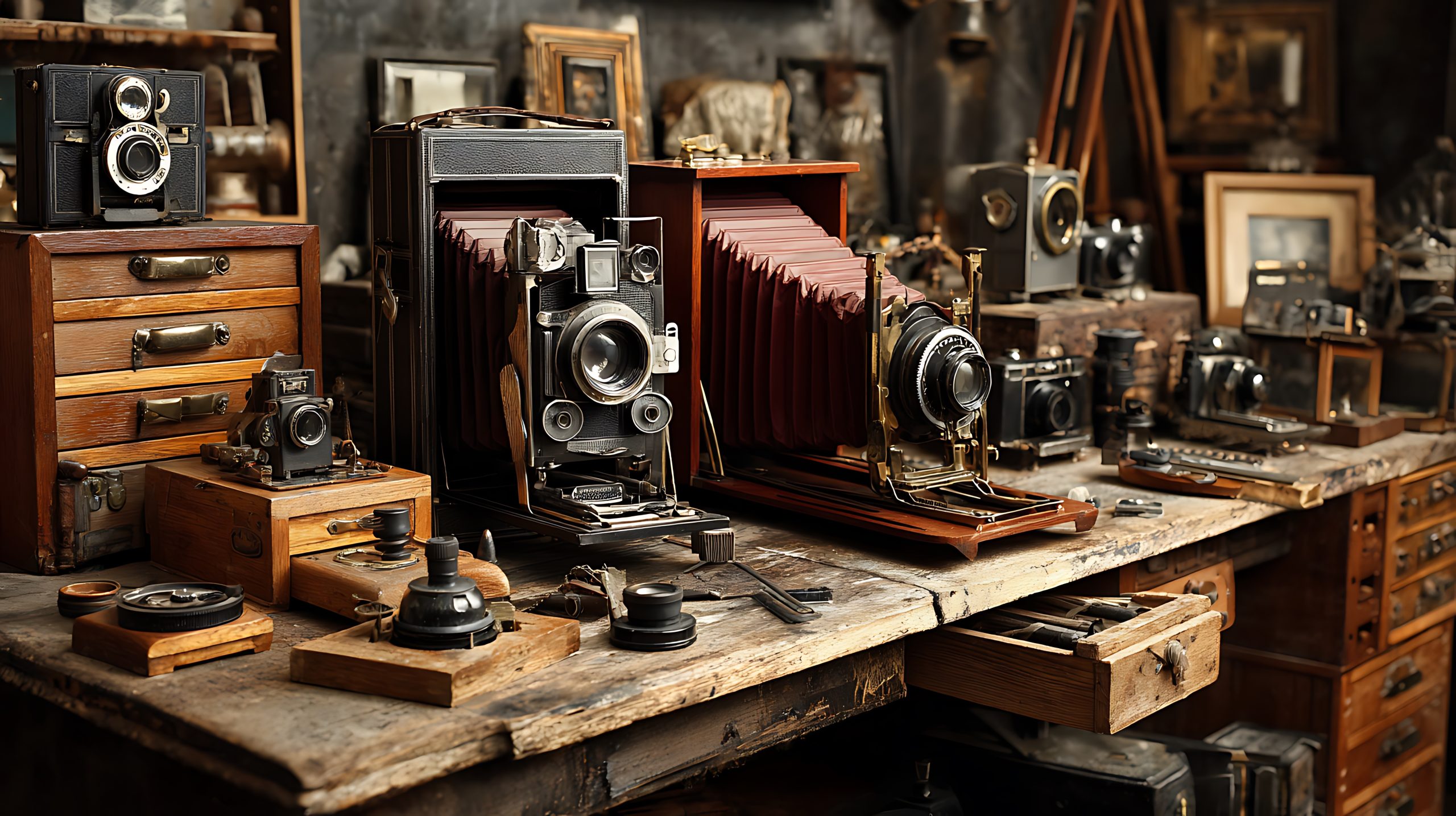
An interesting course of events is about to take place. We are all about to enter a time machine and return to the era before photography was invented. This would be approximately 1820. Let’s just leave it at that date because, for all intents and purposes, photography as we know it was probably “invented” sometime around 1822 by Frenchman Nicéphore Niépce.
We could argue this fact until we were all blue in the face, considering all of the weird evidence supporting strange photographic-like processes going back to at least the century before. Certainly, photography as we know it today started in the mid-19th century, and more toward the end of it if you really want to get technical. Certainly, no one in the general public knew what a photograph was until the late 1800s.
Humans were around living a rather civilized life for many hundreds of years, if not thousands, before this startling advancement in scientific technology. My, oh my, how did we survive? Rather well, actually. And soon, if not already, we will have to survive again without photography being a reliable presentation of objective reality—assuming it ever was.
So, let’s sit on that for a minute. How reliable has photography been in representing true, objective fact? Well, for one thing, photos have often been subjected to a bit of interpretation. We have never been able to really tell, without question, if a photograph represented reality. It has been easy to snap a photo of something that just isn’t as clear as it seemed to be at the time of snapping.
Then there is obvious “photo retouching”—when a photo is manipulated either in the darkroom (yes, they used to have to actually DEVELOP photos with chemicals!) or even while a subject is being photographed. One of the most interesting cases regarding “in the camera trickery” was the Cottingley Fairy incident, which took place in 1917. It is a fascinating story, including the quite famous writer Arthur Conan Doyle (of Sherlock Holmes fame). Doyle and many others believed, without a doubt, that these two little girls had these encounters with actual fairies and took photos of them.
Photography at the time was considered about as reliable in capturing manifest reality as physically being there and seeing what was being photographed with your own eyes. Although most anyone today would take one look at these Cottingley photos and know without a doubt they are paper cutouts of fairies, the hoax caught on like wild fire and Sir Conan Doyle was not the only one who believed in their authenticity, nearly everyone else who looked at them did—even photo experts—even scientists from Kodak who said “look, real fairies, wow!”
People trusted photography, and people trusted moving pictures even more. For the most part, these two mediums were reliable, unless presented intentionally as fake or as movie magic to entertain. Even then, however, the magic of photo fakery was not that sophisticated. Most fake photos could be analyzed, resulting in the exposure of the fakery (maybe this is not as true as it would seem, so many people got away with fakes). So, if seriously scrutinized, photos and movies have been reliable sources for proving certain factors of reality. Not anymore.
With the advent of AI art and AI movies, it is nearly impossible for the casual viewer to discern the accuracy of a photo or movie in its attempted depiction of reality. Sure, for a while, this will continue to go relatively unnoticed. No one will really care if what they see in a photo or “video” is “real” or not.
They will continue to put their hand to their mouth, suppressing the expression of awe and amazement as they watch a cat fly through the air, turning somersaults, or a dog mouthing the lyrics to their favourite song. Soon enough (if not already), that amazement will succumb to the words, “wow, how did they do that?” and eventually dissipating to a ho-hum, who cares, response. Then, back to the pre-photo days of 1822 we will all go. Abandoning the miraculous invention of photography to the dustbin of “it was interesting while it lasted” technology.
I am sure equally advanced technology will be able to analyze AI-generated photos and pronounce the fakes as fakes. But by the time one has gone through the effort to do so, who will really care? Not only will new photos of current “things” be useless, but old photos will also be useless as a chronicle of time, people, and things of yesteryear (unless you were looking at physical, paper, photos—and why would you be doing that?).
I’m sure all of you have seen photos of the past manipulated through AI—adding motion to still photos, or simply photographic images of events and objects that never actually existed. In fact, this alone is probably the greatest blow we will experience with this new (some say “evil”) technology—our past (as it was documented by photography) will be destroyed as well as our present.
Who cares, really? Well, maybe no one should care. At least not very much. As I have been saying, photography is very new; it is only about 200 years old. People got along fine before its invention. It is still interesting, however, that the advent of AI photography may be the first technological advance that will actually bring us back to a more primitive time.
When invented, photography proved useful for documenting the present (at least that was its intention), allowing people in the future to remember the past. It will now lose that function. Not only will it not be a reliable source for presenting reality in the present, but it will also become useless for creating documentation of the present for future eyes to see and ponder.
We have no photos of the pre-1800 world. Thousands of years of existence have not been photographically documented. Everything that was documented with photography since its invention in 1822 is also a useless resource for future generations to see what the world was like during the past 200 years. Considering the effort to destroy all media in its original form (paper, cellulite (film), etc.), it will be difficult to come by original media (welcome “Fahrenheit 451”), which, by the nature of the medium, is not alterable.
All photos ever taken will possibly be manipulated in such an AI way once it is digitized, rendering them inauthentic in their original intention of documenting reality at the time they were taken.
Perhaps, then, we’ll rediscover the ancient art of skepticism, that trusty old companion from the days when tales were spun by firelight and truths were verified by word of mouth—or not at all. In this grand illusionist’s trick called progress, AI doesn’t just blur the lines; it erases them entirely, leaving us to navigate a world where every image is a fairy tale waiting to be debunked.
But fear not, dear reader, for in losing our photographic crutches, we might just stumble upon something far more enchanting: the unfiltered wonder of our own unreliable eyes, proving once again that reality has always been the greatest hoax of all.

Todd Hayen PhD is a registered psychotherapist practicing in Toronto, Ontario, Canada. He holds a PhD in depth psychotherapy and an MA in Consciousness Studies. He specializes in Jungian, archetypal, psychology. Todd also writes for his own substack, which you can read here
Thanks for reading...
You can help us keep doing what we do. Every little helps and is hugely appreciated.




For other ways to donate, including direct-transfer bank details click HERE.
 wpDiscuz