Empire at 250: Can the Principles of 1776 Survive the American Police State?
John & Nisha Whitehead
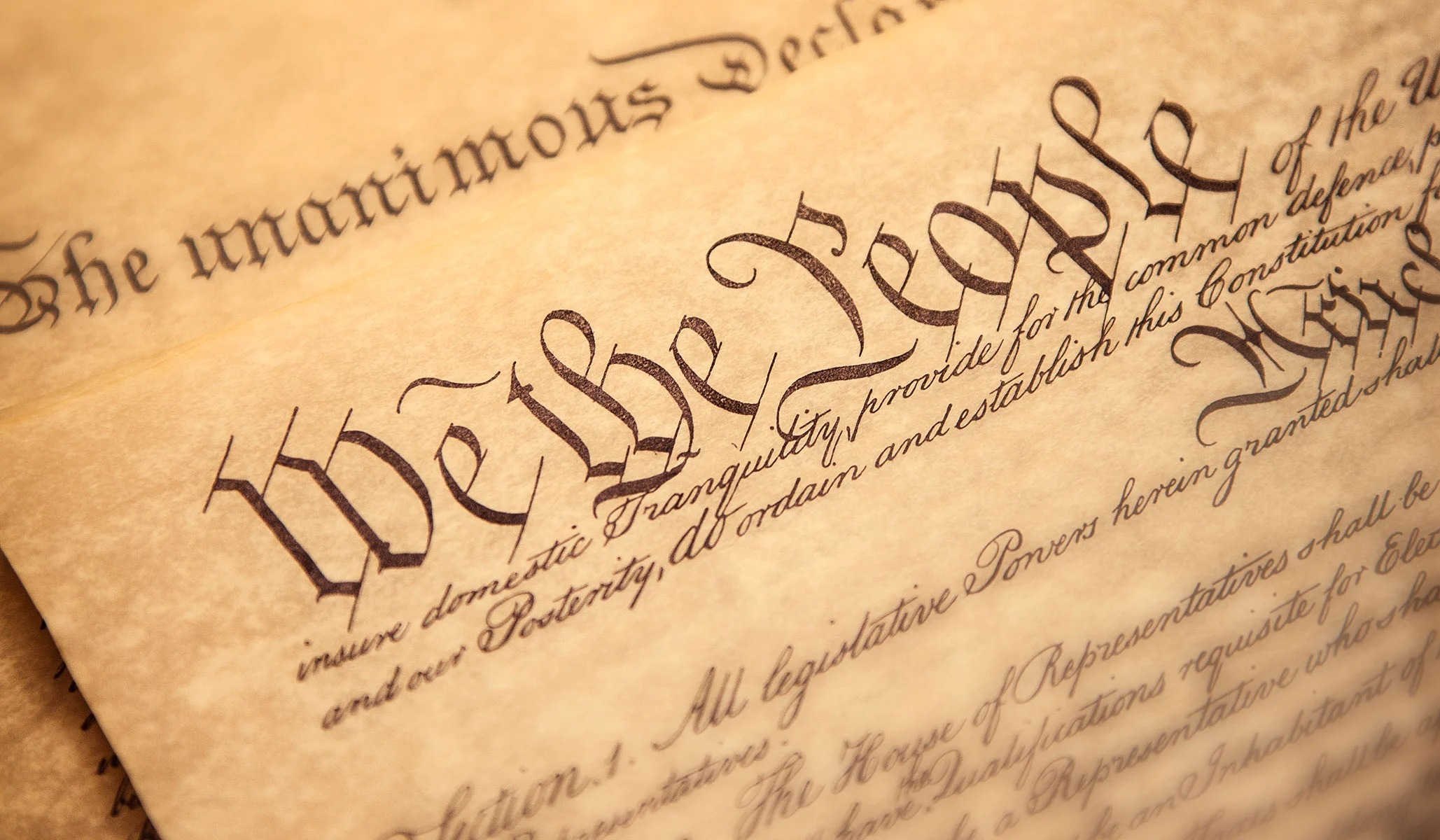
“The people are the only legitimate fountain of power.”
James Madison
This is a year of strange anniversaries. Two hundred and fifty years ago, a band of revolutionaries declared their independence from a king.
America’s founders rejected concentrated power. They denounced standing armies. They distrusted government secrecy. They risked their lives to escape a ruler who could tax without consent, wage war without accountability, and govern without meaningful restraint.
Twenty-five years ago, after the attacks of September 11, 2001, America embarked on a very different journey.
The federal government claimed extraordinary emergency powers. Surveillance expanded. Wars multiplied. Executive authority grew. Constitutional safeguards were weakened in the name of security.
One anniversary marked a revolt against empire. The other marked the normalization of it.
Now, as America prepares to celebrate 250 years of independence, we are confronted with a bitter irony: the republic born in rebellion against empire has become an empire in everything but name.
Worse, the U.S. government is violating the very principles that justified the American Revolution.
Graft, grift and corruption. Endless wars. Profiteering. Trillions squandered abroad while the nation sinks deeper into debt at home.
A government that governs increasingly by executive order and emergency decree. A government that wastes taxpayer money with impunity, rewards political loyalty over constitutional fidelity, installs loyalists in positions meant to serve the public, dismantles safeguards against corruption, shields insiders from scrutiny, and treats accountability as an inconvenience.
National states of emergency that never seem to end. Efforts to nullify constitutional guarantees such as birthright citizenship. Expanded death penalty powers. A growing willingness to bypass Congress, sidestep constitutional restraints and rule by fiat.
Surveillance programs that track where we go, what we buy, who we know, what we say and what we believe. Fusion centers, facial recognition, license plate readers, AI-assisted monitoring, financial tracking, intelligence-sharing agreements and a sprawling security apparatus that treats privacy as a loophole and dissent as a threat.
Military action undertaken without congressional authorization. National Guard deployments that blur the line between civilian government and military authority. The militarization of policing. Federal agents arresting people at courthouses. Protesters treated as security threats. Legal residents threatened with deportation because of their political speech and associations. Immigrants and asylum seekers swept up in raids, detained, deported or disappeared into a bureaucratic maze before courts can fully review the legality of what has been done.
Whistleblowers, journalists, activists and critics targeted for speaking truth to power. Expanding “extremist” classifications that increasingly encompass lawful speech, political dissent and ideological opposition rather than criminal conduct.
This is not freedom.
This is the architecture of a police state.
Nor is this merely the accumulated rot of past administrations.
Republican and Democratic presidents alike helped build the machinery of permanent emergency. They expanded the surveillance state, normalized undeclared wars, empowered the military-industrial complex, deferred to intelligence agencies, and taught Americans to accept secrecy, suspicion and fear as the price of safety.
Donald Trump inherited that machinery.
Then he weaponized it.
No modern president has done more to expose the danger of allowing so much power to accumulate in one office.
Trump did not invent the imperial presidency, but he has shown what happens when a president treats constitutional limits as obstacles, dissent as disloyalty, the courts as irritants, Congress as irrelevant and federal power as a personal weapon.
Nor has he hidden his intentions. From efforts to consolidate authority within the executive branch to the installation of loyalists whose allegiance appears directed more toward a president than the Constitution, the Trump Administration has tested the limits of executive power in ways that would have alarmed the generation that fought the Revolution.
We have also witnessed growing efforts to sideline due process protections, weaken the ancient safeguard of habeas corpus, expand detention powers, and normalize the notion that constitutional rights can be suspended whenever government officials invoke national security, immigration enforcement or emergency necessity.
This is what happens when a government built for emergencies never leaves emergency mode.
The danger is no longer hypothetical.
The tools of authoritarianism exist.
The police state machinery exists.
The surveillance apparatus exists.
The permanent war powers exist.
The question is who controls them—and what remains to stop them.
The American Revolution was not fought over minor policy disagreements. It was fought over the danger of unaccountable power. The colonists objected to a king who could deploy troops, impose taxes, conduct searches, punish dissent and wage war without meaningful consent of the governed.
The Declaration of Independence was not merely a list of grievances.
It was an indictment.
King George III had made the military superior to civilian authority. He had maintained standing armies without consent. He had cut off trade, imposed taxes, obstructed justice and transported colonists overseas for trial.
Time and again, the Declaration returned to the same central complaint: concentrated power had become a threat to liberty.
The Revolution was not fought over a tax on tea.
It was fought over the danger of a government that had placed itself above the people.
When the framers later gathered to draft the Constitution, they did so with those lessons fresh in mind.
The founders understood that power is inherently expansive. Given enough time, every government seeks more authority, more secrecy and more control.
That is why they created a constitutional system in which power was divided. The branches were intended to restrain one another. No person was to be trusted with too much authority.
Yet history shows how quickly constitutional restraints weaken in times of fear.
John Adams signed the Alien and Sedition Acts and criminalized political dissent.
Abraham Lincoln suspended habeas corpus.
Woodrow Wilson prosecuted anti-war activists.
Franklin Roosevelt ordered the internment of more than 120,000 Japanese Americans.
Richard Nixon weaponized federal agencies against political opponents.
Each expansion of executive power was justified as necessary.
Each left constitutional scars.
Then came September 11, 2001.
In the months and years that followed, Congress passed the USA PATRIOT Act, vastly expanding government surveillance powers. The Department of Homeland Security was created. Military tribunals were revived. Warrantless surveillance became commonplace. Watchlists multiplied. Fusion centers spread across the country. Indefinite detention became normalized.
War abroad justified surveillance at home.
Terror threats justified government secrecy.
National crises justified executive emergency powers.
What began as a response to a terrorist attack gradually became a governing philosophy.
Twenty-five years later, the emergency state has become embedded in the architecture of government.
Every crisis expands executive power.
Every war contracts liberty.
Every emergency leaves behind powers that rarely disappear.
This is how tyranny rises and freedom falls.
Presidents of both parties have inherited extraordinary powers and expanded them further. Congress has repeatedly surrendered responsibilities it was meant to exercise. Courts have increasingly deferred to executive claims involving national security, immigration and emergency authority.
The result is a government that often functions by executive decree rather than representative self-government.
Executive orders increasingly substitute for legislation. National emergencies become permanent governing authorities. Constitutional guarantees such as birthright citizenship are challenged by presidential decree rather than constitutional amendment. Congress is bypassed. Courts are treated as obstacles. Separation of powers becomes a formality rather than a safeguard.
The presidency has evolved into something the framers would scarcely recognize.
What Donald Trump has done is expose the fatal flaw in the system Americans allowed to be built after 9/11: once government is handed the machinery of permanent emergency, all that remains is for the wrong person to seize the controls.
For decades, Americans were told not to worry.
We were told surveillance powers would only be used against terrorists.
We were told emergency powers would only be invoked during genuine crises.
We were told national security authorities would remain subject to constitutional limits.
We were told the Constitution’s checks and balances would hold.
We were told no president would ever be allowed to exercise such powers without meaningful restraint.
They were wrong.
And we were wrong to trust power to restrain itself.
The lesson is the same one the founders learned from bitter experience: power granted in the name of necessity rarely remains confined to necessity.
Every emergency becomes a precedent.
Every precedent becomes a power.
Every power becomes permanent.
The founders also warned against standing armies and perpetual war.
Having lived under military occupation, they understood that governments organized around war inevitably become organized around power.
What they feared was not merely the presence of soldiers but the rise of a permanent warfare state—a government that uses conflict, fear and national security as justification for expanding its authority.
Today, those dangers extend beyond foreign battlefields. National Guard units are increasingly federalized and deployed domestically. Military tactics, equipment and personnel continue to flow into civilian law enforcement. The line separating the soldier from the police officer grows fainter with each passing crisis.
Look around.
The United States has spent much of the last quarter century engaged in military operations somewhere in the world. Wars are launched without formal declarations. Emergency powers become permanent. Defense budgets swell while domestic needs go unmet. Intelligence agencies operate with extraordinary secrecy. Technologies developed for foreign battlefields migrate into local police departments and domestic surveillance programs.
Today, even as the Trump Administration and its so-called War Department continue to pound the war drums, Americans are once again being told to trust government officials operating behind closed doors, often with little public debate and even less accountability.
The founders understood a simple truth: governments that prepare constantly for war eventually begin treating their own citizens as potential enemies.
That is the logic of empire.
Enemies abroad justify surveillance at home. War powers abroad justify police powers at home. National security becomes the excuse for secrecy, militarization, censorship, detention and control.
Perhaps nowhere is this more evident than in the rise of the surveillance state.
Long before shots were fired at Lexington and Concord, colonists were outraged by writs of assistance—general warrants that allowed British agents to search homes, businesses and personal property without meaningful justification.
Those abuses helped inspire the Fourth Amendment.
Today, government agents no longer need to kick down your door to invade your privacy.
Your cell phone tracks your movements. Your vehicle reports your location. Your purchases reveal your habits. Your social media activity exposes your associations. Your digital footprint creates a detailed record of your life.
Government agencies can access location data, financial records, license plate readers, facial recognition databases and vast stores of personal information, often with little transparency and even less oversight.
Meanwhile, Congress continues to renew and expand surveillance authorities while intelligence agencies deepen information-sharing arrangements with domestic and foreign partners. Americans are increasingly monitored not because they are suspected of wrongdoing, but because technology has made mass surveillance possible and government has found it useful.
The surveillance state has no borders. Nor does it have clear limits.
Government agencies increasingly rely on broad and elastic “extremist” classifications that often extend beyond violence or criminal conduct to encompass lawful speech, political dissent and ideological opposition.
What begins as a tool to identify dangerous actors inevitably expands into a mechanism for monitoring unpopular viewpoints. Information collected for one purpose is shared for another. Data gathered abroad finds its way home. Intelligence systems built to monitor foreign threats are repurposed to watch domestic populations.
King George’s agents needed boots and battering rams to search your home.
Today’s government can search your life without ever leaving its desk.
And then there is the matter of accountability—or rather, the lack of it.
The Declaration of Independence repeatedly condemned a government that had placed itself above the law.
That grievance remains painfully relevant.
Government officials who violate constitutional rights are frequently shielded from accountability by doctrines such as qualified immunity. Secret courts authorize secret programs. Bureaucrats operate behind layers of classification and administrative complexity. Government agencies routinely fail audits, lose records, misuse surveillance powers and exceed their authority, yet meaningful consequences remain rare.
Meanwhile, ordinary Americans face an entirely different standard.
When government officials make costly mistakes, taxpayers foot the bill.
When unconstitutional policies trigger lawsuits, taxpayers foot the bill.
When unlawful detentions result in settlements, taxpayers foot the bill.
When militarized raids, wrongful arrests, surveillance abuses and civil-rights violations generate years of litigation, taxpayers foot the bill.
Even now, Americans are being asked to absorb the financial costs of government misconduct on a staggering scale—from unlawful enforcement actions and unconstitutional executive orders to politically motivated spending schemes and settlements designed to shield those in power from scrutiny.
The public pays for the government’s mistakes while those responsible often walk away untouched. In some cases, public office itself has become a vehicle for private gain, with self-enrichment schemes, conflicts of interest and insider favoritism blurring the line between public service and personal profit.
The pattern is impossible to ignore.
Profits are privatized. Power is centralized. Accountability is deferred.
The bill is sent to the American people.
Whether it involves unlawful surveillance, unconstitutional arrests, retaliatory investigations, speech-based censorship, ICE raids that terrorize communities, warrantless tracking, civil asset forfeiture, the targeting of whistleblowers, journalists and activists, endless wars or political corruption, the pattern is the same: power protects itself.
The founders did not risk their lives because taxes were too high.
They risked their lives because government had become detached from the people, insulated from accountability and convinced that power justified itself.
Sound familiar?
The uncomfortable truth is that many of the abuses that sparked the American Revolution have returned, only this time they arrive wrapped in the language of national security, public safety, emergency management and administrative necessity.
The faces have changed. The technology has changed. The rhetoric has changed.
The danger remains the same.
Which brings us back to this strange anniversary year.
The 250th anniversary of American independence should have been an opportunity to renew our commitment to limited government, constitutional accountability and the principle that no one is above the law.
Instead, the lesson of 9/11 is being repeated in a different form.
Twenty-five years ago, fear became the pretext for permanent emergency.
Today, patriotism is becoming the backdrop for presidential spectacle, military pageantry and the celebration of the very concentration of power the American Revolution was fought to resist.
Much of the celebration has been transformed into a spectacle of power: military displays, patriotic pageantry, strongman politics and the elevation of political leaders into larger-than-life figures whose authority is expected to be admired rather than questioned.
Yet the founders did not launch a revolution so Americans could celebrate authoritarian power.
They launched a revolution to remind future generations that power is dangerous, liberty is fragile and no ruler should ever be elevated above the Constitution.
For 250 years, Americans have treated the Declaration of Independence as the nation’s birth certificate.
What we have failed to recognize is that the Declaration of Independence was also a warning: freedom is fragile, power is relentless, and no generation remains free simply because a previous generation fought for liberty.
As America approaches its 250th anniversary, the most important question is not whether the nation survived. Nations survive. Empires survive. Governments survive.
The real question, as I make clear in Battlefield America: The War on the American People and its fictional counterpart The Erik Blair Diaries, is whether the principles that inspired the American Revolution survived as well.
Thus, the question is not whether America survived 250 years.
The question is whether the principles of 1776 can survive the American police state.
Originally published via The Rutherford Institute

Constitutional attorney and author John W. Whitehead is founder and president of The Rutherford Institute. His book Battlefield America: The War on the American People (SelectBooks, 2015) is available online at www.amazon.com. Whitehead can be contacted at [email protected]. Nisha Whitehead is the Executive Director of The Rutherford Institute. Information about The Rutherford Institute is available at www.rutherford.org.
Thanks for reading...
You can help us keep doing what we do. Every little helps and is hugely appreciated.




For other ways to donate, including direct-transfer bank details click HERE.



The Zio-Monsters are to send the ZAKA to Venezuela ZAKA is a infiltration unit disguised as a rescue team sent into disaster zones to collect info, bug, and to try and compromise a countries infrastructure – they tried to steal passports in NZ Christchurch,(earthquake) they compromised Haiti after a disaster – they also pave the way for Zio-Monster snatch and grab teams.
When the vermin invade a nation, they routinely kill rescuers, like their infected golem empire.
Is it really not obvious to everyone who these “Whiteheads” work for?
Not to me, how about a clue? Like the name or names. If it’s so obvious, that should be an easy one.
What were the principles of 1776?
And are they worth resurrecting today? Maybe the revolution declared in Jefferson’s Declaration of Independence wasn’t really about political principles that we would admire today but only one group of wealthy oligarchs seizing political power from another group that was holding it
King George and Great Britain claimed to “own” the US by right of conquest and colonization. It settled the Atlantic Coast of North America and ruled it as colonies, extracting wealth and tribute from the colonized peoples.
But over time, as always happens, some of the colonists grew wealthy enough to begin to believe they ought to “own” themselves and the territories they occupied. Colonialism is never more than a temporary condition. No one is willing to be “owned” for very long.
So what happened in the years between 1776 and 1787 when the new government of the United State was finally ratified was only a transfer of power from a British ruling elite to an American ruling elite. There was really very little difference in the lives of most Americans. The American “oligarchs” were the wealthy land owners and entrepreneurs just as was the case in England.
The ratification vote in 1787 for the new constitution was passed by a bare majority. There was no “popular” vote but only delegate to state assemblies. For example,
Virginia: 89 delegates voted “yes” and 79 voted “no”.
New York: 30 delegates voted “yes” and 27 voted “no”.
Massachusetts: 187 delegates voted “yes” and 168 voted “no”
George Washington became the first president largely because he was the wealthiest man in all of the new United States. Andrew Jackson in 1828 became the first “common man” to be president, but he got the job because of his military career.
The US has always been controlled by its wealthy ruling elites. It has never been a “democracy,” though there have been very significant democratic movements throughout its history — the civil rights movement for African Americans or the women’s right movements being the most important two.
The US has also always been an empire, first conquering North America (except for Canada and some of Mexico). The Native population was genocided. Then the US moved on to conquer Latin America, the Pacific, and the Middle East. The US still thinks it is the hegemon of the world.
There are actual principles that anyone would want to replicate. There are empty platitudes galore, but they don’t inform actions and policies of the ruling elite or the government they “own.”
All right, so let us say it all was invented by “The Wealthy Elites and ‘rich’ Entrepreneurs”, and absolutely nothing was invented by the majority of the American people, the lazy intellectual socialists and their filthy working class and peasants……yes?
It was Free Thinkers within the ‘Rich and Wealthy Class’ who was tired of seeing the dirty peasants fokking with pigs and treating slaves with extreme violence and brutality.
The Democrats at that time were 100% against Freedom in US and in for all kinds of Slavery. It was first from very latest they found out they could fool people with their hypocrite choice on Obama.
“Empty platitudes” said about All Men are born Equal with certain unalienable Rights.
I ask myself why and how anyone today in 2026 can get the idea that these ‘values’ should be platitudes after centuries and centuries of slavery and subversion and oppression?
The only conclusion I can come up with is that you must be one of the Pharisees, a Socialist, A Democrat, whoever, trying to promote your goodness by ‘saving our nature and the global clima’, but behind it all you ‘miss the good old violent days before the Independence Declaration’.
I am a socialist and have been for my whole life. By that I mean I take “democracy” seriously. I admire the writings of founding fathers like Jefferson and the influence he represents of John Locke and J. J. Rousseau. He was really the best of all Americans when it came to political and social theory. I was a student at the University he founded for all the right reasons. But he was still a slave owner and a very bad one. He was the kind of platitude seller I was thinking about. “Democracy” is a platitude in the mouths of most Americans today. I take it seriously, but as Jefferson understood democracy or self-government requires a well-educated and well-informed population.
The constitution was an organizational charter and came up with a good and practical structure for a government — three separate but interdependent branches, each with its own responsibilities. The political idealism was added in the first ten amendments or Bill of Rights.
For me, we have the right structure. What’s wrong is that the structure is operated by only the wealthy and they are so easy to corrupt. They will sell out anything or anyone for money. That’s what we are today. Our government is for sale. The Israelis have bought most of it. Corporations have also. That leaves the people screwed.
Bit off piste, but Dr Congo would have an advantage if they stuck blood capsules in their ass and ears.
Those are my principles. If you don’t like them I have others. -Groucho Marx
Where shall a loveless intent or agenda hide but in the self-specialness of the chosen or elect?
By seeking to escape perceived evils, we define ourselves thereby.
By seeking to defend, our defences do the thing they were set against.
In some sense I am suggesting that the underlying issue or conflict runs deeper than where we want to mask and rationalise diversionary solutions, raise banners, flag our identity or turn about in self-hate as leveraging power from victimising collective guilt.
Where lies true responsibility?
What would deny us this but the taking on of a false responsibility framed by blame and sacrifice?
The attempts to organised by force of coercions and deceits claiming moral right or simply supremacism as will to power as the only meaning life (framed in death) can have—ALL mask our true responsibility and freedom at the level of being. Such as no such ‘freedom’ is believed, but smeared, ridiculed and persecuted—by those who believe or want to believe their safety and freedom lies in active compliance to structures or systems of control.
i think that the quality of the people in any system is more important than the structure itself. Structure needs serve love and life, NOT the other way around. The quality of presence, willingness for communication and valuing of relationship cannot be forced, ruled or incentivised into our hearts and minds.
As we have so structured dependencies, we need honesty as a basis to re-establish trust in communication in place of ‘weaponised and marketised communication’. It is none such -and will corrupt the minds that suckle on and imbibe its currency as their own ‘groupthink’.
Compounded toxic debt conflict is like a wound up jack-in-the-box of denials that are leaking out through a disintegrating ‘control mindset’ even as IT thinks to be approaching its perfect system from by life can be locked down and lockstepped to serve ‘morally’ masked reset and reconfiguring of the human consciousness.
The management and control of the mass mind uses ‘identity conflict’ to push and shape ‘solutions’ that serve an elitism of self-specialness framed by truths woven into deceits.
Financial leverage is system capture – not nations states as representing living people co creatively organising their affairs.
The Whiteheads ask, “This is what happens when a government built for emergencies never leaves emergency mode.”
The answer is very clear. You have the American role model — Israel. The real crisis in the US is what people are now calling the Israelization of America. Trump’s regime is really not conservative or MAGA but only the rise to absolute power of the Christian Zionists, that weird strand of Christianity which was raised on the fraudulent “Scofield Bible” to believe that Christians can only be blessed by God if they first “bless Israel.”
Israel has always existed in a state of emergency. Its founding belief is that all non-Jews live only to hate and kill Jews. So Jews must prepare for genocidal assaults at every moment, and the way to do that is to be militarily superior and to attack and defeat every enemy before the can attack Israel. So the nation is constantly and permanently at war with its neighbors.
As long ago as the 1980s, Gore Vidal identified the Neo-Conservatives as an ““Israeli Fifth Column Division operating inside the United States.” Neo-Conservatives have controlled US foreign policy and its empire since the days of Reagan and his idiotic tough talk about Russia as an evil empire. Trump’s administration is filled only with Christian Zionists and Neo-Conservatives. Both groups deeply believe that we are in a desperate “emergency mode.” All violent actions are justified by the emergeny.
I thought that Paki-stan was Washington’s role model. Let the spooks and army run the politicians. Despise your own citizens. Use them as cannon fodder at best. The CIA’s twin the ISI also lies, cheats and steals mostly. The Law is there for you, not for us: Just-us. Both the CIA and Pakistan were created out of thin air in 1947.
To the believers, “bless” is a synonym for giving away in cash or kind to approved people.
Empire destroys republics…. although this article has an overly romantic view of the so-called Founding Fathers as well.
Founding Fathers—backed by fake paperwork, fake receipts, and enough fake letters to drown a historian—standing next to the Three Wise Men, who appear in exactly one gospel account with a lot of interpretive tradition filling in the gaps. Then across the aisle you’ve got Santa Claus delivering global logistics via chimney physics, and the Easter Bunny running an international egg distribution network with zero public tax filings.
250 years of the “Land of the Free”: shaping global events, then spending the rest of history debating responsibility, rewriting the narrative, and arguing over which version counts.
The basic answer is no America can’t survive, or return to a previous state where the world saw it as a progressive nation, without a revolution – the PTB that controls the States has far too great grip on it for any change to be significant and long lasting – so a revolution, that will ultimately descend into a kind of civil war – brainwashed state fighters versus freedom fighters will be the conflict, if the people win its a reset for America – if the PTB wins – they’ll have no need to hide in any fashion, what their real plans are for humanity.
Here, the penny finally drops for Craig Murray and he see revolution as the only real way forward.
Craig Murray: ‘Pal Action ruling proves need for revolution’
I like Craig Murray a lot and revolution is still possible for developing nations or nations under the tyrannical oppression of colonial master. This is the case with Gaza and most of the Arab states of the Middle East.
But I think the Age of Revolutions in EuroAmerica is over. Revolutions were essentially against monarchies. Democratic or more accurately pseudo-democratic societies were simply part of the evolution of culture from monarchy to democracy. We in the West are in a different phase of cultural evolution right now. The West is re-centralizing and by that I mean a return to the rule of a small aristocratic class as existed in the times of monarchy.
The US has no peerage and cannot award titles Baron, Viscount, Earl, Marquess, or Duke in the way the UK and some other European nations can and still do. From the middle 1800s, peerage was awarded to the industrial and financial elites. The Rothschilds became Baron Rothschild or Lord Rothschild. If the US were able to award such titles, then Elon Musk would be Vicount Musk. We’d have Earl Bezos, and all the rest.
These are the people who rule the nations of the West and against whom a revolution would have to take place. They are untouchable and most even not known. Who really knows about Lord Ellison?
You can rebel against a government, as the people of Palestine, Lebanon, Syria, and Iran are now doing against Israel, the hegemon of the middle east. Governments come and go. They can fall. Satanyahu and his vicious killers can be defeated and once defeated they will go away. But you can’t rebel against money or the owners of money.
Interesting Robert, the new monarchy’s are the huge corporations that really run the USA, and Trump is just a face that sits in the Whitehouse signing a multitude of Executive Orders, to give off the appearance that he’s in control.
Trump only got where he is (POTUS) because of his extremely wealthy donors – who demand that their interests are fulfilled for getting him into the Oval Office.
The Musk’s, the Thiel’s, Adelson’s and of course the Ellison’s along with the big corporations Black Rock, MIC, Big Pharma etc, are the real movers and shakers, they have plans for, not just America but much of the world – though America is far down the road with their plans in mind – a ugly dystopian nightmare awaits the average American, unless of course they rise up and do something about it.
For me I’m afraid its far too late for Americans to vote their way out of it – any POTUS that makes it into office, is well compromised, and he/she is controlled via the deep state, a reset is badly required, and the PTB won’t just roll over and say okay go ahead and do it.
Subverting a new leader – even making him do a u-turn on promises – has been the norm in democracy. If that fails, he is eliminated. As explained by John Perkins in his 2004 book.
And we think we’ve got ‘problems’:
https://thedissidentvoice.org/2026/06/venezuela-reflections-on-the-day-the-earth-shook/
No matter how much you punish socialism they just continue in the same scratch on the record.
No you are not heroes, you are still just peasants as far as I can see. https://yandex.ru/video/preview/3193937544500015786 .
Another good piece from Colin, on the fading art of writing:
https://www.globalresearch.ca/performing-author-slow-knowledge-age-spectacle/5931776
The “empire” is a theater ( of operation )
–
Microchip-Like, Parasite-Like, and ‘Self-Assembling Nanotech’ Structures Found Inside Pfizer COVID-19 Vaccine: Journal ‘IJVTPR’
https://jonfleetwood.substack.com/p/microchip-like-parasite-like-and
Researchers publish darkfield microscopy images of Pfizer jab material.
Jon Fleetwood – Jun 24, 2026
… introducing
From Synthetic DNA and RNA-Based Self-Assembling Nanotechnology to Sequalae of COVID-19 Shots
https://ijvtpr.com/index.php/IJVTPR/article/view/129
https://ijvtpr.com/index.php/IJVTPR/article/view/129/451
Shimon D. Yanowitz, EE and Daniel Broudy, PhD
International Journal of Vaccine Theory, Practice, and Research –
Vol. 4 No. 2 (2026) – Facts Outrank Theory – Page 1701 – 1753
https://doi.org/10.56098/7mhh1467
Published 2026-06-19
–
… related to James Giordano, PhD – here one lecture of many.
–
Dr. James Giordano, Ph.D. – INSS/NDU – Neuroscience, Disruptive Technologies And The Future Of War
https://www.youtube.com/watch?v=8CAmyGBLvOU
Progress, Potential, and Possibilities – Jan 16, 2026
–
And the tool to rule.
AI Data Centers Across the United States
https://www.brockovichdatacenter.com/
… yes – Erin Brockovich
–
AI for Good
https://escapekey.substack.com/p/ai-for-good
„The Academic Pipeline to Post-Human Governance“
esc – Jun 29, 2025
„The most dangerous revolutions happen in academic journals, not on barricades. While public attention fixates on AI chatbots and autonomous vehicles, a more fundamental transformation is quietly unfolding across research institutions worldwide — the systematic construction of what we might call techno-governance infrastructure.
And — yes. All of this can be sourced via papers published in contemporary research journals. …”
–
And so:
WATCH: The Technocratic Dark State
https://off-guardian.org/2025/11/23/watch-the-technocratic-dark-state/
David Hughes interviews Iain Davis about his new book.
Nov 23, 2025
–
Dystopia outlined.
We the people to end it.
I find the Whitehead’s articles tedious and repetitive. Same old same old.
Just my opinion.
Change it up OffG.
They are very UScentric, that’s for sure.
Does the US government really intend on keeping the Hormuz Strait closed
to create a crisis of the global economy that can be exploited to complete
the implementation of The Great Reset ?
The US Is Conducting The Largest Logistics Operation In History – A Statistical
Analysis. (30 second video):
https://x.com/sprinterpress/status/2071106089765011688
At the start of the attack on Iran, the Orange One said US could provide all the fuel needed. Just as earlier government said after it blew up the gas pipelines to Europe. Now, he has gone quiet on that. But this is paying any attention to a raving maniac.
The American constitution is a deliberately flawed document drawn up by a bunch of traitorous tax evaders to concentrate power in their hands and theirs alone.
Instead of a king, they ended up with ruling families under the guise of ‘political parties’
Really not much different than before (but less transparent) and interestingly not all that different from some of the ‘communist’ countries that Americans rant about so much.
Let’s face it, America is a failed state that needs to be disarmed.
[…] When in the Course of human events, it becomes necessary for one people to dissolve the political bands which have connected them with another, and to assume among the powers of the earth, the separate and equal station to which the Laws of Nature and of Nature’s God entitle them, a decent respect to the opinions of mankind requires that they should declare the causes which impel them to the separation.
We hold these truths to be self-evident, that all men are created equal, that they are endowed by their Creator with certain unalienable Rights, that among these are Life, Liberty and the pursuit of Happiness.–That to secure these rights, Governments are instituted among Men, deriving their just powers from the consent of the governed, –That whenever any Form of Government becomes destructive of these ends, it is the Right of the People to alter or to abolish it, and to institute new Government, laying its foundation on such principles and organizing its powers in such form, as to them shall seem most likely to effect their Safety and Happiness. [and so on and on it goes]
Declaration of Independence
Like I said, a flawed document
Putin gives eight reason why Russia has no interest in attacking Europe &
The Yookay;
“Realistically, even if you invited us in, surrendered, and waved white flags,
we still would not come.” Putin…
https://michaelwalshwriter/2026/06/27/address-to-the-peoples-of-europe-putin/
https://michaelwalshwriter.com/2026/06/27/address-to-the-peoples-of-europe-putin/
Try entering this into Google (or a search engine of your choice):
is this really a Putin quote “Realistically, even if you invited us in, surrendered, and waved white flags, we still would not come”
It is ‘attributed’ but not ‘confirmed’… ‘Fact checkers’ thus claim its ‘fabricated’**
It reads like a rendering of Something he recently said…
Are you a ‘Fact checker’ too ?.
** Brave Search…
So we are expected to believe any and all ‘quotes’ from random ill-informed posters on the internet as fact?
Do you see something wrong with verification and checking?
Or should we all just believe you and you alone, because you are you, the font of all knowledge?
I did as you suggested i used Brave Search to check Putin’s remarks. It said fact checkers believe the remarks were likely fabricated. Should i get
the Brave Search answer double checked to verify them ? Whom do you recommend i ask to do that ?
Well, when there are obvious doubts as to it’s authenticity, I would suggest that you not present it as fact.
So you’re your own fact checker,
Well, I do like to verify questionable statements. I consider that quite a reasonable thing to do.
So you are a fact checker then.
Putin:
“Your national debt already stands at €2.5 trillion, and no serious economist seems to know how it will ever be repaid”. Yes, You Putin imposed us this debt to undermine Germany.
“Now you want to borrow another €1 trillion to build up your military against us”. Yes, You Putin forced Germany to build up our military again by threatening us with yr Sarmat!”
“Millions of migrants now live in your country, costing tens of billions of euros each year. Why should the Russian people bear any responsibility for that?”. Yes, because You Putin made Russians (1 mio) flee to Germany to undermine Germany!
War!! War in the East, War in the West. War every where!! https://yandex.ru/video/preview/4931480989995502583 .
Since when did the Ruling Class have principles?
06, 1066, or 1776, it’s always been rule by violence.
“The founders understood a simple truth: governments that prepare constantly for war eventually begin treating their own citizens as potential enemies. …That is the logic of empire.” (above)
Founders – not the common people who fought but the elites who won – simply understood one and only one ‘truth’, that of the golden rule: those with the gold make the rules. As far back as the proverbial birth of ‘democracy’ in the ancient slave state of Greece, government had been understood as the necessary protection of propertied wealth by the few from the many. How else can the rich who rob people of resources get away with murder and laugh all the way to the bank without monopolizing means of institutionalized violence as the rule of law over plundered lands which state power provides? Founding fathers proudly carried on the noble principles of this august tradition:
“The most common and durable source of factions has been the various and unequal distribution of property. Those who hold and those who are without property have ever formed distinct interests in society.” (James Madison)
“All communities divide themselves into the few and the many. The first are the rich and well born, the other the mass of the people… The people are turbulent and changing; they seldom judge or determine right. Give therefore to the first class a distinct, permanent share in the government. They will check the unsteadiness of the second.” (Alexander Hamilton)
“…(I)f all were to be decided by a vote of the majority, (would) the eight or nine millions who have no property…not think of usurping over the rights of the one or two millions who have?… The time would not be long before courage and enterprise would come, and pretexts be invented by degrees, to countenance the majority in dividing all the property among them, or at least, in sharing it equally with its present possessors.” (John Adams)
“Those who own the country ought to govern it.” (John Jay)
Founding elites found common interest in understanding commoners as the rabble always ready to resist their rule, thus making democracy mob rule of lawlessness and ungovernability inimical to their enlightened aristocracy of wealth (rather than, for instance, the more enlightened egalitarianism of the Iroquois Confederacy/Haudenosaunee with which Franklin was familiar). Accordingly, the plutocracy always must be prepared to counter such social revolution by constantly waging class war to maintain the order of civilization which “originates in conquest abroad and repression at home.” (Stanley Diamond)
In relation to elites, common people can’t help but be enemies, even when ironically granted inalienable rights as citizens by rulers just to go along with their racket. When by way of what amounted to a coup d’etat the U$ Constitution established rule of law for the law of rule, there was a limited citizenry of lesser white men of property permitted by the patrician class to participate in affairs of the nation-state, if only by consenting to ratification of a Bill of Rights serving as the lure into rule, soon enough proving, as with the Alien and Sedition Acts (1798), of little more substance than the parchment on which it was penned. The same sleight of hand was in effect with the Declaration of Independence, as with recruiting reluctant farmers to leave cash crops behind on promise of payment never delivered and fight for life, liberty, and pursuit of happiness later exchanged upon victory for a republic modeled on Roman oligarchy and a ruling class intent from the get-go upon homegrown empire through continental expansion.
There’s lots more to be said in criticism of the Whiteheads’ whitewashing of history, as for instance already laid out further in the comment section here by Rob Rob. Their fetishism of the founders may be an occupational hazard of constitutional attorneys, but it stands in stark contrast to current realities of the police state they consistently address. They remain captive to an ideological confusion, or big lie, which creates a false equivalence between ‘we the people’ and a national identity that’s never been ours:
“Nations are not communities and never have been. The history of any country, presented as the history of a family, conceals the fierce conflicts of interest (sometimes exploding, often repressed) between conquerors and conquered, masters and slaves, capitalists and workers, dominators and dominated in race and sex. And in such as world of conflict, a world of victims and executioners, it is the job of thinking people, as Albert Camus suggested, not to be on the side of the executioners.” (Howard Zinn)
No war but the class war.
Seems plausible. But weren’t the basic “principles” of 1776 simply those of a bunch of miracle-denying Freemasons influenced by French revolutionary fervor that attempted to overthrow any authority that previously existed?
In which case, the argument for some kind of pre-existing authority still seems plausible
It was simply a incidence of Juvenile Rebellion, Oedipal in nature ?
I don’t know what planet are you from…
The American revolution was fought on behalf of the elites here who were the ones who were trying to get more of the cut of business. It replaced the British police state with the American one.
That’s why the constitution didn’t give rights and needed to be AMENDED WITH THE BILL OF RIGHTS (which didn’t give rights to women, slaves, nor natives).
https://www.michaeltsarion.com/constitution-con.html
Here’s a show that explained how little the war was supported…
https://youtube.com/watch?v=dHLHT-nbqHQ
This video from Adam Ruins Everything challenges the popular romanticized myth surrounding the formation of the Continental Army during the American Revolution (0:00-0:12). Instead of a unified movement driven by patriotic fervor, the video presents several historical realities:
Composition of the Army: Rather than being composed entirely of idealistic patriots, the Continental Army was primarily made up of immigrants, poor farmers, and drunks who were often motivated by the prospect of getting paid (0:21-0:27).
Limited Support for Independence: Contrary to the idea of widespread colonial pride, as few as one in five colonists actively supported the independence movement in 1775 (0:46-0:49). Much of the early support for separation was actually driven by wealthy landowning elites looking to avoid British taxes (0:53-1:01).
A Divided Populace: The average colonist was largely indifferent to the cause, often prioritizing their own daily survival over the political conflict (1:03-1:11). Furthermore, about one-third of the colonists remained loyal to the British side.
But that still gives 2/3 to independence.
Duh:
“Limited Support for Independence: Contrary to the idea of widespread colonial pride, as few as one in five colonists actively supported the independence movement in 1775”
…[]…
The average colonist was largely indifferent to the cause”
We the People is a legal beauty and much admired around the world, giving and gave hope to many in dictatorship and slavery.
The abandonment of slavery and “All men are born Equal” too.
Your down sizing of its significance is not. Its ugly.
Realities are realities, Myths are powerful…
Yes, and remember also that the ‘Revolutionary War’ was NOT won on the battlefield, but in the halls of Westminster in England.
The British (rather) wisely decided that America was not worth the trouble, especially when they had other options (Australia, NZ and Africa etc.)