Fake Wars & Higher Prices: What a “Multipolar World Order” REALLY Means
Kit Knightly
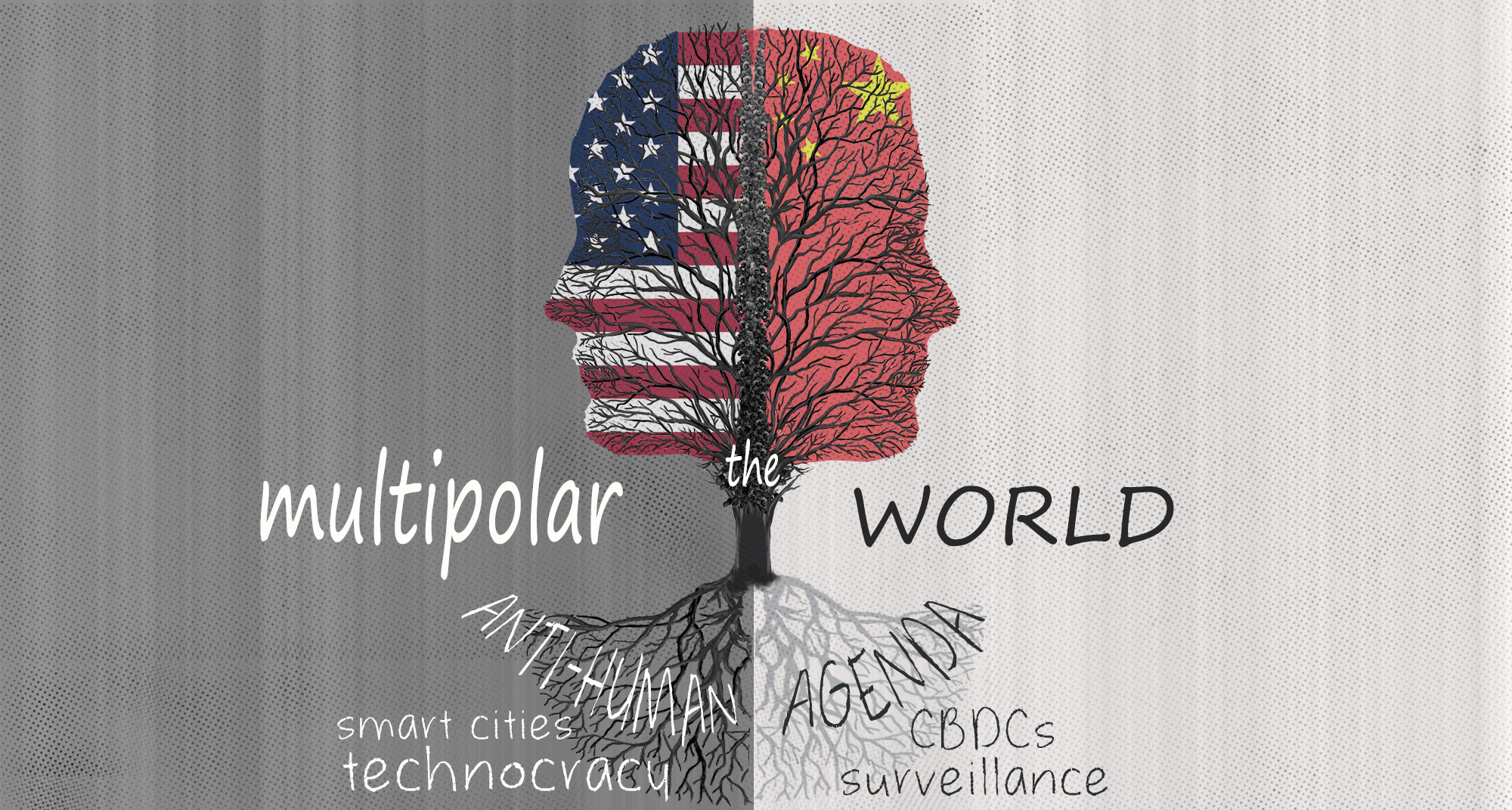
The world is changing. The once dominant imperial power of the United States is faltering, hollowed out by corruption, over-extended by hubris, eaten away by the cancers of hatred, nationalism and greed.
Even according to its own propaganda outlets, America has “become the villain”, is “Officially an Empire in Decline”, and we are witnessing its “final act”.
And, as we await the titan’s inevitable fall, the world is considering the future. Everyone is talking about the “multipolar world order” just over the horizon.
From “Pax Americana to Pax Multipolaris”.
This “Multipolar World” has been a political talking point for a long time, but it has been building momentum over the last few years, and noticeably accelerating since the beginning of Donald Trump’s second term.
Russian President Vladimir Putin has been calling for this multipolar order for years, and did so again last week. China’s Xi Jinping regularly does the same, most recently during his trip to South America in February. North Korea’s Kim Jung Il echoed these sentiments in April.
Xi and Putin signed a joint declaration on “building a multipolar world” this morning.
Two weeks ago, in a talk at Harvard University’s Kennedy School of Government, former German Chancellor Olaf Scholz called for “a post-imperial world [and] a resilient rules-based order in a new era of multipolarity”.
In a speech during his trip to China last month, Spanish Prime Minister Pedro Sanchez called for “embracing a multipolar world order”:
“What is happening today is not a transfer of hegemony, but an increase in multipolarity — in both power and prosperity,”
Outside of politicians speechifying, the multipolar world order has become the main focus of the international think-tank circuit as well.
“Multipolarization” was the main topic of the Munich Security Conference Report in February 2025.
In December, the Tony Blair Institute partnered with the JPMorgan Chase International Council to publish a report called “World Rewired: Navigating a Multi-Speed, Multipolar Order”, which concludes in the foreword (written by Blair himself and Jamie Dimon of JPMC):
The world still offers enormous potential for those willing to engage constructively—to build coalitions, invest in innovation, and help shape the rules of the next era rather than simply react to them.
And then in March, the World Economic Forum published an (exceedingly dull) report titled “The Future of Materials Systems: Cooperation Opportunities in a Multipolar World”, which uses sentences like this…
In a multipolar world, agile interest-based cooperation will be decisive in shaping resilient, productive and sustainable materials systems.
That’s the traditional circle in which “multipolarity” is most discussed. Reports for alphabet agencies and non-profits, market predictions and risk assessments. Academic language that camouflages meaning in layers of surplus verbiage.
But multipolarity is not just the pet subject of presidents and thinktanks, it is a regular talking point across the media landscape.
America Can’t Escape the Multipolar Order
…said Council on Foreign Relations publication Foreign Affairs, in December.
The European Times headlines “From unipolarity to multipolar reality – A new world order is fast emerging”, and is rather more measured:
Multipolarity itself is neither inherently dangerous nor inherently beneficial. Its ultimate impact will depend on how nations choose to exercise power, uphold international law, and cooperate in addressing common challenges.
In an interview with Politico titled “What the next world order looks like”, British author Rana Dasgupta says:
If we’re entering a multipolar world, that’s not very unusual. That’s the normal state of the world.
As you can see, the potential fall of our modern Rome isn’t terrifying to many of those who owe their money and position to that Empire, rather it is energizing or maybe “the normal state of the world”.
The US/Israeli war with Iran has been blamed for and/or credited with accelerating this long-awaited Imperial decline.
Two weeks ago, The Tehran Times headlines:
How the Iran conflict is catalyzing a multipolar world order
A report from The Middle East Council on Global Affairs frames the war in Iran as the US trying to stop the multipolar world from breaking free:
What is unfolding in Iran is not simply a war over the regional balance of power or nuclear containment. It is an attempt to rupture the geographic core of an emerging multipolar order designed to bypass Western dominance
The Carnegie Endowment for International Peace published this…
The Iran War Shows the Limits of U.S. Power – If Washington cannot adapt to the ongoing transformations of a multipolar world, its superiority will become a liability.
In many parts of the independent media there is an almost feverish anticipation.
America’s Empire will fall, and a shiny multipolar new world order will rise in its place, and it’s definitely going to be A Good Thing.
That’s the story.
But that’s all it is, a story.
What is the “multipolar world order”, really?
What multipolarity really means
The cultivated image of a multipolar world – minus the quotes – is that of global cooperation between free-and-equal sovereign nations, each pursuing the interests of their people without living under the cloud of Imperial hegemony.
“Equal and orderly […] inclusive, universally beneficial economic globalisation”, as Xi Jinping said in a February speech.
This was echoed, in greater depth, by Professor Wang Yiwei, who wrote a briefing titled “The Chinese Philosophy of an Equal and Orderly Multipolar World Order”, and describing how different the world would be under Chinese leadership – or rather, non-leadership:
China advocates an equal and orderly multipolar world and inclusive economic globalization. Among these, the core of an equal and orderly multipolar world is to adhere to the equality of all countries, big and small, oppose hegemonism and power politics, and effectively promote the democratization of international relations.
A less utopian view predicts a multipolar world districted into blocs or spheres of influence, but still more dynamic and potentially fair for being out of the Empire’s shadow. That was the original meaning of the phrase when it was first floated in the late 90s.
But neither of these reflect the looming reality, or the true intentions of the powerful people feeding the word to their talking heads.
That might be multipolarity, but it’s not “multipolarity”.
It’s amazing the difference a pair of quotation marks can make, isn’t it?
The powers-that-shouldn’t-be and their soulless meat puppets in the corporate, academic and political spheres have created an entirely euphemistic linguistic phraseology defined by the need for quotation marks.
Words and phrases that don’t mean what they pretend to mean.
“Climate change”, “hate speech”, “public health”.
“Terrorism”, “misinformation” and “sustainability”.
In our political landscape, these have ceased to be words with meanings and become both camouflage and conditioning.
A dishonest cross-breed of programming language and hypnotic suggestion; phrases designed to obfuscate reality on the one hand, and either mechanically call pre-programmed responses or elicit powerful conditioned emotional reactions on the other.
“Multipolarity” is one of those words. And it should always be put in quotes.
The truth behind the word is simple: A global franchise for an old system of control.
Party Politics Goes Global
Defenders of the “multipolar world order” narrative will often argue along the lines “surely a multipolar world is better than US Imperialism? Shouldn’t we welcome resistance to hegemony?”
That same argument has been deployed by climate change supporters, who claim “even if the climate isn’t changing, protecting the environment is still a good thing, isn’t it?”
The flaw in this argument is a failure to question the underlying assumptions and official definitions of these phrases.
Just because something adopts a nice-sounding name doesn’t mean that thing is nice.
Labour don’t support workers. The Democrats hate democracy.
State-backed corporate “environmentalism” is not about planting trees or saving animals, and globalist-backed corporate “multipolarity” is nothing to do with increasing national sovereignty or offering independence from a global authority.
The reality of a “multipolar world” will be a system of intertwining corporate and state institutions implementing authoritarian, anti-human policies and disguising an ideologically monolithic power structure behind an illusory veneer of “choice”.
We in the collective West are more than familiar with this model – it is the way our “democracies” function.
Two major teams, with near identical ideologies and taking orders from the same unelected powers, fiercely battling it out over the tiniest sliver of uncommon ground.
They pitch electoral battles over differences of iconography, phraseology or fractions of percentage points to distract from the fact they agree about everything that really matters, have no real power at all, and are at best replaceable widgets in a vast influence machine.
The point of these battles is to convince people that democracy exists, that they have a choice, and can affect change.
This lie works, and has done for decades.
“Mutlipolarity” is an expansion of that model – the control mechanism of fake binary left-right, red-blue, Coke-Pepsi partisan politics rolling out world-wide.
It’s the same exact method employed to the same exact end: Tribalism as a path to cognitive dissonance, thought termination and the death of objectivity.
Why This? Why now?
It’s worth remembering this faux-antagonistic version of “multipolarity” was not part of the long term plan.
It was obvious, almost from the very start, that the Covid “pandemic” was intended to be a great global unifying moment.
We were all supposed to realise how silly these disagreements across ethnic, national or religious lines were, and come together to beat back the common enemy. A threat to the world that united the world, like in Independence Day.
We were meant to be using digital currency under a globally implemented social credit system by now. Owning nothing and being happy.
But it didn’t work.
The moment they attempted to remove the horizontal divisions created to control society, they only drew attention to the much greater vertical divisions. People suddenly became more aware of the centralized, unified nature of global power structures.
The grand plan to get Global Government through the gates inside the Covid trojan horse not only failed, but backfired spectacularly.
There was a need for a re-adjustment. A new approach.
International unity didn’t work and doesn’t sell, but an international binary might.
That’s the “multipolar world order”.
The Momentum of Real Division
None of this is to deny the existence of real divisions, or whitewash historic crimes. Obviously there are deeply felt, and entirely justified, anti-Imperial sentiments across the developing world, and within the dissenting circles of the developed world.
The USA has been an Imperial power for the best part of two centuries, and a global hegemon for almost forty years, and in that time it has carried out monstrous acts of colonial aggression, and destroyed millions of lives. We have covered many of them.
In pursuit of oil and gold they cut a bloody swathe across the Middle East, and churned South and Central America into political chaos over and over again.
Israel likewise – whether you consider them the power behind the US throne, or Washington’s catspaw in the Middle East – is a brutal apartheid state, that has torn up and spat out international law a thousand times over.
These are all true facts, and the multipolar narrative finds utility in them.
Just as domestic party politics parlays very real economic issues into shallow class-based resentments, or understandable concerns over uncontrolled immigration into reactionary xenophobia – so too does the “multipolar world” narrative prey on historical trauma and the desire for vengeance to embed partisan thought that erodes critical thinking.
The narrative harnesses the momentum of historical hatred to push itself forward.
Indeed, as I have previously said in interviews, the enthusiasm for this new model from the political classes in Russia, China et al. is entirely understandable. It is far better, from their point of view, to have a seat at the globalist table than be living with Uncle Sam’s nuclear gun at their temple.
It’s possible many of the people involved truly believe that a fake “multipolar world order” really does prevent a nuclear war, and is for the best.
Ironically, in their minds, “war” really does mean peace.
The Role of War
War is vital to the development of this multipolar model, in two main ways:
- It disguises, discredits and/or distracts from, the revelation of globalist cooperation highlighted by the Pandemic.
- It furthers, by other means, the “great reset” agenda.
It has other supplementary functions as well.
If “Multipolarity” is the global franchise of fake democracy, then war can be seen as a replacement for the ballot box.. We don’t have global elections (yet); so their role in the system is assumed by geopolitical struggles; trade deals or staged/limited “wars”.
Global unity government was and is a very unpopular idea, so its creeping implementation has to be disguised. Nothing disguises unity of purpose so well as armed conflict.
The sheer number of people who repeat some variant of the argument “how can they be on the same side, they’re shooting at each other!” is testament to the effectiveness of this strategy.
Nothing brings a populous together so well as a perceived external threat. History is replete with rulers who, faced with discontent at home, started a war to garner support. A state of being at war tends to unite people behind the government.
It’s the natural extension of this known tactic that two governments would agree to go to war in order to mutually benefit from this group-think dynamic.
This is international geo-political game theory, as explained in A Beautiful Mind. They both win if they agree not to truly compete.
Both sides have corrupt political classes, both sides have arms manufacturers keen to profit from chaos, both sides crave “emergency war-time powers” to crack down on domestic dissent.
So, we can see how the “war” individually benefits the rulers of each side in the short term. But, more importantly, the supra-national powers have a larger, longer-term agenda (see below) that is also served by the war.
War drives up prices, consumes resources, lowers the standard of living, justifies shortages and manufacturers scarcity.
These factors combine to a make a state of being – or appearing to be – at war vital to the planned breakdown and reconstruction of society.
This is not a new idea, the state has used the framing of war, or at least the threat of war, to boost national unity and increase state powers for centuries.
The new twist is that these “wars” are not real, they are – to one extent or another – staged.
all the wars a stage
We are living in the age of the unreal – The Perfidious Unreality of the New Normal – as we discussed with all those quotation marks.
We regularly live through “terrorism” that is no such thing, we hold “elections” where the voting is irrelevant, and we just had a worldwide “pandemic” without a disease.
It is only natural that warfare should be folded into a propaganda control system that increasingly relies on simply making stuff up.
Just as Western domestic “democracies” need “elections” to maintain the illusion of the system, so too does a “multipolar world” need “wars” to create the appearance of conflict.
These wars are not real.
Or perhaps “real” is not the best word to use – if you want we could say these wars are not honest, not true, not sincere.
But what does staged war mean?
Does it mean no bombs are being dropped or people killed?
No, as we have said many times: Be it in Ukraine or Gaza or Iran, there likely is death and destruction taking place – but that does not necessarily mean war.
As Catte says in her 2024 article:
Death isn’t the definition of war. Conflict is the definition of war.
Do a few air strikes or a thousand dead civilians mean the US and Iran are really enemies locked in an ideological struggle for survival? No. Of course not.
We know these governments and agencies do not care about their own people, let alone each other’s.
People were disposable when they were being nailed inside their houses, given illegal DNR orders or injected with toxic Pfizer goo, and they’re just as disposable when they’re being blown up.
It’s like a psychopathic, murderous sport. The players are real – maybe they’re playing to win or maybe paid to lose – but it doesn’t really matter, since the struggle is controlled by a league which sets the terms.
Numbers, times, places, rules and limitations are all agreed on beforehand.
And, just like sport, the fans cheering hate each other far more than the players playing do, everyone gets paid no matter who wins, and the whole thing is owned by a handful of billionaires who all go to the same parties.
What would a staged war look like?
Well, that’s a more complicated question.
The simple answer is “coordination”. Any kind of coordination – especially of scale or scope – means we can infer a certain amount of fakeness. After all, if the two sides can agree to have a limited war, they can agree not have a war at all.
There are a few more specific signs to look out for.
For example, both sides calling ahead to tell each other where they plan to bomb (or not bomb), so that people can be evacuated accordingly.
Or one army making it to the enemy capital inside a month, then turning around and leaving again for unknown reasons.
Or maybe pausing hostilities to carry out a polio vaccination drive.
Or perhaps vague or ever-changing victory conditions.
Or a pattern of airstrikes hitting empty or condemned buildings in such a way that aligns with pre-existing renovation plans.
Or repeated self-defeating or self-sabotaging behavior that seems to artificially halt progress or extend the conflict.
Or sudden, contradictory developments in the narrative that don’t logically follow.
Or apparent collaboration from combatants on strategies that further a globalist agenda.
…that kind of thing.
This is the logical extension of pre-existing modus operandi. The inevitable intersection of the war-for-profit model that is centuries old, and the age of simulacra described by Baudrillard in the 1980s.
What is the benefit of staged war?
The benefit of a staged war vs a real war is much the same as a fake pandemic vs a real pandemic – control.
A coordinated “war” can last as long as it needs to, pause or resume on command, kill as few or as many as necessary, and can’t ever accidentally result in nuclear annihilation.
George Orwell described it almost perfectly eighty years ago. Super-continents locked in eternal, and maybe even fictional, conflict. Warfare becoming “a purely internal affair”, not meant to be won but meant to be continuous.
An endless game and permanent chaos is how they win.
That’s our state of play, grumbling wars with vague victory conditions that neither army ever loses but both sides constantly claim to be winning.
Meanwhile, the price of energy is only going up, we’re being warned of fertilizer crises and food shortages and higher taxes.
Different Paths, Same Destination
Just as in domestic party politics, vociferous or violent disagreements between the parties belie a shared agenda pushed by the power that controls both sides of every apparent divide.
Even as their mutually-beneficial “wars” play out, reports and think-tanks talk up the need for “limited cooperation” or “regional multilateral projects”.
As they bash their soldiers together on one side of the world, they share technology, cooperate on environmental issues or buy gas and oil from each other.
And agree on major policy documents.
The whole world (minus the US, currently) has signed the Pandemic Treaty, or signed up to the United Nations “Pact for the Future”.
The BRICS nations all have globalist ties – recall BRICs was a term coined in a Goldman Sachs report in 2001 – and they all signed the Kazan Declaration in 2024. Supporting, among other things, the IMF, the WHO, Agenda 2030 and “sustainable development goals”. (Read Riley Waggaman’s great break down here)
The Kyoto Protocols, the Paris Climate Agreements, the UN’s Sustainable Development Goals are all backed by every one of our multiple poles.
Everyone on any of the supposed sides believes in the same things and shills the same foundational globalist lies such as climate change and Covid.
And, quirks of implementation or nomenclature aside, they all want the same things and push the same familiar shopping list of policies:
- Programmable Digital currency
- biometric Digital ID
- ending online anonymity
- Cashless society
- Censorship
- “Sustainable development goals”
The unspoken endgame of this collective horror show is easy to summarize: Techno-authoritarianism.
Hrvoje Moric has written about how multipolarity, as a model, is a form of global government.
A dystopian society where the state and mega corporations merge into a Thing-like monstrosity that has constant, real-time access to any and all data for pretty much everyone on the planet. That has the ability and facility to monitor – or control – every transaction, every journey, every message or phone call.
“Multipolarity” disguises this truth, and uses partisan thinking and ideology to draw fake or surface-level distinctions.
BRICS vs NATO, the US vs China, Israel vs Iran, Europe vs Russia, Belt and Road Initiative vs the India-Middle East-Europe Trade Corridor.
Pick a flag and wave it. Fake Wars & Higher Prices, all in the service of The Great Reset.
That is its purpose, and that is what “multipolarity” really means.
Thanks for reading...
You can help us keep doing what we do. Every little helps and is hugely appreciated.




For other ways to donate, including direct-transfer bank details click HERE.
 wpDiscuz